Time Passage

Monday, September 20, 2011— (Tonight’s “Harvest” moon will rise nearest to earth and in full phase.)

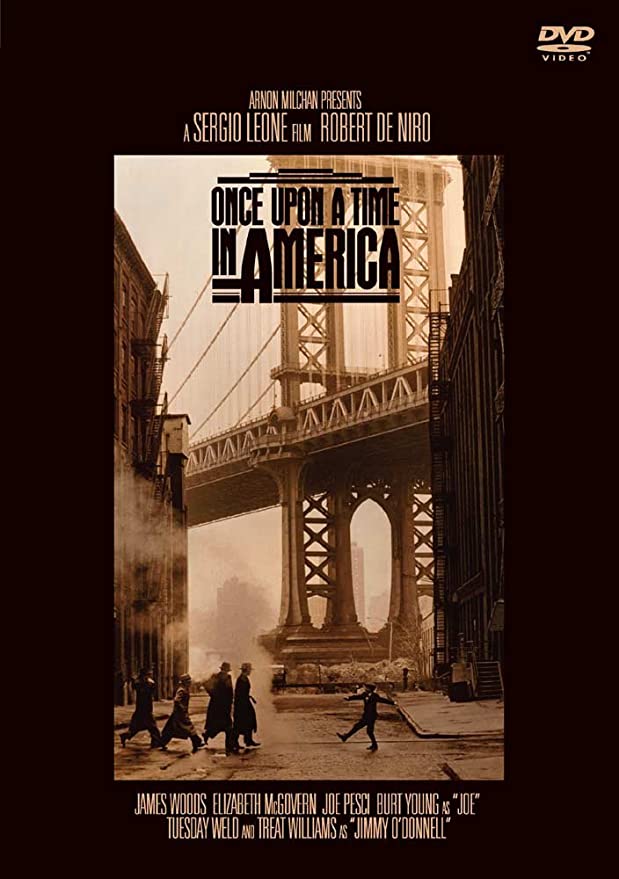
While checking what’s on Netflix, I found the 1984 film, “Once Upon a Time in America”, by Italian director Sergio Leone, with an outstanding cast. My feelings about watching were mixed, for in “those days” I rose from a theater seat and walked out on the film.

Leone could work in wonderful ways. He creatively used light and space, was fearless about timing action sequences in modes very slow or very fast. As a director, he could reveal much inside and outside to drive a character’s choices and behaviors.

Leone’s films for me have a disturbing quality. This film for example reminded me shortly after it started why I had walked out on it. It’s almost impossible for me to sit and witness ongoing sheer violence, despite a story’s potential for it. To me, great art delivers punches without visual bloodletting, without slicing and hammering.

Maybe Leone was ahead of his time, working on a curve between Old Hollywood fantasies and today’s bang-’em-up, kill ’em options. Current streaming services are filled with choices that rely on fright and violence. Perhaps they’re quickies, cheaper-to-film, and popular enough to justify existence.

By the way, this old movie introduces us to a very young and beautiful Elizabeth McGovern, then in her early twenties. Today we know her from the popular series, “Downton Abbey, in which she’s a mother of three and wife to His Lordship.

Netflix provides an Americanized version of “Once Upon a Time in America”, which prior to releasing Hollywood transformed by cutting and re-sequencing. Critics condem this version and instead applaud Leone’s original or “European Cut”. It’s true to the original film and long has been considered one of the greatest-ever gangster movies.

The original version might be available on the internet, and worth checking out.

Dear Friends: I loved Leone’s “Once Upon A Time In The West,” after many re-watchings. Diana

Hello Fall

Two terrariums (gettyimages ).

Sunday, September 19, 2011— (Tomorrow evening’s “Harvest” moon will rise nearest to earth full.)

Ahead is another rainy morning, and already outside, it’s overcast and blowy. From the barnyard are rooster’s day-opening call strings. Ah well, time to stand up, start moving.

These chillier and damper days encourage hiking. Already here are fall colors to enjoy and memorialize. One way is with a camera. Another is to collect visually attractive plants, leafs, and rocks. Collecting itself is cool, and equally so is finding ways to display items, so they’ll recreate the delight of being outside doing what feels good.

Lately, I’ve been making fun of myself, well sort-of, for staring at the ground. I’m spotting for colorful leaves and unique small stones, and doing so even while leading my trio of equines back and forth to and from John’s pasture.

The other day, I felt guilty as all heck for lifting and pocketing a stone from John’s gravel pathway. I’m no thief, or so I hope, but I’d eyed that stone for over a year.

It’s big as my palm, nearly round, somewhat like a river rock. On first seeing the stone, I picked it up but couldn’t bring myself to take it. Not wanting to lose sight of it, I set it on top of a pile of rocks surrounding John’s garden. That kept it visible through last year. But yesterday, it was among the ground mix.

Today, its atop rocks surrounding my garden. I know John won’t miss it, but, still it’s kind of his.

That’s one example from my ground searches. Right now, interesting are newly fallen leaves from deciduous trees, which locally are few as Central Oregon primarily supports conifers. But aspens and maples do grow and thrive here, becoming incredibly visible in fall, to we who stare at the ground and see dropped leaves.

Taking my “rock thievery” to heart, I’ll listen to an inner voice saying, “Best not to steal”. So, today I’ll pack a vehicle with dogs, take a collection bag, and head upward toward the mountains. While the dogs and I hike, I’ll take from nature’s big bounty whatever’s small, beautiful, and worth memorializing. Back home, I’ll think up ways to be creative and keep both that outing and haul memorable.

Dear Friends: A compliment confirming my vision would be thievery from me of John’s Rock. Diana

Her New Digs

Saturday, September 18, 2011— (In two days the full moon, “Harvest”, rises nearest-to-earth.)

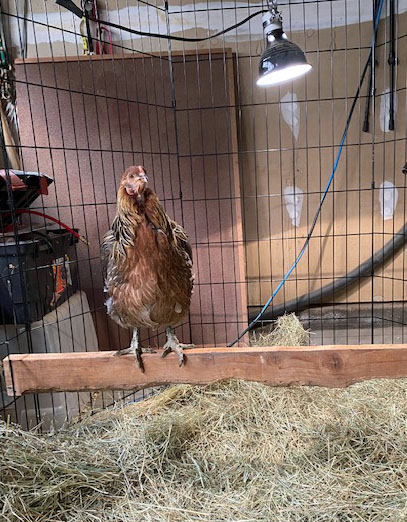
My eleven-year-old hen, Welsummer, is alive and living well in the garage.

She’s the last survivor from my 2010 baby chickens. She’s still healthy and alert although very old for a domestic hen. For most of this year and as a lone chicken, she shared space with my twin goats. This summer I acquired seven new baby chicks. For weeks they lived in my garage, and eventually, were moved into part of Welsummer’s space. A fence separated them and the old hen.

Welsummer considered the babies intruders and when at last they joined her, she ran them away. One new baby turned out to be a rooster. He didn’t forget and after maturing enough, he chased and threatened Welsummer mightily.

My old hen immediately hid and remained out of sight. I wondered whether, if isolated, she’d continue to eat and drink. My worries had been about wanting her to accept the babies, never expected anything like a rooster. Now, having witnessed and expecting more of the same, it was important to reconsider Welsummer’s future.

She had to be moved.

Hurriedly in my garage, I cobbled a temporary pen, layered its bottom with straw, added feeding and watering dishes, and constructed a roost of sorts. Then, I introduced the old hen. She appeared right at home, ate, drank, and that evening perched on her roost.

Since then she’s thrived, and yesterday, became introduced to new digs. She’s inside a large kennel with four-foot-high sides–and wonderful for me, a step-in entry door. There are feeding dishes, a strong roost, and in cold weather the arrangement will include heat lighting.

Everything looks good for Welsummer. I’ll not dismantle the vacated holding cage. Since it’s on a dolly, sometimes she’ll be in it outside and enjoying sunlight.

My Welsummer, viva!

Dear Friends: If it’s possible to work out details, she might gain inside-the-house time. Diana

Glow Lessons

Friday, September 17, 2011— (In three days, the full moon, “Harvest”, will rise nearest to earth.)

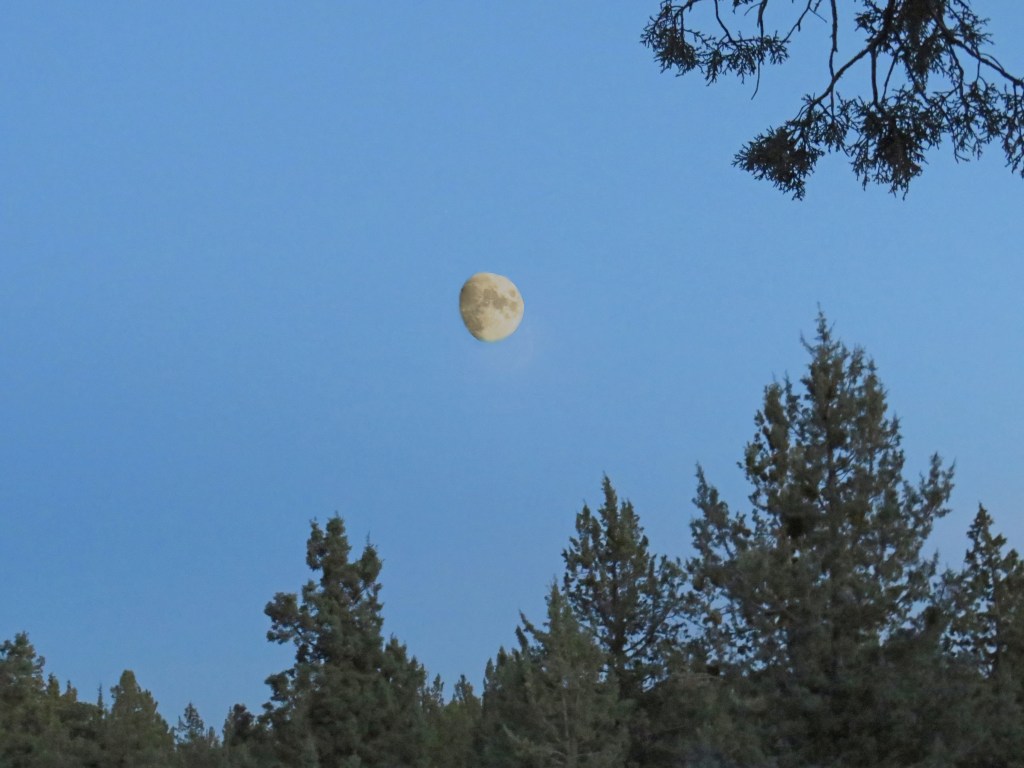
Yesterday evening, this eye-catcher above my Oregon ranch is the nearly-full Harvest Moon. Now, it’s three-quarters full, and technically, it’s in a waxing gibbous stage.

A little research helps us understand the variations in moon appearances. Waxing means a moon is receiving more sunlight and appearing fuller each passing day. Gibbous refers to a moon that appears lighted but is less than full. (What’s “Gibbous”? It refers to convexity or swelling, comes from a root word meaning “humped-back”.)

On the 20th, our September moon will be at the point nearest Earth to appear at its fullest. Beginning the very next day, it’ll become a waning moon. That’s because, immediately after a full moon appears nearest to the Earth, waning begins. The waning continues until a next new moon appears, and its changing positions relative to sun and light restart the waxing.

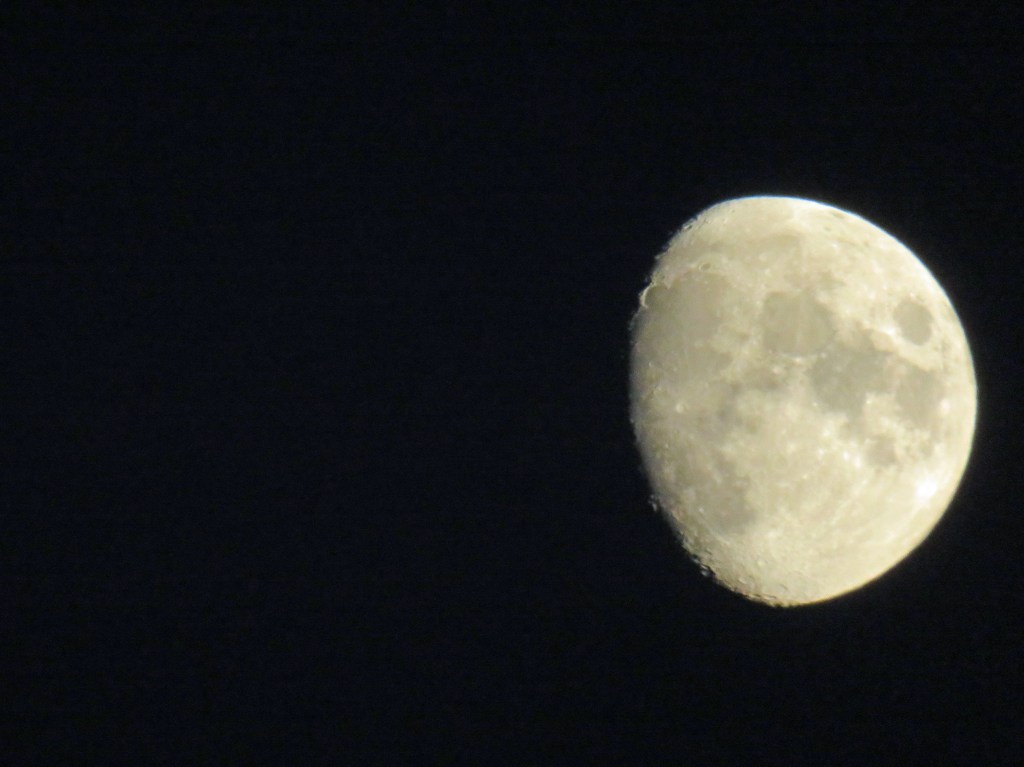
After all that, here’s a closer-up of last night’s huggable waxing three-quarters beauty.

Dear Friends: The solar system awes with unending provisions of motion, beauty, information. Diana

Western Skylights

Western sky

Thursday, September 16, 2011— (On September 20, the full moon, “Harvest”, will rise nearest to earth.)

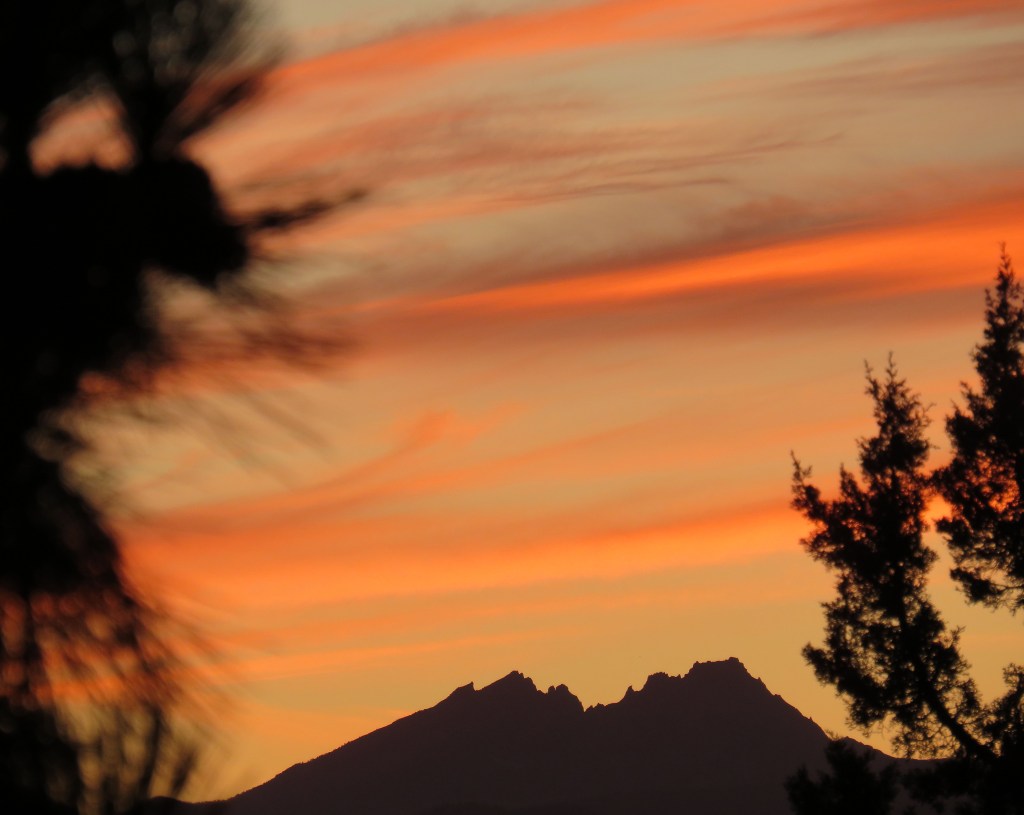
This September’s sky is offering what seems another world full of entertainment and wonder. Raise your head and look around at incredible colors that highlight unique cloud shapes.

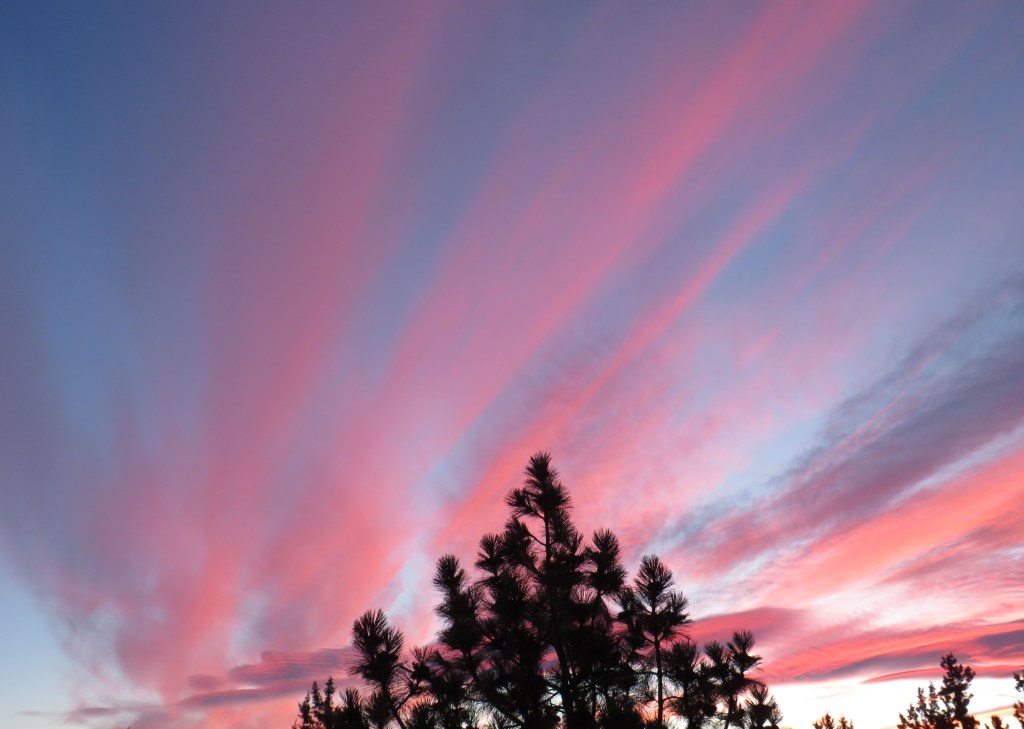
Yesterday’s late afternoon overhead simply amazed. At almost-evening, as the sun set behind the Oregon Cascades, it turned the sky into a total knockout.

From behind those western mountains and under massive clouds, the sun sent countless streaks. Some of the bright oranges were narrow, others wide. All seemed to stretch from south to north.

Streaks from south to north

I ran to find a camera, happily managed to capture final gasps of those amazing colors.

From behind and over Broken Top

Dear Friends: In just a few days, September’s sky will offer a full, glorious Harvest Moon! Diana

Waxing Gibbous

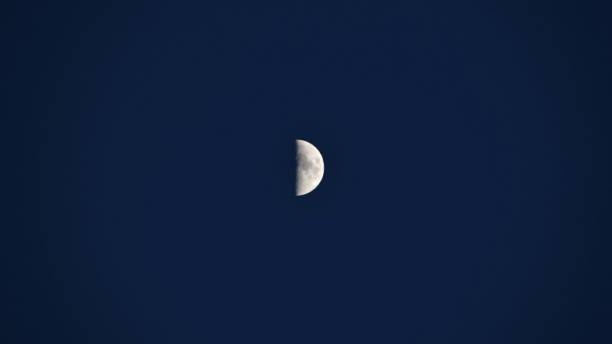
Harvest “half-moon”, Getty Images

Wednesday, September 15, 2011— (On September 20, the full moon, “Harvest”, will rise nearest to earth.)

This month is slipping away. In a few days the full Harvest Moon will appear at its strongest, most beautiful. This moon is one that many love best.

It’s my favorite, maybe because I grew up in middle America and knew well all four seasons. It introduces my favorite months, September and October, season-changers, and when natural daylight and evening darkness appear and disappear in environmental changes indicating winter’s onset.

Here in Oregon we have seasons, but with murkier comings and goings. Annually, we might see indications for spring, but awaken one morning to deeply freezing temperatures. Looking outside we sense bitter cold and see new snow, conditions often continuing through weeks that ought to be introducing spring.

Maybe my childhood memories are wistful, and in contrast central states also experience murky seasonal changes. Childhood memories often confuse, some are better than reality and some worse. Anyway about the seasons, I believe that I knew them, felt each, and sensed delight on seeing a clear lovely moon lighting an evening as farmers finished harvesting.

Sure, my memories are from the old days. Then, a farmer stepped onto an open tractor (lacking a radio and computer), and helped by spouse and kids drove into fields. Manually, the family did much of the laboring. Modern technologies have changed harvesting, this might mean that modern kids are less in tune to Harvest Moons.

I wanted to photograph the current half-moon, that coming Harvest. It’s still very distant but clear. I couldn’t find a vantage point appropriately lit for my camera. The caption photo, borrowed from Getty, looks like the moon I’ve seen from the ground.

Dear Friends: Half moons, or “waxing gibbous”, are triggers–for redirection, adjustment, flexibility. Diana

Medium As The Message

Beauty and Courage add wings to intent, Internet photo

Tuesday, September 14, 2011— (On September 20, the full moon, “Harvest”, will rise nearest to earth.)

I can’t resist this photo, of AOC making a controversial political statement while attending one of NYC’s most richest glitziest events, the Annual Met Gala. Young, physically attractive, self-confident and intelligent, she’s gained political influence during a career still in its early stages.

Crossing the world and focusing on another highly-visible woman, nations soon will lose the influence and guidance of Angela Merkel, Germany’s leader since 2005. Merkel grew up in a divided East Germany and studied to become a scientist. After the Berlin Wall opened in 1989, she moved into the larger Germany and toward political leadership. Her years in office have shown her to be a stalwart among other leaders on their very complicated world stage.

One career is beginning as another moves toward closing. Between an auspicious beginning and a successful ending come years of practicing and learning. The most able politicians understand ways to navigate among complex ideas and individual passions. They gain success from learaned abilities to negotiate for what seems most right in current and potential circumstances.

Our world has changed so much and so soon, we’re bewildered about the future. Who’ll be in power? Who’ll make key decisions? Who’ll have a right to decide what can or will be shared?

Moreover, how much will individual beauty and brains count? How many decisions might be inspired by technology and algorithms?

I was planning to focus differently, but AOC’s dress-message reawakens a recognition of our shifting social behaviors. Such unexpected and well-planned public displays do impact our typical expectations and connections. AOC’s dress illustrates a rising readjustment of social tolerances.

Dear Friends: BTW, the little chipmunk recovered completely, runs again free and happy. Diana

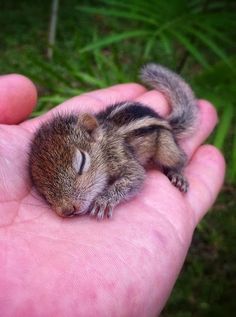
A Townsend’s baby

A rescue, internet photo

Monday, September 13, 2011— (On September 20, the full moon, “Harvest”, will rise nearest to earth.)

I set humane critter traps in my RV garage where I play around with hobbies. The traps designed to capture mice and pack rats occasionally yield other species, sometimes a lizard or angry chipmunk. These get released immediately to my rocky property.

Recently, I was lazy about checking the traps. On doing so, I found a tiny chipmunk, appearing sleepy, and without any interest in leaving the trap. I set the trap with critter inside, its door open, on a rocky area and left. On returning, I saw the little guy outside the trap, asleep only inches away.

I’d gone too long before checking that trap. This baby, tiny and skinny, seemed at death’s door. I lifted it, got no reaction. Nearly lifeless, was it dehydrated and starving, or might it be ill? Gambling that too many hours trapped had taken their toll, but maybe the little one could be revived.

I have a critter-keeper, a small cage with a lid and litter inside. I added bird seed, but chipmunk wasn’t interested, still appeared dead. I picked it up, rubbed its body, and seeing little claws trying to reach out, hoped for the slim chance of bringing it back.

As some background, earlier this summer I rescued a baby bird, a helpless, only half-ready fledgling fallen from the nest. I hand-fed until it grew strong enough to fly. Its most critical need beside nutrition was hydration. A syringe inserting water might harm by putting moisture into lungs. To hydrate that bid, I offered food-bits only after dipping them into water.

As to the chipmunk, without some way to feed it, best to try hydrating. I probed with a small syringe at the clamped mouth. On opening lips a little, I provided only a drop or two. As moisture ran down the critter’s coat, I rubbed to awaken its body. After many attempts, a few water drops were met with tiny-tongue licks. The continual rubbing, probing, and encouraging returned the body gradually to life. Not lots, but that squirming and pawing pointed toward revival.

Inside the critter carrier, that chipmunk tried eating but couldn’t handle much. Chewing consumed energy, and again, it fell asleep. I set a lid with water into the carrier, above it rigged a heat lamp, and went to care for my household animals.

When next I checked, the chipmunk was moving around. I saw it discover and lap the water, and try again to eat before falling asleep.

Happily this morning, chipmunk’s on its feet, has eaten and is trying to escape. I might keep the animal in that carrier until tomorrow, to ensure it’s good and strong before being released.

More about this little rescue. It’s a Townsend’s Chipmunk, a variety common to this area near the Oregon Cascades. Chipmunks are a species of rodent in the squirrel family and considered ecologically beneficial for helping to spread spores of fungi around in the forest. I enjoy watching them running rapidly with straight upright tails, and gathering seeds. They’re very social and get along well at food sources.

This chipmunk has provided another, very cool learning experience. Even so, I promise to be more diligent about the frequency of trap checking.

Dear Friends: Real, and country-like environments bring close-up learning about wildlife. Diana

Old Welsummer

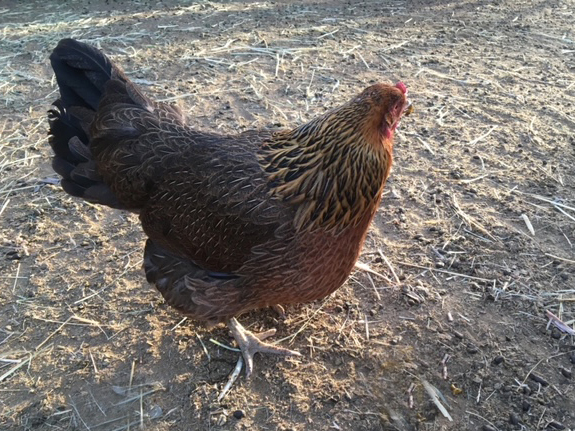
Welsummer @ Eleven

Sunday, September 12, 2011— (On September 20, the full moon, “Harvest”, will rise nearest to earth.)

I spent most of yesterday working to rescue and keep safe a beloved old hen.

She’s the last survivor, 11 years old, from my first flock. She came home with me at just days-old, out of a “sick tank”, and at a marked-down price. I rigged a special baby tank and heating-light in the living room. In it she grew, became strong, and later became integrated with the other chicks, all still very young.

Welsummer matured into a beautiful and sweet hen. She wasn’t the most dominant and always took care of herself among the flock. I knew each bird as an individual and loved the entire group. They communicated constantly, a flock with leaders and losers, with clowns, thinkers, and hunters.

Well, few places might be more violent than a hen-house. The birds huddle and constantly vie for dominance. Stronger ones pick on those less aggressive. My first hen that passed did so from natural causes when the flock was five years old. After that, maybe once-a-year, a least-dominate bird would pass away.

I hated losing any bird and tried keeping one or two of the declining hens alive. An experienced veterinarian medicated them and helped me do all possible to bring each from the brink. My successes were brief, and finally and clearly, I understood that when a hen gives up eating and drinking, and behaves differently, she’s decided to go.

This spring, knowing Welsummer won’t last and realizing I’d miss my chickens, I acquired new babies and brought home seven, all different breeds. I raised them apart from old Welsummer, who didn’t want them around. They were visible and interactive with her through fencing, and as they matured, I periodically released them with old Welsummer. She chased and frightened them greatly until they grew larger.

Eventually, all the birds became integrated.

Meanwhile, it tured out that one baby’s a rooster and happens to be huge, He’s a Jersey Giant breed, and already taller and heavier than all the others. He’s begun watching over and protecting the hens.

Yesterday, it became evident that he fears and dislikes Welsummer.

While hurrying from the hen-house to greet me, in mid-tracks she had to reverse and run squawking. The rooster chased and leaped attempting to attack her. She escaped, and he left no doubt abouts what he’d have done if managing to capture the old hen.

Yesterday, Welsummer moved into new quarters, in my garage. She hasn’t yet enough space but is protected. There’s a roost on which to perch, and best, she’s willing to eat and drink. Today, I’ll figure out how to enlarge and improve her area. Once she’s accustomed to and comfortable in the garage, we’ll proceed. I’ve always thought it would be cool to have a “house chicken”.

Long as she independently eats and drinks, Welsummer’s old age will be safe and comfortable.

Dear Friends: Who’d have imagined? That danged rooster better not ever attack me! Diana

Learning

Aftermath of atomic bomb in Hiroshima, Aug. 6, 1945. (U.S. Army photo)

Saturday, September 11, 2011— (On September 20, the full moon, “Harvest”, will rise nearest to earth.)

Twenty years ago today, people throughout the world, horrified, numb, unable to process information, saw on television, and in real-time, passenger jets destroying New York’s Twin Towers. The world’s attention followed Flight 93’s diversion from D.C. to Pennsylvania fields, to more total destruction.

As a little kid watching Movietone News, and later periodically on television screens, I’ve seen the aftermath of an event, equally-awful and equally-surprising, of planned mass destruction with civilians as innocent victims.

From the early days of atomic development, we’ve seen videos showing enormous plumes of deadly black smoke arising after American planes dropped the most powerful bombs ever created on Japanese cities.

The world never has nor ever will recover completely from such vicious attacks, they’re so-beyond-violent, against mass humanity.

Before the advent of modern communications, the whole world didn’t witness horrific events, but learned about them from group or individual memories. Learned from news stories, books, and history lessons. These days, we learn differently.

In December, 2001, the Pentagon released a video of Osama bin Laden discussing with his colleagues the terrorist attacks on America.

In May, 2011, the world applauded news, that the U.S. military and CIA operatives, upon raiding a compound in Pakistan, had located and killed Osama bin Laden.

Now, and again in real time, the world is witnessing an aftermath of war. The world is fearing a potential for mass destruction of innocent civilians on Pakistan’s streets.

Dear Friends: Humanity is vulnerable to such powers as leadership, ideology, technology. Diana