“Today’s” Anita Hill

On Tuesday, Hill speaking with Amanpour (photo CNN)

Thursday, September 30, 2011— October’s fullest moon (“Hunter’s”) will rise on the 20th.

In 1991, like so many viewers, I saw on television Anita Hill’s testimony before a judicial selection committee, which consisted of 14 white male Senators, chaired by Senator Joe Biden. That committee was vetting Clarence Thomas for the Supreme Court and listening to Hill’s description of sexual harassment incidences from Thomas. She previously worked for Thomas on the Equal Employment Opportunity Commission.

Hill’s testimony was a first of its kind in a Supreme Court nominee’s hearing. That all-white male panel grilled Hill without mercy, working hard to disregard and dismiss her testimony. Afterwards, the Senate confirmed Thomas’ nomination in a 52-48 vote.

In those days, Hill was a publicity-shy attorney, immersed professionally in arcane aspects of commercial and contract law. After earning a J.D. at Yale in 1980, she primarily focused on legalities associated to her specific areas of interest.

While testifying thirty years ago, Hill appeared unaggressive but direct, seemed personally rather quiet and unassuming. The rumor was that opponents of Thomas’ selection on discovering Hill’s experience had pushed hard for her to appear and testify.

Testifying in 1991

Immediately, Hill’s life changed. She was condemned by many and received death threats. I was incensed by how her testimony had been received, how she had been treated. I wrote a long supportive letter, but couldn’t find a viable address. She was associated with the U. of Oklahoma, so I sent it there, never heard back.

Well, after all, Anita Hill wasn’t so quiet and unassuming. Following her experience, she’s continued moving forward, and today, offers in her new book an expanded understanding of that early 90s experience, its social and legal aspects. Moreover, she has teamed with Christine Blasey Ford, another pained victim of the American judicial selection process. They discuss their experiences, known-injustices to women and other minorities, and speak to changes needed.

Hill’s totally updated, and again in the spotlight as an American lawyer, legal scholar, educator and author. She’s with Brandeis University as a professor of social policy, law, and women’s studies. She’s also on the faculty of that university’s Heller School for Social Policy and Management.

Dear Friends: Hill’s talk with Amanpour, a “don’t miss”, is on streaming and podcast media. Diana

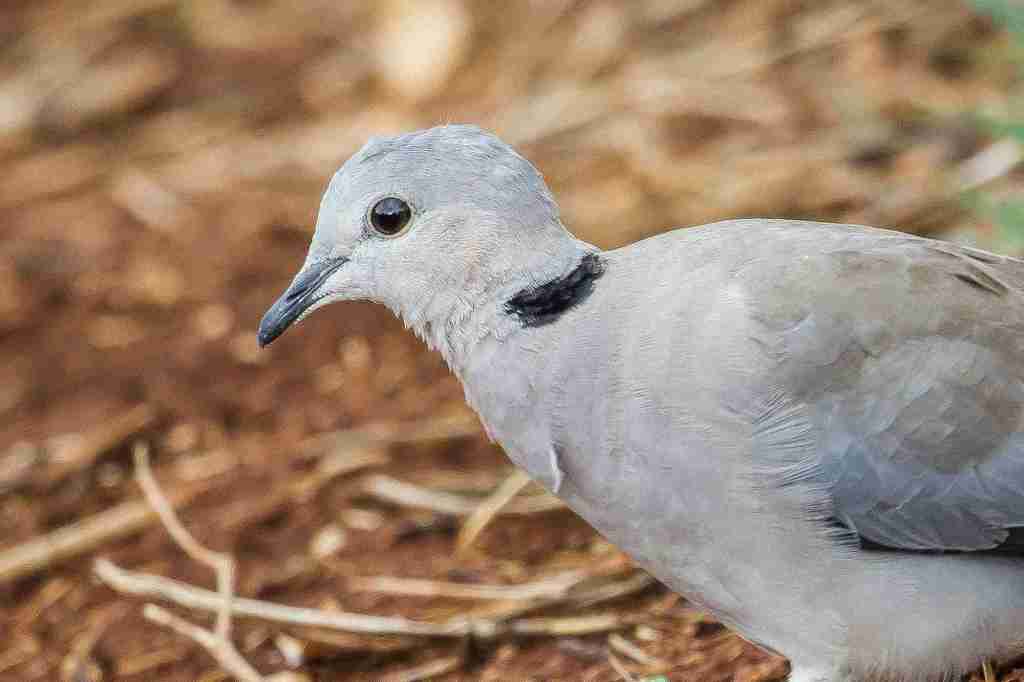
A Ringed-Neck Dove

Wednesday, September 29, 2011— October’s fullest moon (“Hunter’s”) will rise on the 20th.

Another rescue, this time a young ring-necked pigeon (“pigeon” is French for dove).

While passing my chicken coop, I saw the chickens pecking at a cornered white object. I looked closely and saw a pigeon. It had flown into a part of my chicken coop entirely fenced except for a small chicken-size opening.

Occasionally, a bird gets through the small door and into that fenced area, immediately becomes anxious, tries to get out. On seeing a trapped bird, I open a people-sized door and encourage the confused captive toward the large opening.

Recently, I saw a Jay bird fly into that all-fenced area and become confused. With its family flying outside, screaming in “Jay-talk”, that bird found the escape. No surprise, for Jays are very smart. Pigeons less so. The one being pecked at had become stunned, was helpless, and couldn’t lift off to fly. Curious chickens pecking at its wounded back were becoming more aggressive.

I rushed inside the coop. My chickens anticipated treats and turned, hurrying to greet me. Inside the more-inner enclosure, I lifted the stunned bird. Besides wishing to help the bird, I happen to like pigeons, gentle non-aggressive birds. My household includes a very sweet pigeon, Gilbert, a rescued racing bird.

Holding the injured pigeon, I left the coop and went to the barn for a “critter carrier”. Took the now-loaded carrier to the garage. After transferring the bird into my parrot’s travel cage, I activated an overhead heat-lamp.

By the time I could locate a bottle of purple spray-on wound disinfectant, the pigeon had awakened and was resistant. Probably it could fly, but best shouldn’t also display the red wound. I sprayed the purple and left the bird to rest an hour under heat. Later it appeared okay.

It fought removal from the cage, but against the gentle pigeon I won. Once we were outside and far from the chicken coop, I lifted my hands. That bird flew mightily away.

Dear Friends: Being at home facilitates rescuing, often very satisfying experiences. Diana

Changes & Emotions

Tuesday, September 28, 2011— October’s fullest moon (“Hunter’s”) will rise on the 20th.

Yesterday’s rain gave this area a much-needed soaking, and today, our chilly high will reach the 50s. Temps during what’s left of this week will be in the 70s for book-perfect weather.

Clearly, we’re into change which fosters mixed feelings. Although becoming used to worrying about weather, how it’s changing and could impact the future, our moment right now brings mixed feelings. We’re enjoying ahead a string of comfortable temps while also anxious about soon-coming very cold weather.

Anyway, I as usual am battling anxiety. It’s an annual “same old”, but it always feels new. For example, a partial list of my, “where is, or are” and “did I do, or not?”

Where are the batteries for heating my coldest-weather jacket? Will the dogs while outside in freezing winds have adequate shelter? How best to alter feeding amounts for horses being far-less exercised? Is now too late to leap-in and try to accomplish all left-overs on my winter-proofing list?

Oh, yeah, how about that danged rooster! Yesterday, he was sporting even fewer feathers and had more exposed bare skin. These are cold nights!

Dear Friends: Another season, a different list, some newer worries, change does this. Diana

“Hope is a thing with feathers….”

Monday, September 27, 2011— October’s fullest moon (“Hunter’s”) will rise on the 20th.

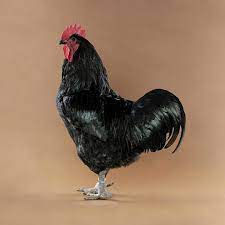
Isn’t this Jersey Giant Rooster a knockout? And how about those extra-long neck and tail feathers?

In sunlight these guys absolutely are beautiful, their black feathers become radiantly iridescent and stunning.

My baby chicks, now about five months old have begun to lay. One, a Jersey Giant, has turned out a rooster. True to breed descriptions he’s a gentle fellow. Recently, the long feathers on his neck have begun disappearing, leaving bald spots. I estimated that cooling weather might have him molting, like my rescued racing pigeon, Gilbert. A couple of times annually, Gilbert, frequently stands, spreads wings, and shakes his body to release what seems billions of feathers.

But uh oh, guess what. Molting isn’t behind Jersey’s situation. Now I see that some of the hens regularly pluck and gobble his gorgeous feathers. Chickens commonly eat feathers, do some plucking and find them on the ground. Most surprising now is Jersey’s casualness about being picked on, plucked at by aggressive hens not satisfied with only a single feather.

Like his neck, Jersey’s tail section shows bald spots.

Previously, I’ve had only one flock of baby chicks. It turned-up two little bantam roosers. The first began breeding and became aggressive toward me. He got re-homed. The second then took over, began breeding, and turned against me. He also got re-homed.

This time, I’m hoping my rooster may stay here living and guarding his hens. Currently we’re facing winter’s approach, and he will need feathering abundant and capable of offsetting frequently-severe cold spells.

Dear Friends: Here’s yet another stumble, into a situation unpredictable and confusing. Diana

Woodworking

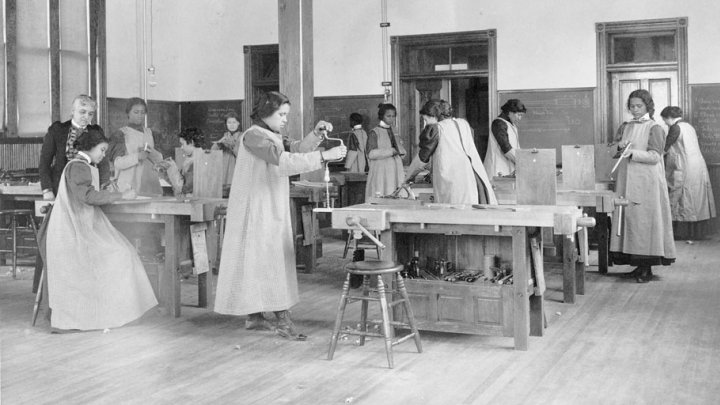
Women learning woodworking in 1900 (F. B. Johnson photo)

Sunday, September 26, 2011— October’s fullest moon (“Hunter’s”) will rise on the 20th.

I’m doing some woodworking in an outbuilding that’s had various purposes. The previous homeowner built it to house an RV. After I acquired horses and understood how much hay is necessary to keep them, that building became dedicated for storing hay.

Early this year when a new bug bit me, I found other places to store hay. The outbuilding became a hobby workshop.

Long ago in my growing-up days, on recognizing wood’s beauty, I wanted to learn woodworking. The thought just hung around until years later I attended a party in San Diego. The guests were artists, mostly teachers, and I heard a woman speak of building furniture herself for her new home. She suggested to me that a good start would be to acquire a table saw and go for it, by teaching myself to use it.

Maybe woodworking again is wishing to renew creativity and its pleasures. Not so easy with modern tools, so different from those of old. My current table saw has technologies for accuracy and safety that required a relearning. Similar, for a modern drill press and sanding machine. Many of today’s tools are battery operated, lightweight and portable, and some that in the old days I couldn’t heft have become easier to use.

My timing for setting-up was awful. Lumber prices shot-up quickly, became sky-high. The pandemic-interrupted supply chains, along with world-frenzied home-building, made wood a scarce commodity.

Life on an acreage teaches against tossing left-over project pieces. I found scrap lumber and with it practiced using newer tools. Unable to afford durable hardwoods, I used wood scraps to construct needed objects.

A couple of examples. My new magazine rack made from unappealing pressed plywood keeps pulps in one place. My farm-vehicle, Gator, is sporting a pressed-plywood carrier to transport without spills a cup of coffee and keep small tools handy.

Now it’s funny, to find myself loving these ugly, serviceable pieces. I’ve no wish to have them made of quality lumber, looking prettier. I see them as cool, creative one-offs, from my mind and imagination.

Dear Friends: Just “going for it” turns out often to be the “best way”. Diana

Season’s Pricklies

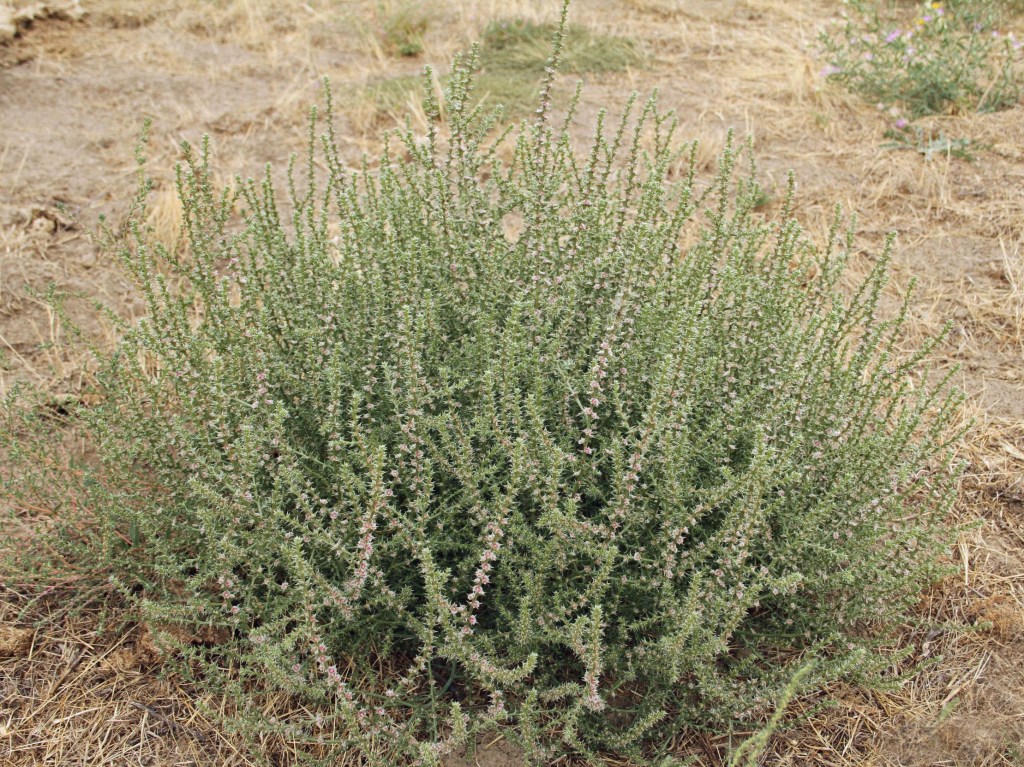
Russian thistle

Saturday, September 25, 2011— October’s fullest moon (“Hunter’s”) will rise on the 20th.

I’m pulling weeds by hand on a strip of land separating my property from the highway. I avoided this until doing became a must. It’s late summer when weeds explode, especially many awful clumps of thorny Russian Thistle. I’m finally driven to be out pulling those massive resistors.

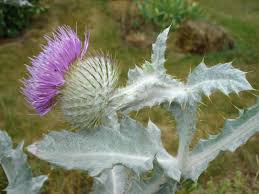
Russian Thistle is one of the ugliest weeds imaginable, and even worse than Scotch thistles that also pop up anywhere. Both varieties have wicked thorns, on stems, branches, and leaves.

Scotch thistle

Bare hands scream while pulling these weeds, and Russian Thistle is worse. Its loose thorns get inside a puller’s gloves, shoes, socks, and pants-legs. After a little pulling, just standing among thistle clusters is painful.

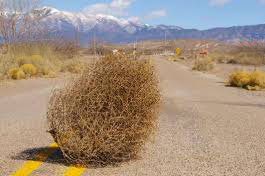
I dislike both spraying and pulling. But spraying is more awful. Now, I’m partly through this season’s pulling and made miserable by invading thorns. Ahead are more unwieldy clumps for removal, before they break away from roots and roll loosely, as tumbleweeds spreading seeds.

Coming rains cause an embryo inside each of 250,000 seeds to sprout.

Immigrant homesteaders, in 1873, destined for South Dakota accidentally brought Russian thistle as contaminated flax seeds. More spreading occurred from contaminated flax leftover in railroad cars and the natural winds. That year occurred during a long period of severe drought over the great plains, with inadequate naturally-growing animal fodder. Imported thistle was intended for growing and supplementing animal feed.

Everywhere now, of course, a single tumbleweed’s trillions of seeds will pop and grow in the-most-minute unoccupied spaces. Oh well!

Dear Friends: Bad weeds, one of the few minuses of caring for large or small acreage. Diana

Sky Tickle

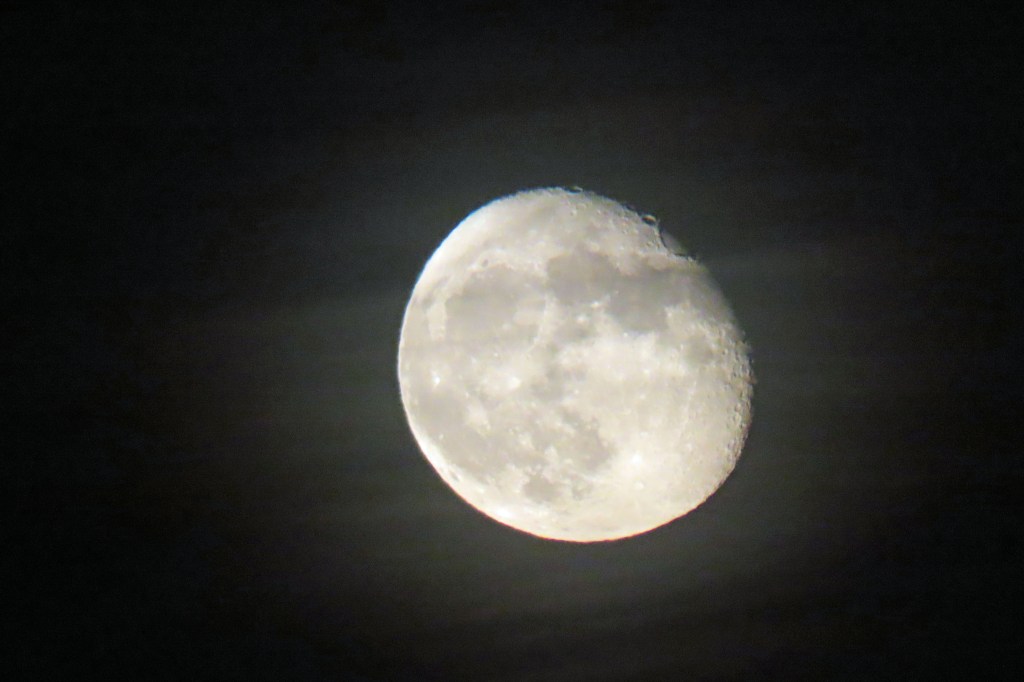
Harvest Moon, in waning gibbous phase, 9-23-21

Friday, September 24, 2011— October’s fullest moon (“Hunter’s”) will rise on the 20th.

September’s full moon although now appearing slightly less round still is a knockout.

Last night while walking uphill after feeding horses, I couldn’t locate the moon. Impossible! An almost full Harvest Moon can’t be invisible in a reasonably clear evening. I searched overhead without seeing it in any of the usual sky places and felt a loss.

But wait! In another moment while rounding a corner of my house, I glimpsed from way high a giant glow, its light streaming through thickly branched junipers. My moon! I moved to find the best view. The sight appealed equally to days ago when Harvest rose at its fullest. This was beautiful, made me rush for a camera.

Through many years, and beyond all other full moons, Septembers’ Harvest Moons have captured my heart.

Dear Friends: As Earth world seems smaller, a spacey sky world tickles more. Diana

Writer’s Dilemma

Thursday, September 23, 2011— October’s fullest moon (“Hunter’s”) will rise on the 20th.

I’ve drafted some novel-length stories. None has seemed particularly impressive but all had grains of possibility. I’ve edited trying to improve each and always been unsuccessful. I become tangled among sections by changing enough action to alter an original story. I’ve failed as an editor of my longer creative efforts.

On short pieces, I’m successful. They’re quick to create. Although self-editing is labor-intensive, short articles allow my brain to keep squarely on stated themes and desired endings.

But longer writings have one or more key themes with multiple branching activities, requiring an editor to focus squarely on the critical trio of subject-action-resolution. While editing and wishing to improve the writing, I fiddle and lose focus by becoming tangled among conflicting possibilities and ideas. One must quit altering to wrap-up a story.

These days, I want to re-explore the old stories. Many passing years have distanced me from early ideas and themes. Maybe re-reading an old draft will renew its possibilities. Maybe finally, I can better edit multiple chapters and gain their relevant closure.

Dear Friends: The materials exist, and so, one should quit thinking, start doing. Diana

Wrap Summer

Wednesday, September 22, 2011— October’s fullest moon (“Hunter’s”) will rise on the 20th.

The weather is changing, daylights becoming shorter. We “moon chasers” were aware while preparing to chase the rise of September’s Harvest Moon. The designated day had been hot enough for t-shirts, but that early evening we took jackets and sweaters. Plus, we left earlier than usual to be in place to witness the full moon’s rise.

Today is the autumnal (fall) equinox, which lasts moments but represents an actual weather shift to winter of 2021. This usually occurs on September 22 or 23 and is a brief moment in time, during which the sun appears directly over the Earth’s equator before crossing into the Southern Hemisphere. At that moment across the globe, there are equal periods of daytime and nighttime.

Technically at this equinox, the Earth’s orbit is at a point where neither hemisphere tilts away from, or toward, the sun. That makes day and night nearly equal, and over most of the globe will be 12 hours of daylight and 12 hours of darkness.

To me, it’s significant that we’re about to enter the “dark season”. As our days become shorter so must our habits, and certainly mine. Folks who like me have equines will decide whether to shoe again or leave horses barefoot (shoes are negatives in snow). We will prepare for altering equine exercise routines through the months ahead with short light and much cold.

Already, my animals show signs of transiting to winter coats. Already, in mornings I am in a heavy jacket while out feeding them. Already, I’m thinking about having to cope with arriving cold weather in unusual patterns.

Dear Friends: Earth weather is less predictable, while solar activities are dependable. Diana

Harvest Moon Rising

Almost clear of the horizon

Tuesday, September 21, 2011— (September’s full moon (“Harvest”) begins its waning phase. October’s full moon (“Hunter’s”) rises on the 20th.)

Yesterday evening, Susie and I headed east to a farmer’s field where we like to go and to await first glimpses of the month’s fullest moon, newly rising. At the destination, we unload cameras and (in the right weather) a cold couple beers, and unfold chairs. We wait for first moon light, share interests, activities, and plans.

That’s our “waiting part”, we’re in a perfect space to achieve our goal. We discovered this small offbeat spot by focusing on technical aspects of what we hoped to accomplish.

Where we sit gives a clear view across the farmer’s large flat acreage, surrounded by a string of bare buttes. From behind one of those buttes will emerge a uniquely bright light reflecting the now-setting sun.

Sun’s last glowing from behind the Cascades
Last spot of sunlight

Susie does our research and determines which compass point will allow first-sighting of a perfectly round globe. We keep watching that point and on-time are rewarded.

A first glimpse of an appearing moon structure is awesome, magnificently and stunningly beautiful. The event gets more exciting as an emerging globe becomes more visible.

The Harvest Moon isn’t a Super Moon, but compared to bigger moons it emerges as equally thrilling or maybe better. Last evening while it was hanging low and most colorful, we tried for best sighted in various ways, through naked eyes, powerful binoculars, and using cameras.

Earlier through our waiting, and now as we photographed, between ourselves and that horizon across the field, the farmer’s herd of alert llamas watched us intently. At a low spot among the buttes, just behind that barn, the moon would rise.

We were treated by natural sounds. There were owls in nearby trees teaching babies to hunt, coyotes yipping and hunting in the distance, and swooshing by a hawk circling the farmer’s field.

And otherwise only silence. And that moon!

Our “chasing team”, with way-in-the-background “vague bumps”, actually are about 50 llamas.

Our background, closer-up

Dear Friends: Susie can spot visible planets, point to their locations, is a wealth of sky knowledge. Diana