Chicken Ranching

Monday, July 18, 2021 — (In 4 days, July’s fullest moon [“Thunder”] will rise.)

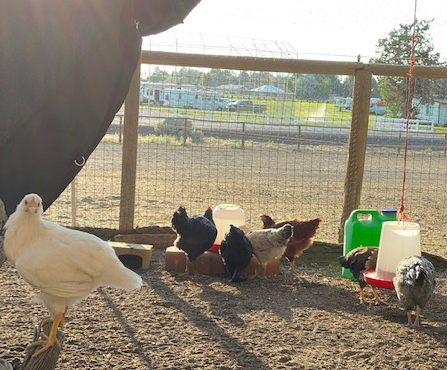
Here’s a photo of my baby chicks just before I re-opened an exit allowing them entrance to a larger fenced area that houses my old, still-thriving hen, Welsummer, and twin aging dwarf goats. I kept the babies separately from Welsummer for a long time, wanting them to grow into less easy victims for her annoyed attacking beak.

Recently, during a first-time meeting with Welsummer, the chicks adored her and rushing to say hello were met with a most evil “Get away!” Welsummer grabbed one skinny neck (of white bird, forefront in the photo). Thinking she was ending my baby, I chased Welsummer and tossed her angry self from the chick area.

How to integrate the bunch safely?

The chicks, not yet fully grown are big and healthy, will start laying in a month. They need freedom to roam wider and gain easy access to the coop’s feeders and nests.

Yesterday, they ventured out slowly and cautiously, one by one, until all were in the larger area. Excited! They pecked, squeaked, and moved grouped as one. On seeing them, Welsummer charged and I headed her off with warnings. The hen got it and after a couple of attempted attacks backed off, still grouching but staying away. The twins watching casually couldn’t have cared less about their new space-mates.

I hung around for an hour or so before retreating. The re-opened exit gate might as well have remained closed, for the chicks preferred returning to their area and huddling, while Welsummer stayed in hers.

This morning will reveal if anything’s changed. I’m hopeful all the chickens are alive. Including Welsummer, who at eleven years (mega-old for a domestic egg-layer), might have been stimulated to a point of stroke.

I love old Welsummer. She’s still beautiful, and friendly with me and the twins. Not wanting entirely to lose that old girl is why I acquired the babies. At first, I intended to have just a couple of little Welsummers, but became seduced by the cuteness and irresistability of tiny chickens. After lots of hand-wringing, I settled on having one baby Welsummer and six of other breeds. No mistake, too, for they’ve become a flock of friendly sweet birds.

Now, just need all of them safely to be together.

Dear Friends: Birds of all types are amazing creatures, smart, fun, and worth knowing well. Diana
Big Bird

Sunday, July 18, 2021 — (In 5 days, July’s fullest moon [“Thunder”] will rise.)

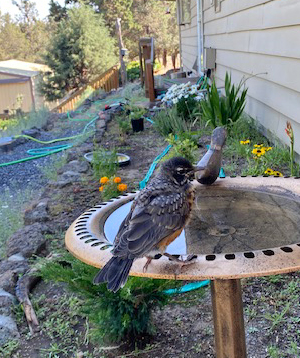
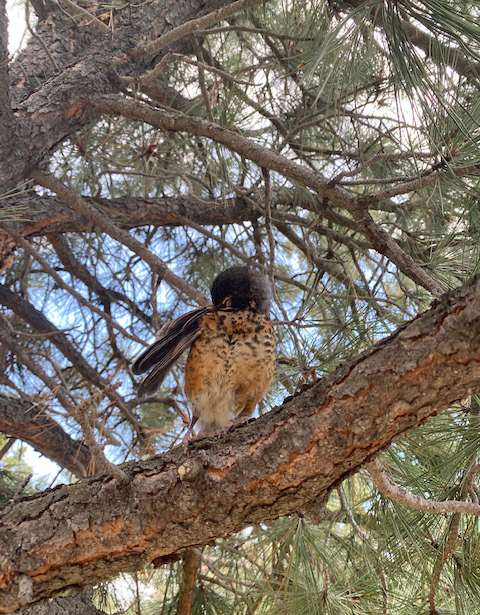
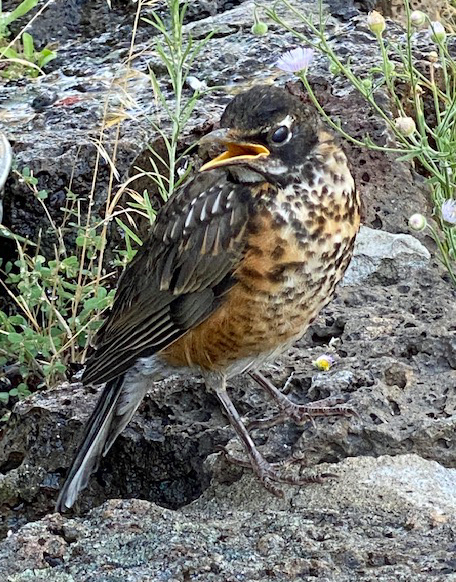
Yesterday, my baby Robin visited out of the blue. After three weeks in my care it had gone out on its own, not even showing up on the day earlier. Suddenly, its sounds, little peeps with whistles, were a pleasant surprise. The baby was safe and thriving. I hardly recognized this bird, independent only a few days and still with baby spots, but resembling more a sleek efficient adult.

Baby hopped and followed as I watered plants, made its sounds in responses to my hellos. It stayed three or four feet away and and flew off if I reached for it. I left the bird alone and it hung around. Didn’t open its beak for food and seemed just to be saying hello.

After shutting off the water and walking toward the garage, the bird followed, and so, I paused to sit in a chair. We continued talking and as I watched the bird, it turned and hopped into in the yard’s wet area. It pecked around, suddenly removing a flower from a weed and eating it. A surprise, who knew Robins eat flowers? Could hunger be motivating this visit?

Curious, I went into the garage for a leftover tub of night crawlers and removed one with forceps. I took it outside, sat in a chair near the bird and danged the worm. Bird watched and didn’t seem interested. Unsure what else to do, I tossed the worm to the ground near the bird.

The bird attacked, treating the worm as if it were a snake, grabbing, dropping, and repeating time after time, until the worm no longer moved. Then the bird, that only days ago couldn’t down an entire night crawler, expertly lifted one end and sucked and consumed the creature.

As bird stood digesting, I wondered about those behaviors, and repeated my offering. With this brand new crawler, Robin again in the same focused way killed and wolfed. Now satisfied, bird flew off and landed in the wet area before disappearing under a big plant to hunt.

Dear Friends: Proving, that a mom of any kind tends to be an easy tap for a meal. Diana

Oh, My Deer

Saturday, July 17, 2021 — (In 6 days, July’s fullest moon [“Thunder”] will rise.)

Wildfires are blazing, the air is smoky, sunsets are gorgeous. All this recurs most summers, but this season’s unusually intense heat from global warming adds burden to wildfire fighting.

There are many ways fires can start in hot dry weather. Anything, from a lawn mower spark to parking a car with hot exhaust over dry brush, could initiate a blaze. We’re all aware, worried, and watering our surroundings to maintain damp environments.

Heat and burning are causing wild animals to migrate toward moisture. I’m seeing an unusual assortment of critters in my dampened slopes and garden areas. I’m not complaining, and in fact, keeping Maxwell, my killing-machine-cat, inside. The critters I don’t mind Max killing are mouse-types, which he ignores.

This year, I’ll let the visiting rock-chucks, bunnies, and others survive. It’s okay if my plants pay a price.

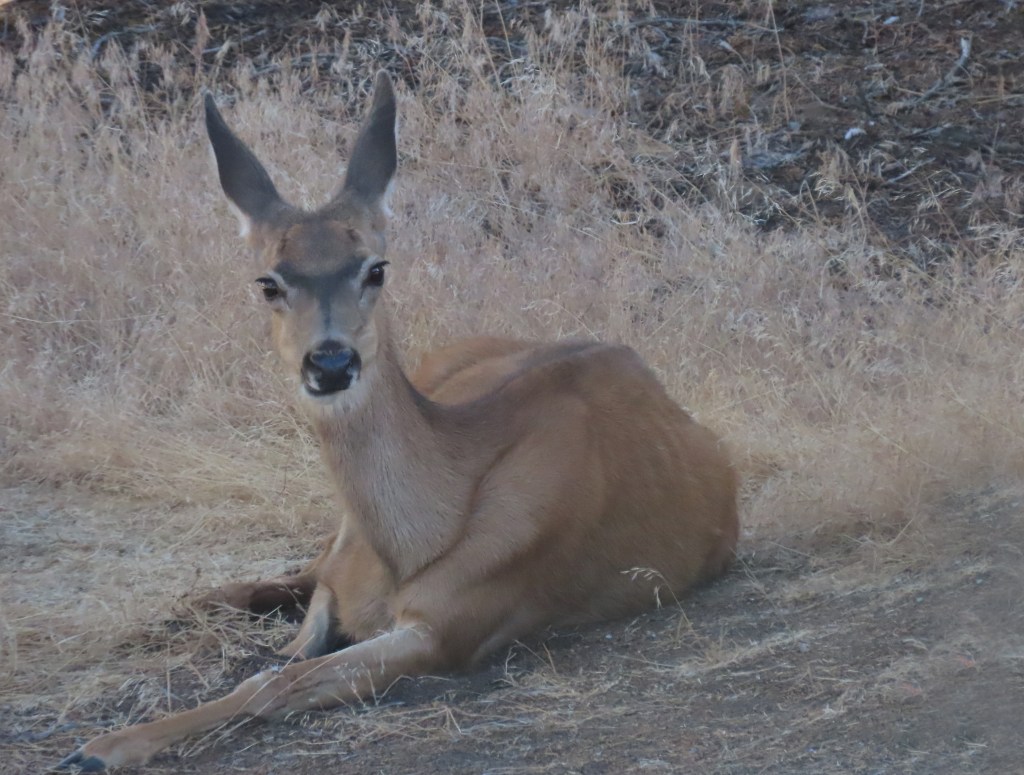
Yesterday, I was re-visited by a mule deer doe, Ear-tag #55. She’s young, in great condition, and beautiful. I saw her on my property a day earlier, but she quickly disappeared. Yesterday morning she appeared, grazing on my neighbor’s green pasture. By the afternoon, she was resting beside one of my outbuildings.

And later, she began moving through my slope and taking long pauses to munch on healthy sage plants. I watched from inside through a window, letting it happen and knowing she’d work on up to my planted garden. She did, and later I groaned on seeing the results. My most beautiful leafing plants and gorgeous flowers, cut off or disappeared.

This year, evidence of a deer’s visit doesn’t make me particularly angry. Now, I just shrug, as most plants quickly grow again, or simply can be replanted.

I’m fascinated by Tag #55. For one thing, it’s unusual to see a lone doe. This one especially is beautiful, her coat the color of wet sand. She appears confident, making me I wonder who tagged her and when. Is she completely wild or maybe a little tame?

Just random thoughts, as I’m inside trying to stay cool and hoping for firefighting success. Or as I’m outside watering the area to assist my safety and help the wild critters.

Dear Friends: It’ll be cooler today, in the high 80s, and fine for touring in a forest on horseback. Diana

Tracking

Friday, July 16, 2021 — (In 7 days, July’s fullest moon [“Thunder”] will rise.)

On these hot days not many activities can beat riding on horseback and following a forest trail.

The horses, dogs, and I have been out to find and explore obscure old trails winding through dense trees. Those old pathways beaten-in long ago, probably by horses, today are sustained by the hooves of wild roamers and seasonally-active on-foot hunters.

My dogs are arthritic to various degrees. I’ve been concerned about them accompanying horses on trails and over-exercising. A pleasant discovery has been that keeping the horses at a walk tends to keep my dogs at a walk and they’re not pushing themselves. Walking tours are fun enough, and they’re turning out to be less stressful for all.

Something interesting is my smallest dog, Louie, refusing to go on trails with his buddies. He starts out with the pack and totally disappears after about a hundred yards. Louie is about twelve years old, has spent most of his life running in front on horse trails. He’s a smart fellow who’s made a decision, and knows how to toss in the towel while refusing to be left home.

He’s a cute mini-Aussie, but kidnapping Louie wouldn’t be easy. He doesn’t enjoy being approached or handled by strangers, and his world-class stink-eye kills an outsider’s interest. So, while the rest of us choose to go, Louie chooses to be a rig guard.

These are weeks of transition. This season’s extremely hot weather has hindered my animals and me being out and on the go. Now finally, we’re getting back into a routine and that feels pretty good.

Especially, too, as our walking exercises are working out for the dogs. Plus, our Louie needn’t be left out.

Dear Friends: Time flies, and already summer is half-past, but much remains to do, to observe. Diana

Sun, Oh Sun

Thursday, July 15, 2021 — (In 8 days, July’s fullest moon [“Thunder”] will rise.)

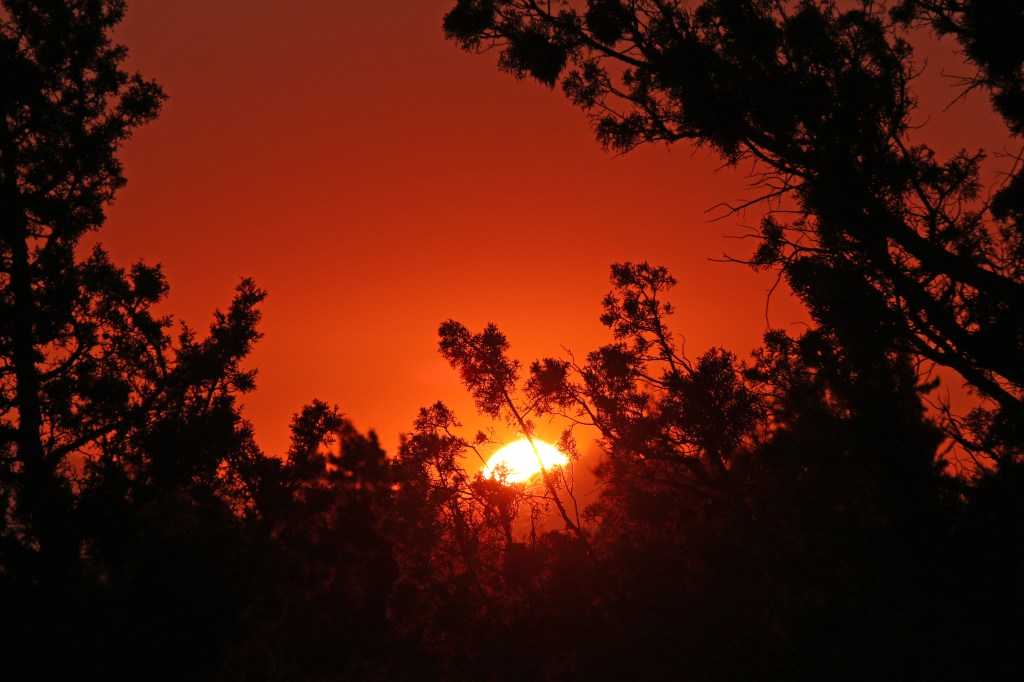
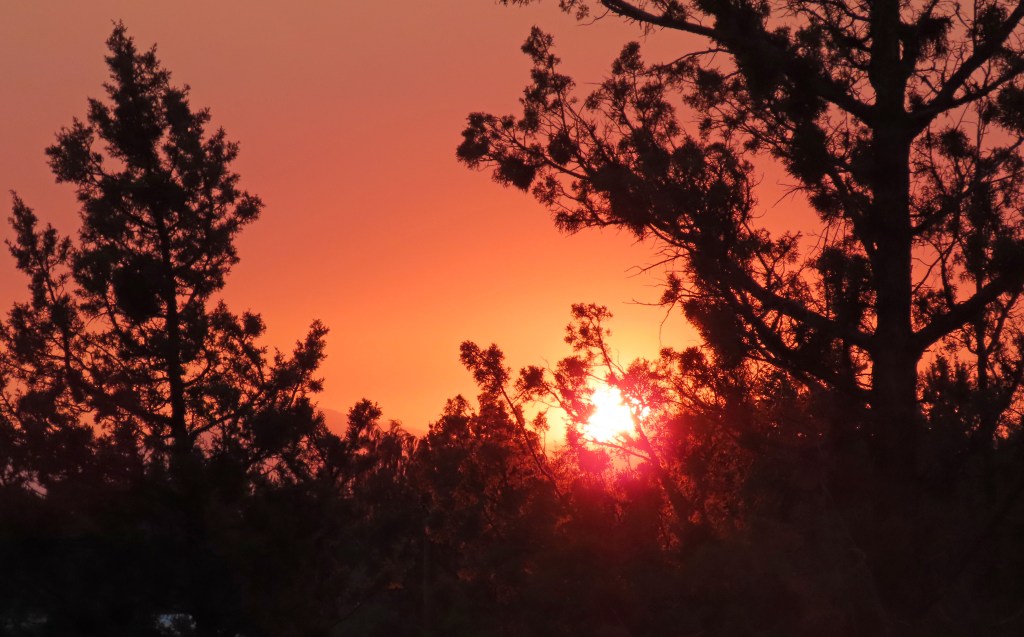
It’s a challenge to photograph great and powerful sunsets in a manner that does real justice. This area’s smokey atmosphere from wildfires is producing ongoing spectacular settings. Last evening’s caught my eye as I finished with the horses.

I hurried into the house, grabbed a couple of cameras, and began hurrying from one side of the property to another. The sun’s brightness forced me to find a position allowing for non-blinding opportunities to shoot, thus protecting the lenses of camera and naked eye.

There surely are special camera lenses that enable shooting straight-into-sun. They’re not in my world, but I wished to record the alight entire globe with surrounding lights, and just before it set. At worst, I’d capture its afterglow, and nice, but not enough.

That setting circle hovering slightly over the mountainous horizon quickly was disappearing as I hurried from one watching spot to another. I repeated many steps in order to re-check the possibilities.

I couldn’t plan for a straight-on spectacular picture, because of needing to veil the sun’s brightness. An optimal on-the-spot solution was to find appropriate tree limbs. Big problem, because available limbs either obliterated light too much or tamped it too little.

This capture, taken moments before the header shot, actually is of more globe but doesn’t appear so, because brightness needed hiding. Thus, the sun already seems partly disappeared behind a horizon line.

While relatively happy with these pictures, I’ll attempt to rise better to the challenge of capturing really-good sunsets. I’ll prepare in advance for this evening’s, and maybe be able to capture a vision more stimulating of the sunlit dreaminess.

Dear Friends: It’s about an inborn love of light, and finding ways to be “Stomping At The Savoy”. Diana

Learning Mode

Wednesday, July 14, 2021 — (In 9 days, July’s fullest moon [“Thunder”] will rise.)

Yes, he/she still is “my baby”, well nowadays part-time. The now post-fledgling flies and hunts, and two or three times daily also swishes out of the air and lands at my feet for an easy meal from mom. I’m a pushover, stocking worms and small fruits, avoiding overfeeding, and enjoying our brief encounters, this wonderful opportunity to observe a Robin’s transition into full adulthood. This one’s breast still has spots but its becoming redder. At some point, baby’s visits will stop.

I’m not a passionate gardener but should be, because this season the bird’s needs have taught me. A journey began by my sense of the importance of keeping a garden area, and wet, so baby could learn to hunt. I expanded the wet property on east into a wild section. In time, too, for once the Robin had figured out that it could fly among tree branches, it began to explore and peck on the ground.

For me, the wet expanse has provided unexpected beauty. The little garden area alongside my house is planted with flowering bought items. East and among rocks are native plants, and a few revived leftovers from the former homeowner. Besides suddenly loving the east side of my house, I might revive a neglected weedy section on the west side.

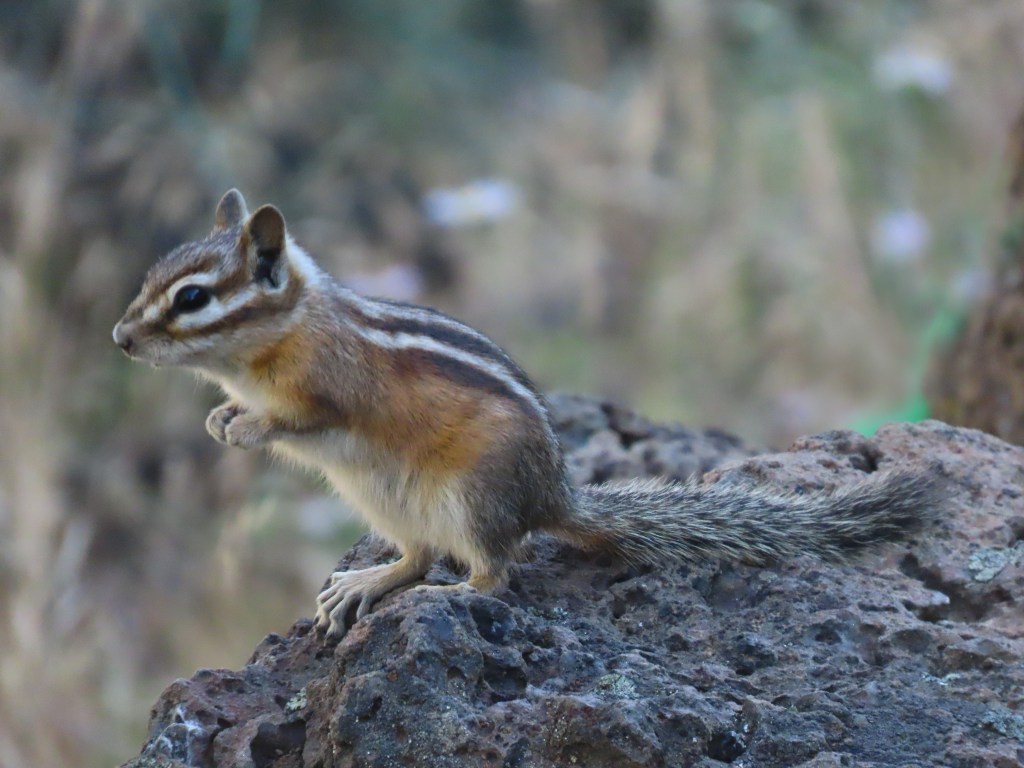
Moreover, the east side invites critters that I’ve been missing. The bird population has increased. Lizards that anyway always are residents now are joined by chipmunks. The other day, I spotted a young Rockchuck (Marmot), which didn’t make me happy but its attraction to the environment makes sense.

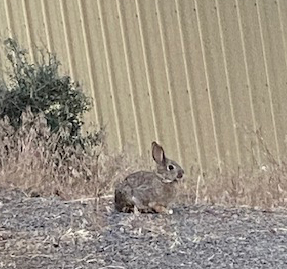
Here’s a young visitor that although destructive is pleasing, for after all, what kid didn’t love Thumper!

Dear Friends: How an orphaned baby bird encouraged my routines and interests to expand. Diana

Distance Is Relative

Forest trail

Tuesday, July 13, 2021 — (In 10 days, July’s fullest moon [“Thunder”] will rise.)

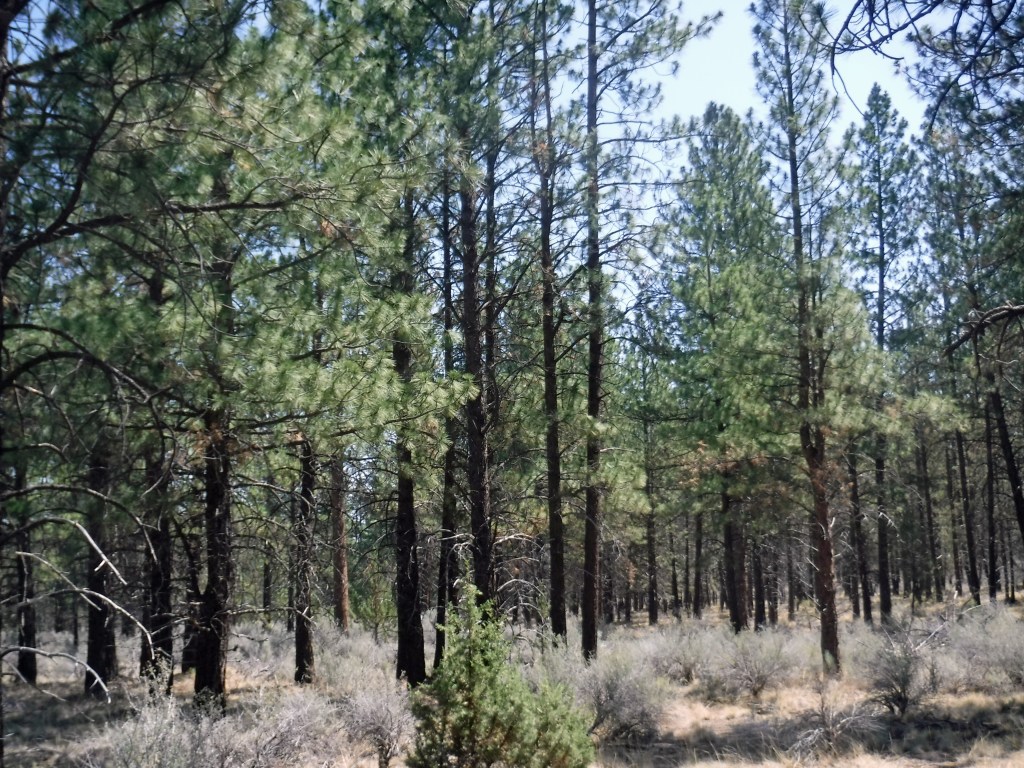
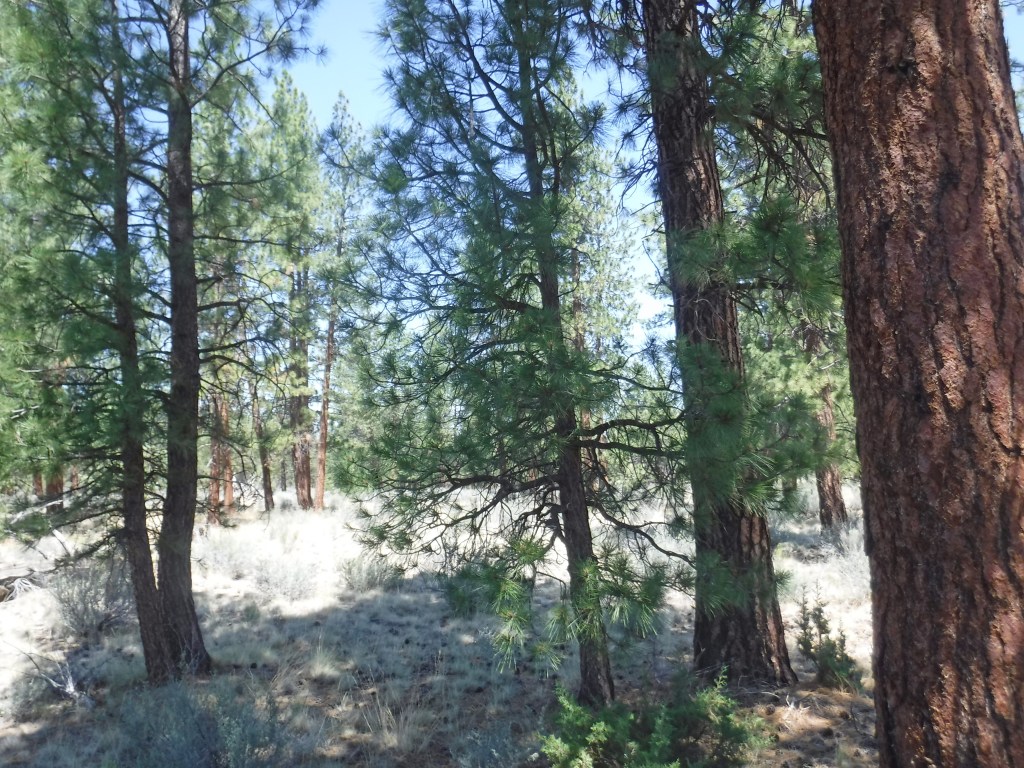
The header photo is a quick snap of the trail-area in which my horses, dogs, and I traveled yesterday. It’s a lovely, shady experience out among big trees. Heat loving wildflowers that have popped up offer captivating spots of color.

Our ride was a little longer than planned. Soon after we started, Rosie (the horse I rode) spotted a shining white side of a big truck, parked ahead about a hundred feet and directly on our trail. Rosie doesn’t like objects that didn’t belong, and instantly, she tried turning us around.

Correcting Rosie is too hard when also I’m holding the rope of our accompanying riderless horse (Sunni). Relatively helpless with my hands full, I let Rosie alter the route to our forest-trail destination.

So, my dogs instead of running two-to-three miles had to cover over four. Still, not too bad, as none began lagging or limping. Otherwise, everything was good in the air. Aside from the little visual bump, Rosie couldn’t have been better. Oddly, Sunni seemed easier to lead.

To clarify about leading Sunni, she’s always very willing and in good mood. She’s easy to lead, except for taking any opportunities to grab at grass. That makes Rosie envious, and I keep us all moving by working to keep Sunni moving.

Also, I count dogs. And, I listen for a big cowbell hanging from the halter of my donkey Pimmy. If there’s no distant clanging, we in the lead pause. The dogs hang out, the horses graze, and finally, Pimmy and her bell catch up.

Our ride was nice, and as we returned, I noticed far ahead a shine from the white slab. Wanting to avoid talkback from Rosie, I moved us toward that longer route.

That truck! Any other day, our ride could have been, as planned, only two-to-three miles, all in forest.

Dear Friends: Rosie’s right, it’s rude to park a motorized large vehicle on a popularly-used trail. Diana

Getting Out

Doug Coats driving Reba

Monday, July 12, 2021 — (In 11 days, July’s fullest moon [“Thunder”] will rise.)

I’m struggling about taking along dogs when I’m horseback riding.

My friend Bill, a physician who loves dogs, points out dangers to dogs from heat exhaustion. We’re into a stretch of intense hot weather that’s almost overpowering.

Another worry about dogs and horse trails is that my dogs are showing signs of early arthritis. That’s not good in relation to miles of running.

Last week while riding with the dogs, there were problems with my smallest, Louie. He clearly didn’t want to be on the trails.

The next time out, and that time riding without dogs, I enjoyed not having to keep track of them. I also missed their companionship.

It’s interesting that the dogs accompany me okay on hikes. A good hike can cover one- to two miles. While I’m walking, they’re running, and I wonder what’s the difference?

That suggests a new plan. Keep the horseback rides shorter and keep them cooler.

Today, I’ll include the dogs and go for a shorter ride. The forest has trail loops that can average two or three-miles. If the horses just walk, my dogs shouldn’t find moving more hard than hiking with me. If today’s ride entirely is among trees, it’ll naturally be cooler than using the dusty roadways.

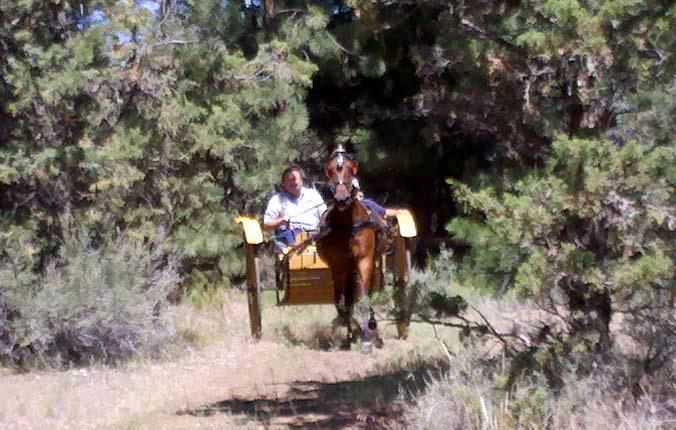
A major goal for long rides has been to exercise the horses. That’s not so necessary if horses are being driven, which is great exercise. As part of this new plan, in a week they’ll receive shoes and I’ll start to drive them.

Horses become arthritic, too. This season I’ll keep a close eye on mine, especially as they’re pulling.

I have arthritis, too.

Nonetheless, all of us must keep getting out, keep going, and keep pacing ourselves appropriately.

Dear Friends: Having horses is a no-brainer, they force householders to stay active. Diana

Post Infancy

Sunday, July 10, 2021 — (In 12 days, July’s fullest moon [“Thunder”] will rise.)

A pleasant break in the heat this early morning. Last evening, no sign of little “Bird” flying-in for its “before-dark meal” and a night in the garage. Bird spent last night outside. Today as I made coffee, a familiar chirp from the garden drew me out and Bird flew to me, landing with a wide-open mouth. A single worm was as much as Bird could consume, so on its own, already had found eats.

Bird fully has fledged.

I understand it takes Robin babies about two weeks to leave the nest (fledge). After that, they usually stay with their parents another two or three weeks, during which the father continues feeding them while the mother starts incubating a new brood of eggs.

All this began when I heard this baby’s parents screaming at it during an evening. They still were screaming the next morning. I looked for what was causing the ruckus and saw their baby on the ground, and among my dogs in a fenced area. The parents probably weren’t safe to feed baby. It was weak and by a miracle unbothered by my dogs. It seemed helplessly vulnerable.

I picked it up, moved it to a safer area, but still it was very weak. A deciding factor was that a large raptor circled slowly overhead. I adopted the baby Robin. Almost right away, its parents dropped responsibility for its welfare. Little Bird quickly responded to its new primary provider and was comfortable in my hands. Baby learned my voice and physical mannerisms, it grasped our care and feeding routines.

Over our days together, just short of three weeks, Baby has thrived. From here on we’ll probably interact directly less. This morning, Baby was happy having its morning worm but didn’t seem very needy.

Thinking back at how I figured out what to do about a semi-helpless infant bird amazes. I knew pet stores carry live food, knew baby birds could consume mealworms. But I learned that nowadays live pet foods are in short supply. The current lasting intense heat wave interferes with shipping living creatures and the pandemic has forced many bait breeders out of business. I also learned that bait shops still carry live earthworms. Baby has thrived on night crawlers.

An important bit of awareness came from my habit of watching adult Robins as they hunt. I consider them “The Border Collies of birds” and enjoy seeing them pausing to listen before dashing to capture. Often, they dunk a capture into a water source before carrying it to babies. That’s a way of hydrating that I copied. All Baby’s food bits were sloshed through water before entering the welcoming beak.

A little research reveals that Robins don’t eat seeds but do hunt for fruit. That encouraged me to augment the worm protein with freshly chopped blueberries and blackberries.

Over this stretch of time, of my not working away from home, I could attend to an infant’s needs. The bird and I developed a close relationship offering me an opportunity to be a mom and bird one to thrive. Beautifully, everything is working out as Nature directs and on its timeline.

Dear Friends: In my mind always these couple of weeks will be treasured moments. Diana

Summer Starting

Saturday, July 10, 2021 — (In 13 days, July’s fullest moon [“Thunder”] will rise.)

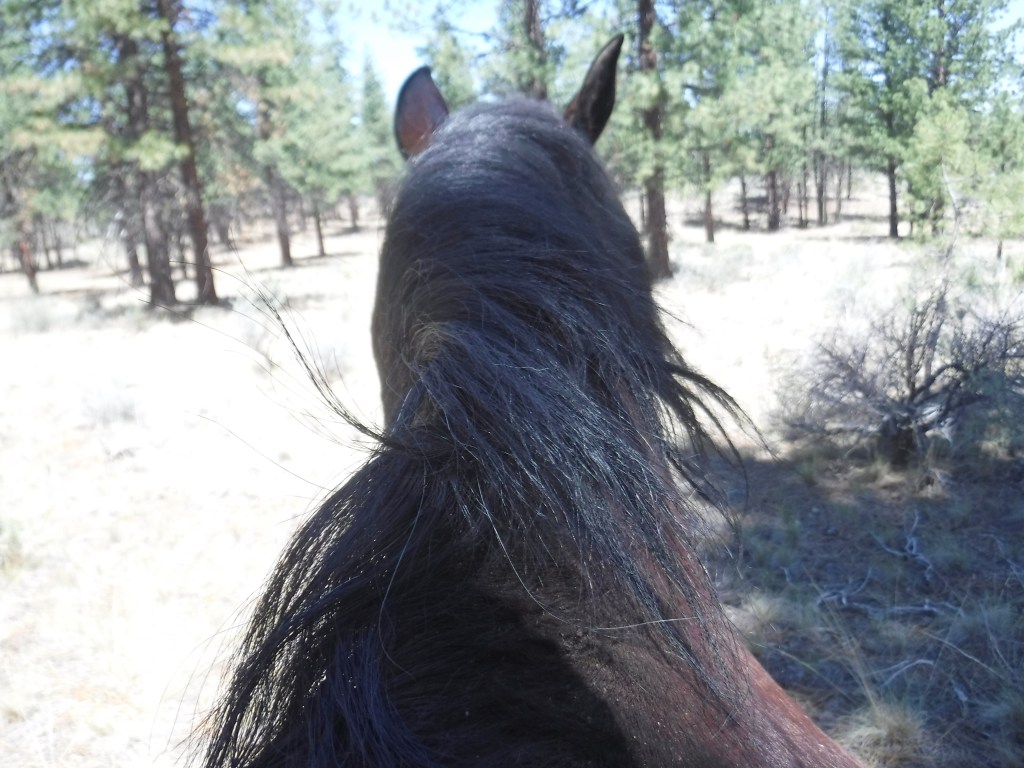
I’m entering into a new season of horseback riding in the forest. The weather has been brutally hot and on most days I observe few, if any, signals of other humans nearby and also battling heat. As long as the horses walk among trees, it’s pleasantly cool out riding, and pretty views invite exploration.

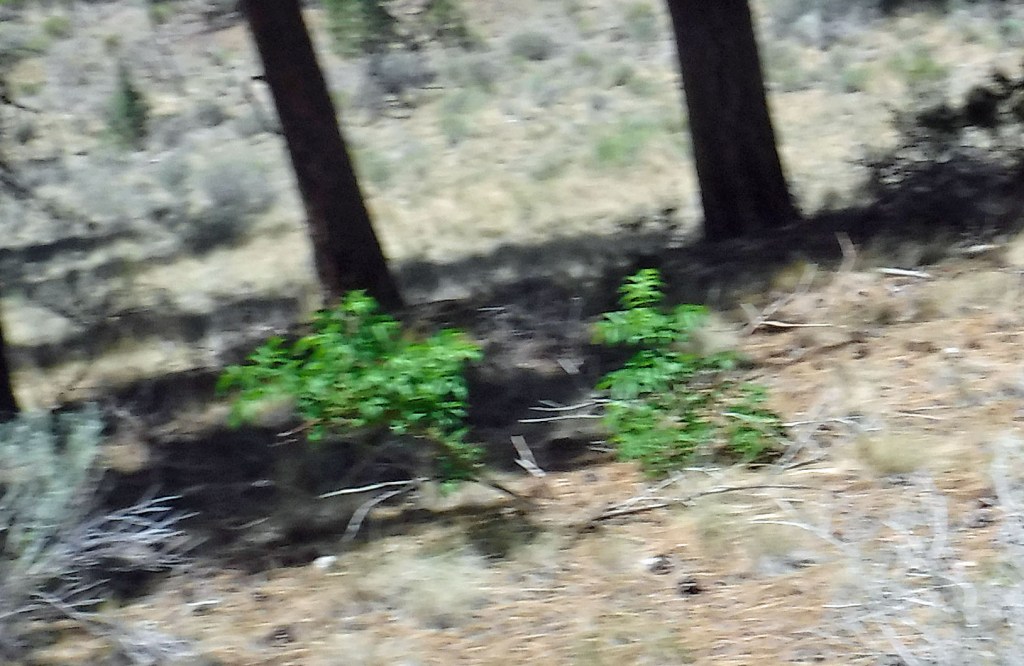
One of my first objectives has been finding my beloved wild Blue Elderberry. As last summer wound down, the deer completely stripped that shrub’s earlier abundant leafs and gorgeous white flowers. I had to check and be assured of regeneration. What a delight to find it with healthy leafing but no blooms yet.

Blue Elderberry, an Oregon native shrub, is valuable for wildlife, with cover and nesting for birds and small mammals. It has edible fruit and flowers that insects pollinate and has nectar for hummingbirds. Squirrels and other small mammals eat its fruit.

Excuse this capture, crooked and fuzzy, taken as I worked also to hold still two grass-grabbing horses.

,

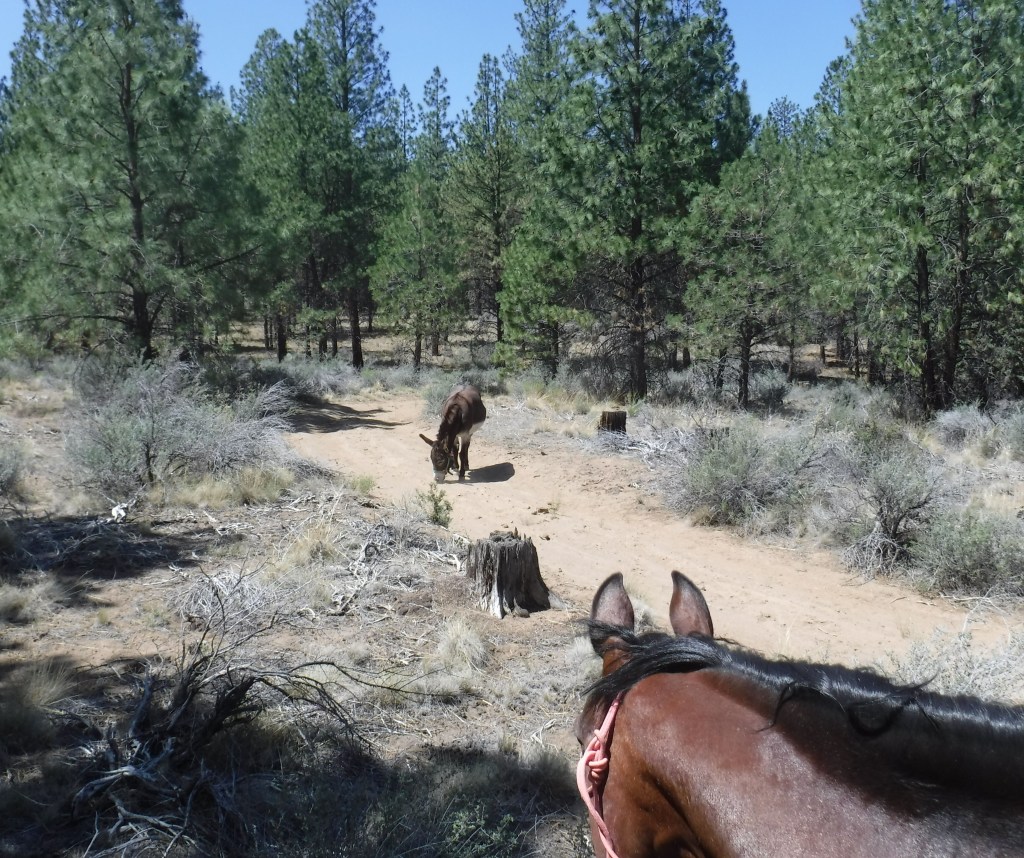
Pimmy usually comes along, and follows her horses.

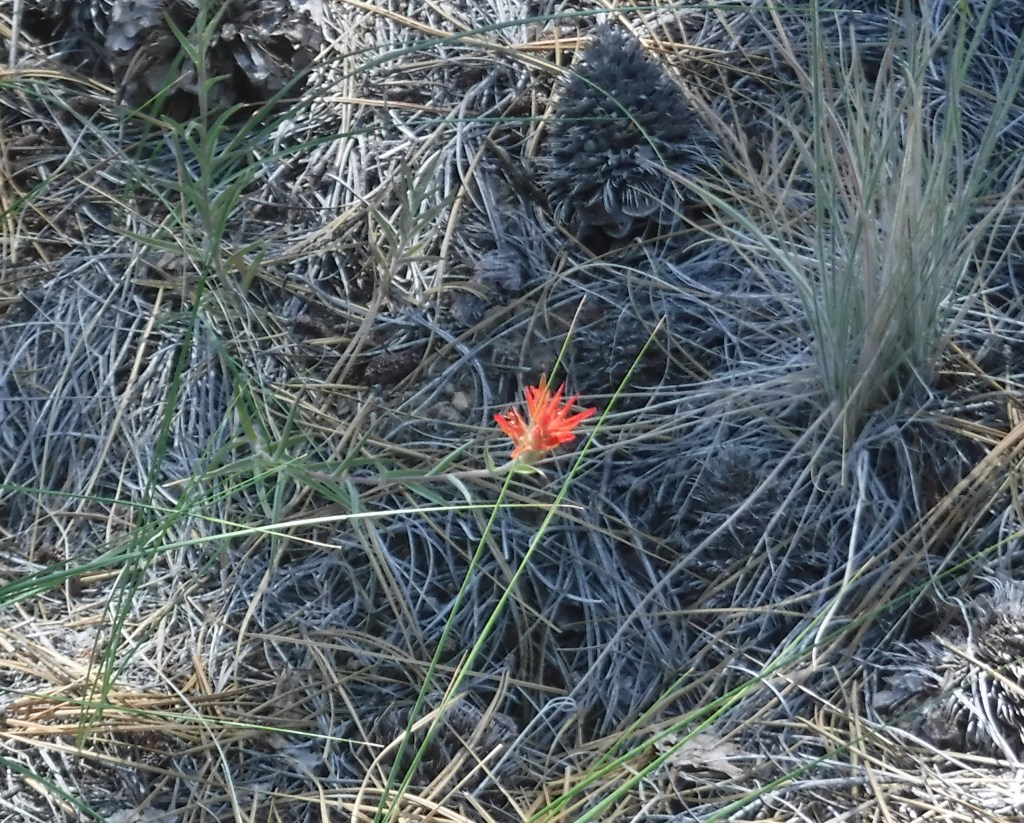
Many beautiful wildflowers are popping. A favorite is Indian Pink, one of the most attractive wildflowers. An established healthy Pink will have emerald green leaves and upward-facing, brilliant-red tubular flowers that flute-out. Here’s the lone bloom we came across.

Most often in the forest, I’m managing two horses and a donkey. When next another rider is along, I’ll take a camera to photograph wildflower varieties. If someone else holds my horse, it’s easy to dismount, capture, and again climb on. Many forest areas are eye-fillers, with color and beauty.

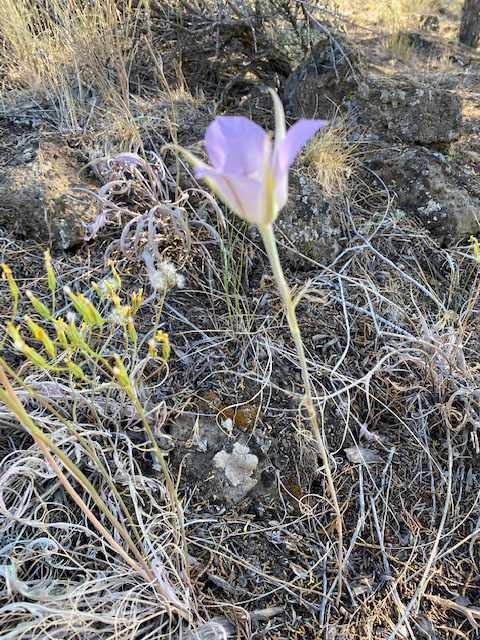
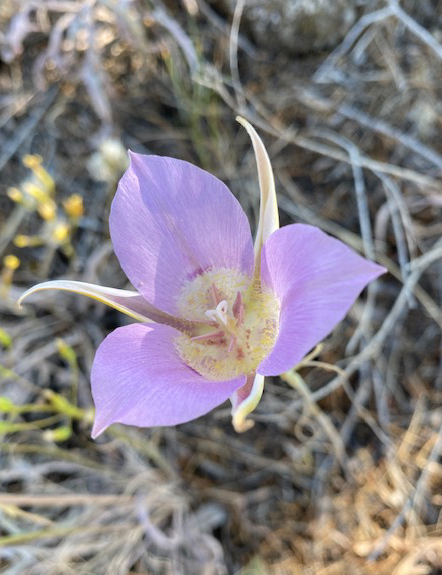
Right here, too, at home surprises pop up. Annually, a joyous moment is spotting an earliest seasonal Sego Lily. It’s a bulbous perennial that grows in the Western United States. Here’s my discovery of this summer’s earliest bloomer.

I’ll eagerly anticipate upcoming wild Elderberry blooms!

Dear Friends: Also noting that “Bird” still hangs nearby, always hungry, communicating, delightful. Diana