Getting Out

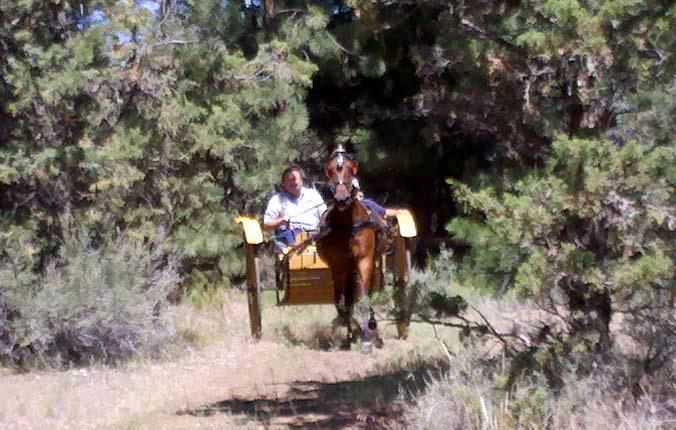
Doug Coats driving Reba

Monday, July 12, 2021 — (In 11 days, July’s fullest moon [“Thunder”] will rise.)

I’m struggling about taking along dogs when I’m horseback riding.

My friend Bill, a physician who loves dogs, points out dangers to dogs from heat exhaustion. We’re into a stretch of intense hot weather that’s almost overpowering.

Another worry about dogs and horse trails is that my dogs are showing signs of early arthritis. That’s not good in relation to miles of running.

Last week while riding with the dogs, there were problems with my smallest, Louie. He clearly didn’t want to be on the trails.

The next time out, and that time riding without dogs, I enjoyed not having to keep track of them. I also missed their companionship.

It’s interesting that the dogs accompany me okay on hikes. A good hike can cover one- to two miles. While I’m walking, they’re running, and I wonder what’s the difference?

That suggests a new plan. Keep the horseback rides shorter and keep them cooler.

Today, I’ll include the dogs and go for a shorter ride. The forest has trail loops that can average two or three-miles. If the horses just walk, my dogs shouldn’t find moving more hard than hiking with me. If today’s ride entirely is among trees, it’ll naturally be cooler than using the dusty roadways.

A major goal for long rides has been to exercise the horses. That’s not so necessary if horses are being driven, which is great exercise. As part of this new plan, in a week they’ll receive shoes and I’ll start to drive them.

Horses become arthritic, too. This season I’ll keep a close eye on mine, especially as they’re pulling.

I have arthritis, too.

Nonetheless, all of us must keep getting out, keep going, and keep pacing ourselves appropriately.

Dear Friends: Having horses is a no-brainer, they force householders to stay active. Diana

Post Infancy

Sunday, July 10, 2021 — (In 12 days, July’s fullest moon [“Thunder”] will rise.)

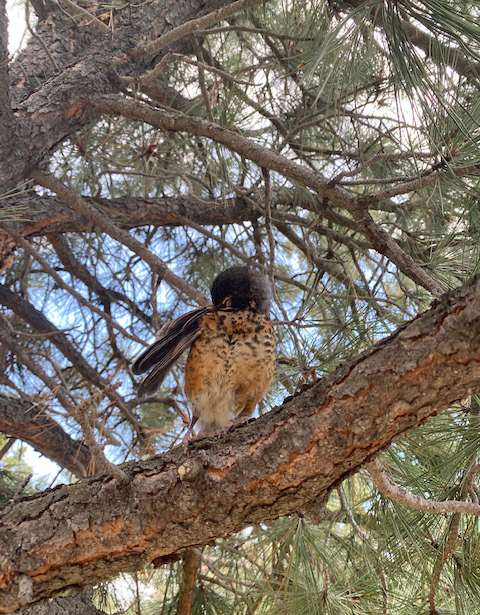
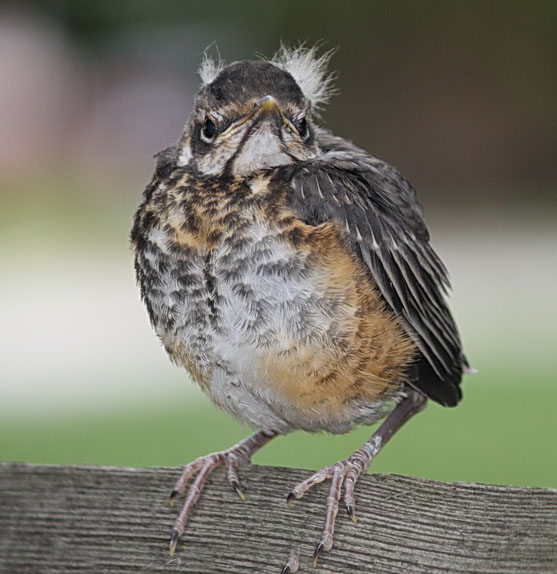
A pleasant break in the heat this early morning. Last evening, no sign of little “Bird” flying-in for its “before-dark meal” and a night in the garage. Bird spent last night outside. Today as I made coffee, a familiar chirp from the garden drew me out and Bird flew to me, landing with a wide-open mouth. A single worm was as much as Bird could consume, so on its own, already had found eats.

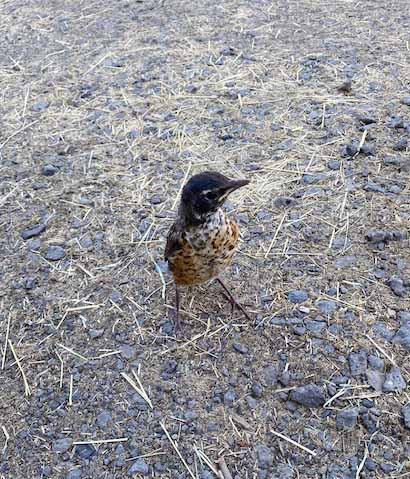
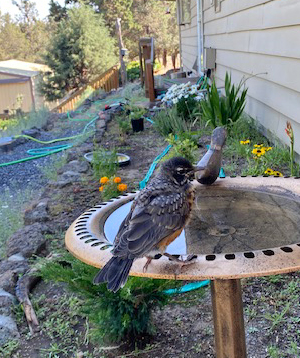
Bird fully has fledged.

I understand it takes Robin babies about two weeks to leave the nest (fledge). After that, they usually stay with their parents another two or three weeks, during which the father continues feeding them while the mother starts incubating a new brood of eggs.

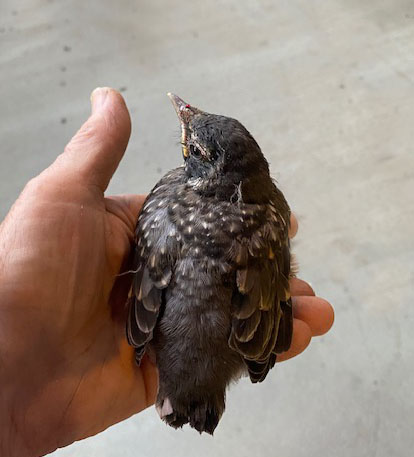
All this began when I heard this baby’s parents screaming at it during an evening. They still were screaming the next morning. I looked for what was causing the ruckus and saw their baby on the ground, and among my dogs in a fenced area. The parents probably weren’t safe to feed baby. It was weak and by a miracle unbothered by my dogs. It seemed helplessly vulnerable.

I picked it up, moved it to a safer area, but still it was very weak. A deciding factor was that a large raptor circled slowly overhead. I adopted the baby Robin. Almost right away, its parents dropped responsibility for its welfare. Little Bird quickly responded to its new primary provider and was comfortable in my hands. Baby learned my voice and physical mannerisms, it grasped our care and feeding routines.

Over our days together, just short of three weeks, Baby has thrived. From here on we’ll probably interact directly less. This morning, Baby was happy having its morning worm but didn’t seem very needy.

Thinking back at how I figured out what to do about a semi-helpless infant bird amazes. I knew pet stores carry live food, knew baby birds could consume mealworms. But I learned that nowadays live pet foods are in short supply. The current lasting intense heat wave interferes with shipping living creatures and the pandemic has forced many bait breeders out of business. I also learned that bait shops still carry live earthworms. Baby has thrived on night crawlers.

An important bit of awareness came from my habit of watching adult Robins as they hunt. I consider them “The Border Collies of birds” and enjoy seeing them pausing to listen before dashing to capture. Often, they dunk a capture into a water source before carrying it to babies. That’s a way of hydrating that I copied. All Baby’s food bits were sloshed through water before entering the welcoming beak.

A little research reveals that Robins don’t eat seeds but do hunt for fruit. That encouraged me to augment the worm protein with freshly chopped blueberries and blackberries.

Over this stretch of time, of my not working away from home, I could attend to an infant’s needs. The bird and I developed a close relationship offering me an opportunity to be a mom and bird one to thrive. Beautifully, everything is working out as Nature directs and on its timeline.

Dear Friends: In my mind always these couple of weeks will be treasured moments. Diana

Summer Starting

Saturday, July 10, 2021 — (In 13 days, July’s fullest moon [“Thunder”] will rise.)

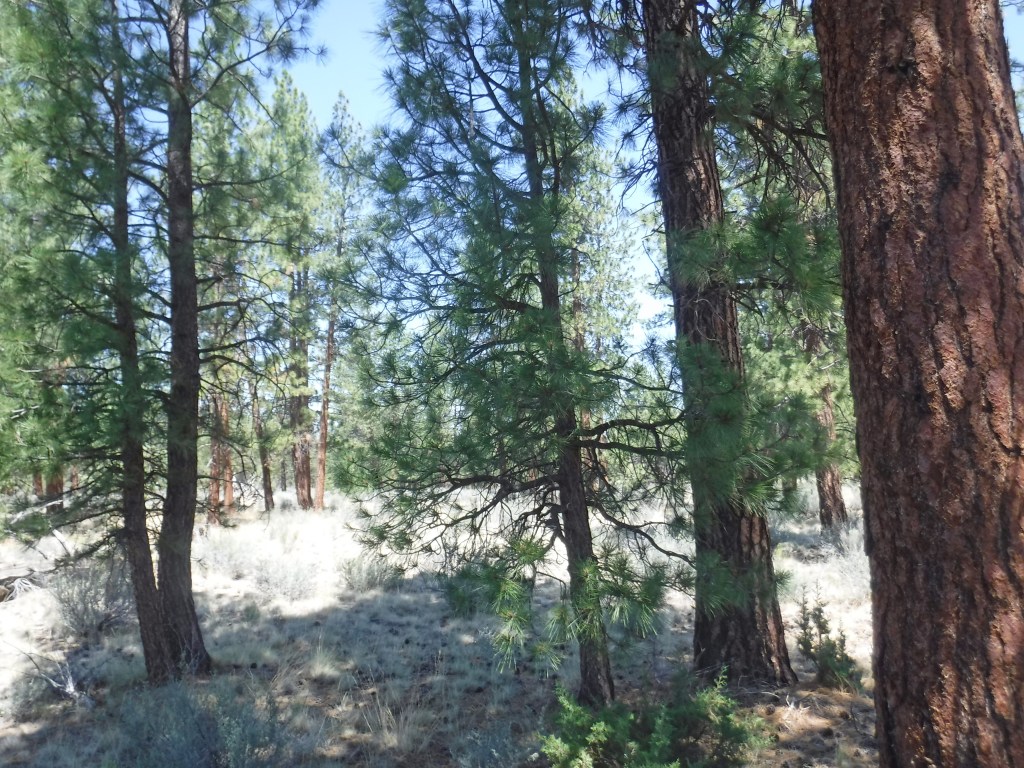
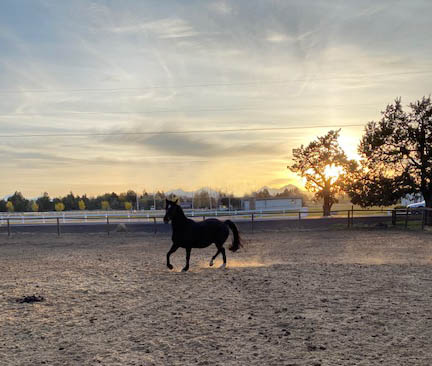
I’m entering into a new season of horseback riding in the forest. The weather has been brutally hot and on most days I observe few, if any, signals of other humans nearby and also battling heat. As long as the horses walk among trees, it’s pleasantly cool out riding, and pretty views invite exploration.

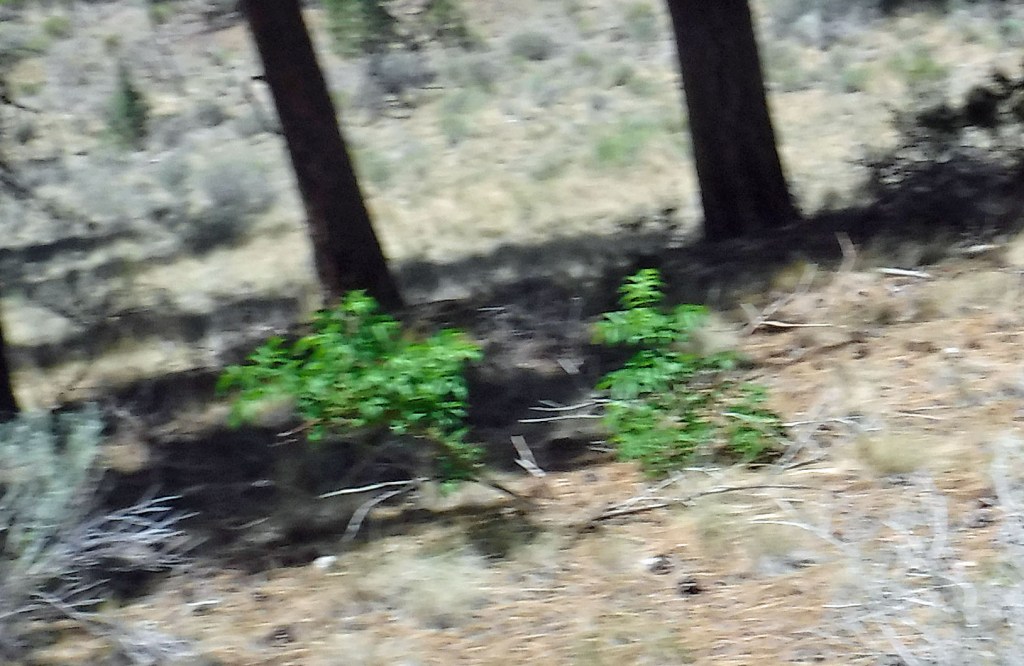
One of my first objectives has been finding my beloved wild Blue Elderberry. As last summer wound down, the deer completely stripped that shrub’s earlier abundant leafs and gorgeous white flowers. I had to check and be assured of regeneration. What a delight to find it with healthy leafing but no blooms yet.

Blue Elderberry, an Oregon native shrub, is valuable for wildlife, with cover and nesting for birds and small mammals. It has edible fruit and flowers that insects pollinate and has nectar for hummingbirds. Squirrels and other small mammals eat its fruit.

Excuse this capture, crooked and fuzzy, taken as I worked also to hold still two grass-grabbing horses.

,

Pimmy usually comes along, and follows her horses.

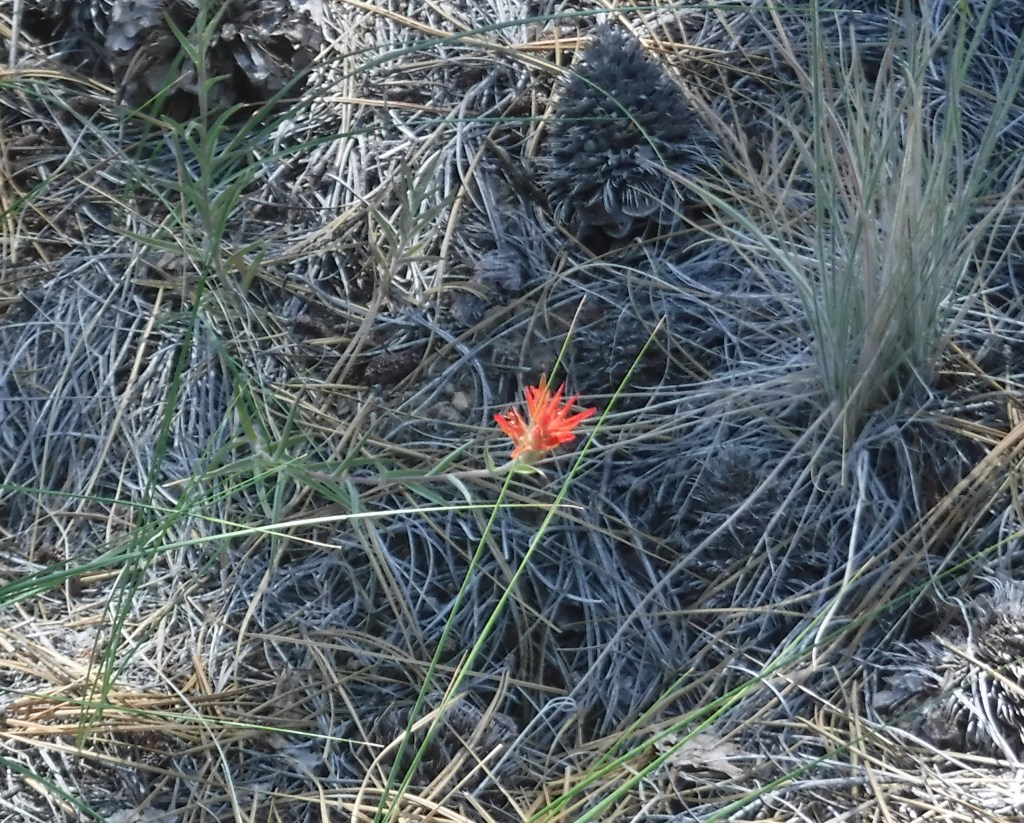
Many beautiful wildflowers are popping. A favorite is Indian Pink, one of the most attractive wildflowers. An established healthy Pink will have emerald green leaves and upward-facing, brilliant-red tubular flowers that flute-out. Here’s the lone bloom we came across.

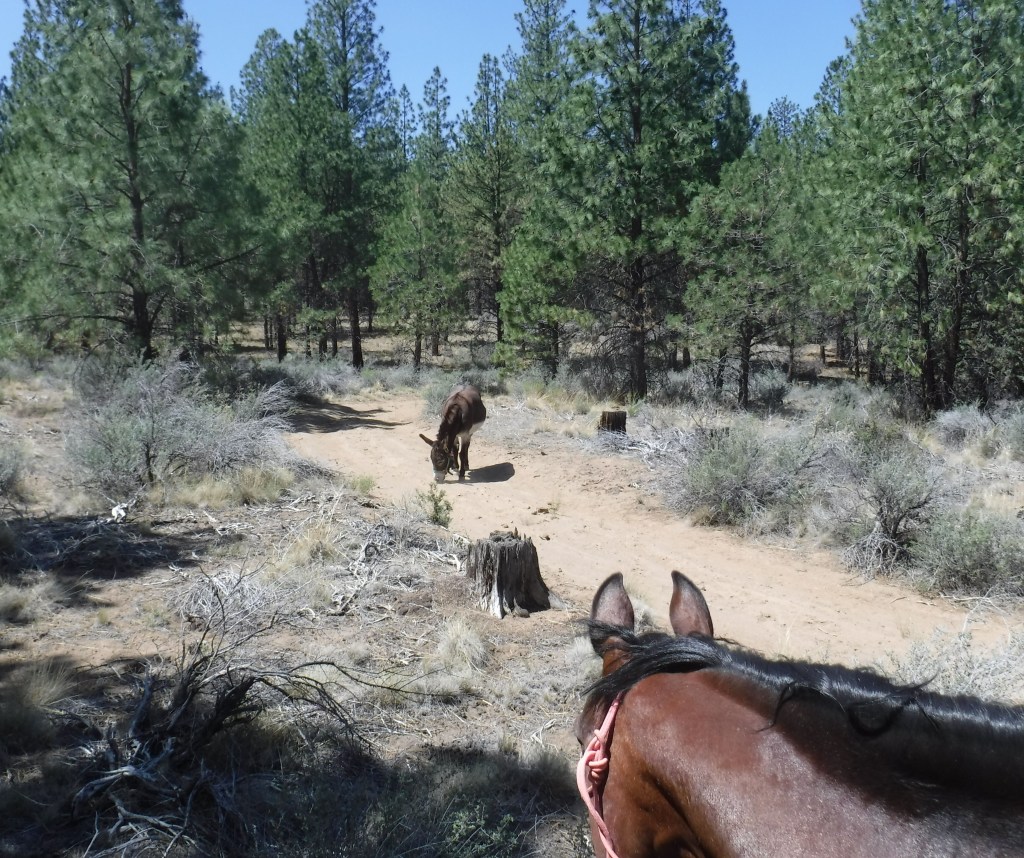
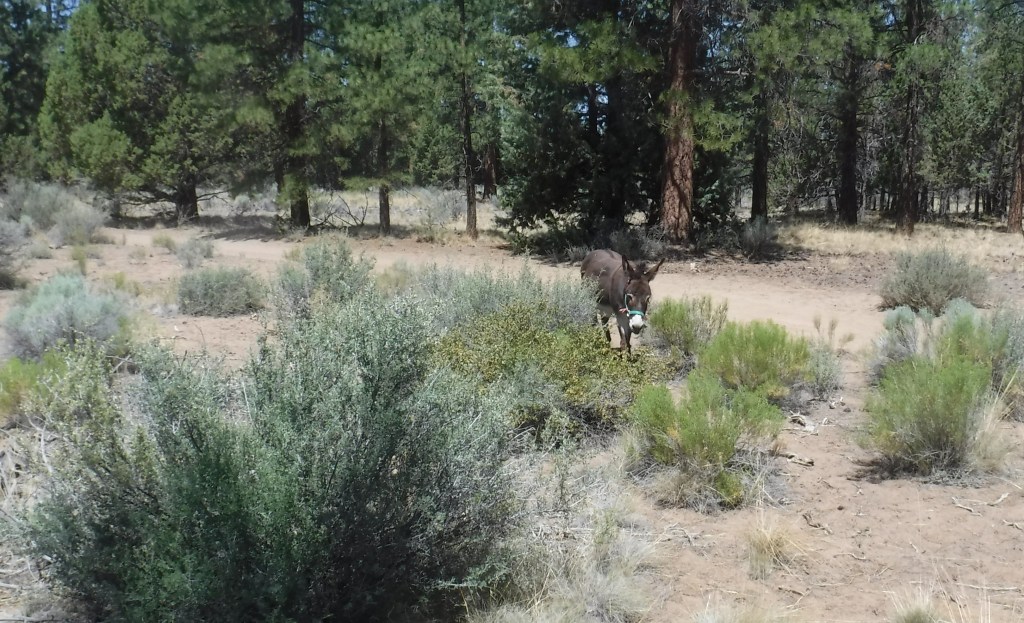
Most often in the forest, I’m managing two horses and a donkey. When next another rider is along, I’ll take a camera to photograph wildflower varieties. If someone else holds my horse, it’s easy to dismount, capture, and again climb on. Many forest areas are eye-fillers, with color and beauty.

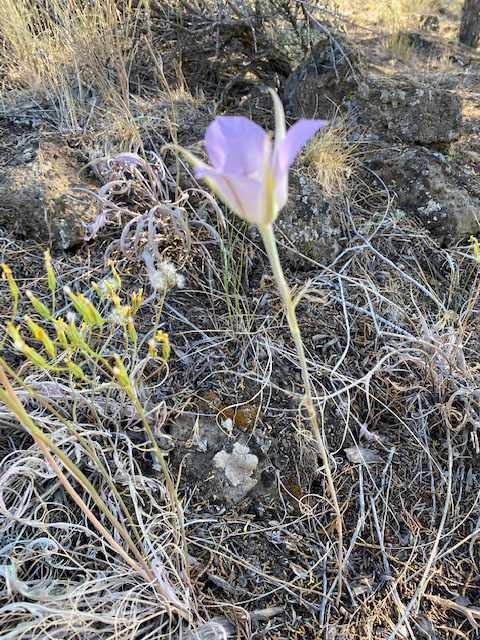
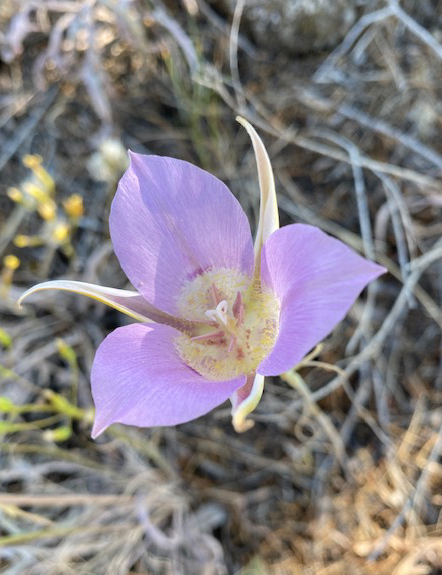
Right here, too, at home surprises pop up. Annually, a joyous moment is spotting an earliest seasonal Sego Lily. It’s a bulbous perennial that grows in the Western United States. Here’s my discovery of this summer’s earliest bloomer.

I’ll eagerly anticipate upcoming wild Elderberry blooms!

Dear Friends: Also noting that “Bird” still hangs nearby, always hungry, communicating, delightful. Diana

A Heart “Knows”

Friday, July 09, 2021 — (In 14 days, July’s fullest moon [“Thunder”] will rise.)

Week three of “the fledgling saga” begins.

During week one, the rescued baby Robin lived in my garage, housed in a cage, received food often.

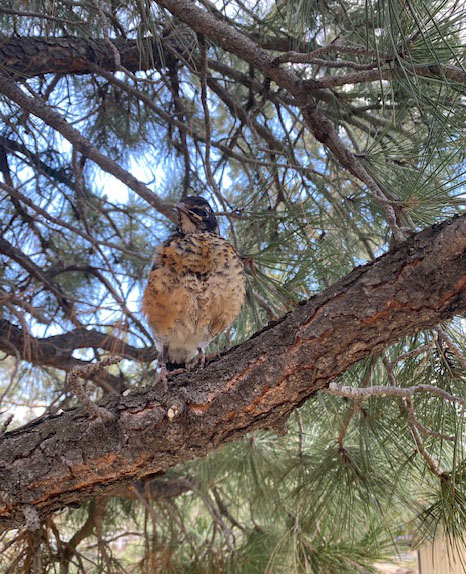
During week two, after each early feeding, I would set Robin into my favorite pine and on a low branch. There it slept until noticing my presence, when it would make baby squeaks. Oddly, I recognized them as from my hungry baby. I would lift Bird from its branch and feed and return it. Or I’d let it roam in the garden (it didn’t try flying) to peck around. Bird discovered a water pool, took its first independent drink, had a vigorous bath. Because it yet didn’t fly, Bird was returned to the Pine branch.

After a couple of days, Bird began making fluttery lifts, flying upwards to higher branches and finding its way downwards for feedings when I appeared. After a couple of days, Bird could really fly, shooting from the tree and landing at my feet. Always hungry, now it gobbled two whole night crawlers and chopped fruit (blueberries, blackberries, apple).

Meanwhile, my cat Maxwell to his disappointment has been forced to stay inside. Neighborhood cats knowing Max’s territory don’t appear during daylights, but do roam here nights. (Max through a window sputters and screams at occasional intruders). As for the Robin, after its last feeding just before darkness, I keep it overnight, flying freely, in the garage. In the mornings after being fed, it’s re-set on the low pine branch.

Every few hours the Robin and I communicate. I walk around saying softly, “Bird?”, and after waiting, maybe again then, “Bird, Bird?” Almost instantly I pick baby’s sounds from those of resident Robins. In another moment Bird flies to me wanting a meal.

Yesterday, I saw Bird flying strongly from its pine directly over to a far juniper. That afternoon, I walked in the garden area calling, but didn’t hear Bird. Maybe Baby had flown away and was gone. Aside from feeling slightly empty, that seemed okay.

Yet, something nagged me. Earlier on returning from horseback riding and while down at the barn, I seemed to hear my baby’s sounds. But surely, not down there! Later, when Baby didn’t respond in the garden area, I wandered toward the barn, calling, “Bird, Bird?”

From a tall tree behind the barn streaked a bird, and my Robin landed in front of me.

Last evening, Bird consumed three fat night crawlers (avg. 8″ each), with fruit. This morning Bird waits in the garage for breakfast. Then it’ll go to the pine branch.

Bird is growing, still has baby spots over its reddish breast. Changes occur rapidly and hours make a difference. Today, it’ll show new strengths and behaviors. Maybe Bird will become harder to find on this property. I worry that it doesn’t know about cats or predatory birds, and hope for its safety as independence grows.

Besides having two weeks of fun and learning, I’m amazed by the relationship between me and a baby bird. Especially a Robin! Like, who considers them particularly smart? Well, now I do.

I’m impressed, too, finding that my ear can identify one infant’s small sounds, among the many others being made by birds in our vicinity.

Today will begin week three of our learning. As long as Baby needs, I’ll feed. Nonetheless, it’ll be wonderful when my little one finally can find and pull earthworms on its own.

Baby, above all, stay safe!

Dear Friends: Whoever might have guessed that a serendipitous rescue incident would have legs! Diana

On The Trail

Thursday, July 08, 2021 — (In 15 days, July’s fullest moon [“Thunder”] will rise.)

Yesterday, I happily rode horseback in the forest with the dogs. My dogs, borderline arthritics, love running on trails. But this time my smallest, a Mini-Aussie, Louie, seemed to lag as we started out, unusual for a tough little guy who keeps up.

We took a known path that leads toward a very dim path and following it preoccupied me. The horses cooperated and we went about a mile before I noticed Louie missing. That’s never happened and so I sat waiting and calling, but no response.

Often, I discover Osix missing from trails. She just decides to stop running, turns around, and knowing how to get back to our rig goes there to hang out until we return. Sometimes she decides to rejoin us on the trail, knows where, and reappears. She’s worrisome, but knows the trails and has a track record for disappearing and reappearing.

Louie, a twenty-five pound dynamo, is a dedicated trail-runner alongside front-runner, Ranger. Yesterday was his first time missing. I let the horses graze, waited and called, but no Louie. Maybe he returned to the rig, but unable to assess probability I decided to reverse our direction to search for him.

A mile later,he suddenly appeared and was in front leading us toward the trailhead. He seemed alert, not limping, and I attempted to reverse us, to go in the opposite direction. Once again Louie lagged and seemed likely to resume missing.

We continued toward the trailhead and Louie searched ahead for shady spots where he paused and waited for the rest of us. The reality hit me that Louie is getting old, his frame has absorbed many trail miles, and sometimes it seems his hearing has taken a dip.

Ahead, when I hope to ride for miles, Louie should stay home.

In fact, all my aging dogs should run less with horses. Except for quirky Osix, each has leg-joint popping that indicates arthritis. Maybe more limited running keeps Osix’s joints healthy. Going forward, I must decide whether to take dogs and which, or leave the whole lot at home.

This only partly is about dogs, denying their expectations and the activities that give them joy. It’s more about me, having to face missing their activities and companionship on trails. We are in the middle of a sea change.

Dear Friends: Living beings are ticking clocks, regularly calling for assessing and courage. Diana

Summer Fun

Wednesday, July 07, 2021 — (In 16 days, July’s fullest moon [“Thunder”] will rise.)

Today’s temperature will be this week’s coolest. Of course, everything is relative, and today’s forecast of 95 degrees normally isn’t considered cool. But a view can change after days having temperatures averaging 100+ degrees.

I dream of horseback riding in a forest. It’s my goal for this morning. Starting to ride in July is late, but our long stretch of intense heat has discouraged horse hauling, and even riding among trees.

Meanwhile, I’ve regularly exercised the horses “on the long lines”. Don’t ask why it might have seemed better, standing in the heat and working with them, than hauling and riding. I just did that.

The forest has places I yearn to find again. There’s the Greenery, the Blue Elderberry, and the partially hidden old horse trails that seasonal hunters use these days.

Once upon a time, and really not very long ago, this area had many horseback riders who beat numerous trails among the forests’ trees. Over the last ten or fifteen years, another sort of ridership gradually has taken over established trails. Bicycles!, less expensive than horses to keep and haul. Bike riders have altered or ignored old horse trails, and now some trails are unrecognizable, others forgotten.

Last year, my horses and I undertook a mission of old horse trails rediscovery. I hoped to map dim trails we found but didn’t have a source for software easy enough for me to use in creating maps. This year, I’ll try again to achieve that goal. It’s fun but not really important.

What’s important is being out there, and riding!

Dear Friends: Thankfully it’s real, still having horses, despite space shortages and increasing costs. Diana

End Tale

Tuesday, July 06, 2021 — (In 17 days, July’s fullest moon [“Thunder”] will rise.)

The baby Robin is flying! But doesn’t achieve the height necessary to reach a tree branch. This tyke is excited, loves marching over ground wherever its little legs may go. I’m concerned about safety and so caged the bird for another overnight. Today I’ll look for progress in its flying.

Time is everything in a bird’s development. For days this bird could consume an entire night crawler only if it were offered in small pieces and poked down its throat. Suddenly yesterday, it in-took a whole crawler by sucking. I didn’t know birds could suck, and this one consumed with amazing determination its highly-objecting victims. I am helping by pointing a crawler into baby’s mouth, but dramatically a few such meals are increasing the Robin’s capability.

By today and having gained strength, the Robin might fly more confidently and actually achieve height.

Nature’s timing amazes. From hatch to fledgling, after 21 days of growing, most baby birds safely are able to leave the nest, function on their own. Maybe Robin parents conduct some post-nest training in flying and hunting. Every summer, I see local-resident Ravens during post-nest weeks working with youngsters, teaching about floating on air currents, finding water, and much more less visible to humans.

Among newborns, some infants are weaker, even a “runt of the litter”. Common knowledge is that parents won’t take care of too-weak babies. Some baby birds might be able to fight for food but are slower to develop, like the one I found.

I found this baby on the ground with parents screaming and probably encouraging it to fly. The tiny bird appeared helpless, didn’t try to escape being lifted, opened wide its mouth for food. Maybe it hadn’t managed to eat enough while in the nest. Regardless, a week of care has transformed it into a little dynamo.

Maybe this bird will stay around, or leave and return in the future, or fly high to be gone forever. Today should be our last together, but for always this little Robin has a place in my heart.

Dear Friends: Offering closure to friends following closely this bird’s and my progress. Diana

Bye-Bye Baby

Monday, July 05, 2021 — (In 18 days, July’s fullest moon [“Thunder”] will rise.)

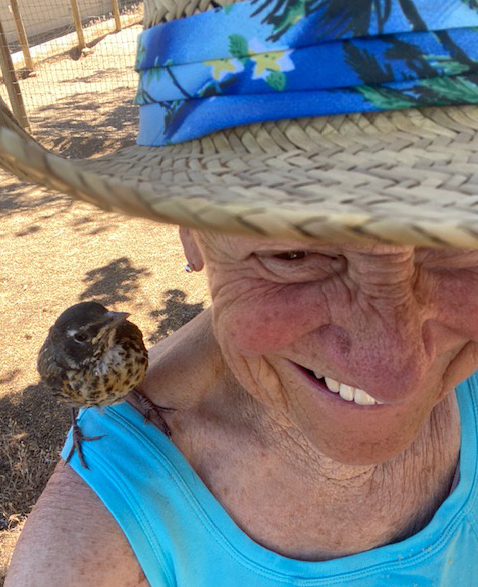
The rescued fledgling in my care might be ready to fly. Assisted by flapping wings, it escapes its cage and lands on my shoulder where it enjoys riding. Its wings assist another hop, from shoulder to finger. It knows the signals asking for a transition onto my finger.

Earlier today, we were outside (in lovely cool weather!) listening to resident robins. This little one, alert to all sounds, made bunches of small chirps (probably its nest voice) but didn’t attempt to leave my finger.

Later today, we’ll do a few bird-tossings and maybe achieve flight.

I’ve enjoyed several days working with this lovely bird. Besides growing stronger, it’s taught that robins are smart, fun, and affectionate. Its instincts are strong, fascinating to observe.

Rescuing a wild fledgling is a big job, time-consuming and often worrisome. I stop anything else I might be doing after every half-hour or 45 minutes to feed this bird. It always seems starving. Because of the pandemic and current live bait shortages, this baby has been getting easily accessible night crawlers. Baby’s mouth can’t take an entire crawler so I cut each into several pieces. One crawler for this baby is a satisfying meal.

A rescuer needs efficient feeding tools. I favor a curved hemostat, which grips food and simulates a parent’s pushing beak. Another tool is soft plastic tweezers which don’t grip food tightly, resulting in my having to chase worm parts (yes, they’re alive!) through bird cage bedding. It’s essential that a gentle hand is poking food into baby’s throat.

The resident robins have taught me about bird hydration. They dunk live catches into a birdbath before flying off to feed their young. I am borrowing that technique and dunk food pieces into filtered water before feeding the rescue. Providing water itself to a bird is tricky, but sometimes it seems to need a little more moisture. I use a tiny syringe to drip one or two mms into its lower beak. The bird raises its head and gravity lowers the fluid.

It’s easy to become attached to a cute, sweet little bird. This one has learned to recognize my voice, recognizes my mannerisms, and communicates back effectively. It’ll be hard watching this youngster fly away–inexperienced, wobbly, vulnerable. If all goes well, it’ll grow into a healthy adult and remain a local resident. Surely on some level, we’ll continue to feel a connection.

Dear Friends: The challenges of rescue: obtaining food, keeping a schedule, and letting go. Diana

“Mr. Sunshine”

Sunday, July 04, 2021 — (In 19 days, July’s fullest moon [“Thunder”] will rise.)

Without fully comprehending what made this video series so fixating and unable to resist it, I binge-watched all 24 episodes of “Mr. Sunshine” (one season, Korean with subtitles) on Netflix.

What’s easy to understand is its superb artistic components. Gorgeous videography, compelling soundtrack (Asian flavor with Western influence), and lead characters introduced in their childhoods by endearing young actors.

Knowing little about Korean history, and nothing about this series aside from visual and auditory attractiveness, I felt lost among its threads, but the overall beauty held me. Afterwards, I researched to understand better the story line, and after learning, became very interested in Korean history and culture.

The series plot is multi-pronged. A love story, told Asian style, passionate with little physical contact. A history story, beginning in early Twentieth Century, as Japan flexes muscle (supported by America and Great Britain) to take over Korea.

The series opened my eyes, made me want to understand more historical Korea’s people and politics.

We know modern Korea. Common knowledge begins with the Korean Conflict and the politics dividing Korea North and South. We know that today many countries influence Korean politics–current events but little else.

The Korean peninsula had settled and literate societies as early as the fourth century BCE. Gradually competing groups and kingdoms merged into a common national identity. Korea reached its near-present boundaries during the Koryo Dynasty (918-1392), from where derived the Western name “Korea”.

After invasions during the Sixteenth and Seventeenth Centuries, Korea enforced a policy of strictly limited contact with all other countries. It became abnormally isolated, or a “hermit kingdom” as Westerners knew it.

In the latter half of the Nineteenth Century the Chinese Empire declined. Western powers began to vie for ascendancy in East Asia and Korea became an object of competing interests. Japan, China, and Russia were main rivals. After Japan defeated China and Russia in war (1895-1905), it became a predominant power on the Korean peninsula.

In 1910 Japan annexed Korea as a colony, and for the next 35 years ruled the country in a manner strict and often brutal.

“Mr. Sunshine” takes place in the late Nineteenth Century, with Japan beginning to interrupt and shake up Korea’s feudal culture. The story presented is multi-faceted, about the stresses of loving much–family, culture, and tradition, in a world rapidly changing and brutal physically and psychologically.

After having done story background learning, I’ll watch again the series. It’s a beautifully presented study of post-industrial social and human conflict, about economically and politically driven post-industrial modernization, and how it was forced upon a slower economy.

Dear Friends: The “University of Netflix” is gaining ground in influence similar to “U. of YouTube”. Diana

On Bird Time

Saturday, July 03, 2021 — (In 20 days, July’s fullest moon [“Thunder”] will rise.)

It’s still here, that rescued infant Robin.

Yesterday I stood on a hill and three times tossed baby high into the air. Its wings flapped in the abundant space between toss- and landing-spots, but each try ended abruptly with a thud. The unhurt bird sat patiently until I lifted it.

Maybe it’s too young to fly, or something about the bird isn’t right. Well, it behaves normally, eats like a tiny horse, naps between feedings, and recognizes my voice. It patiently sits on my forearm to lounge in the garden, and comfortably rides an arm to barn or shop.

Over two days it has consumed two cartons of small mealworms, 10 each of giant mealworms, a few crickets, and as of this morning is finishing the last of three cartons of fishing worms. Today requires refreshing my live bait stockpiles.

A suggestion of turning weird is saving household bugs alive. I appreciate insects, they’re fun to observe and learn about. Usually I interrupt only the few genuine unwanteds. This is changing now as all air and ground insects are potential bird food, and I evaluate ease of catch-ability.

Feed me

Daily going forward, I’ll toss this baby high into the air, several times, hoping it may fly independently. Until strong enough to sail on its own, it’ll remain in care.

Meanwhile, this a happy tyke that creates a little extra work and offers lots of fun.

Dear Friends: All living beings incredibly are connected, and living reminders of this simply delight. Diana