Farewell, RBG

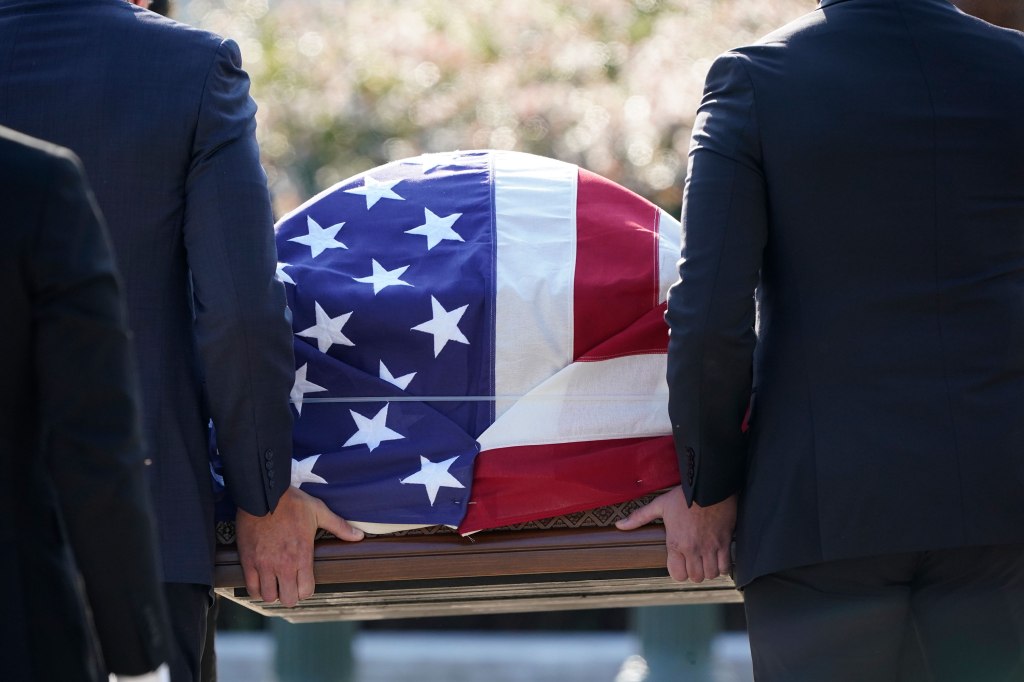
The flag-draped casket of Justice Ruth Bader Ginsburg arrives at the Supreme Court in Washington, Wednesday, Sept. 23, 2020. Ginsburg, 87, died of cancer on Sept. 18. (AP Photo/J. Scott Applewhite)

Wednesday, September 23, 2020

Watching the procession and setting of the casket carrying Ruth Bader Ginsburg at the Supreme Court. The arrival of her casket is touching, she’s carried in by some of her current and past law clerks. Once the coffin is resting, a confident woman Rabbi leads a memorial service. Chief Justice Roberts pays a tribute that’s warm, emotional, and genuine. This ceremony has me in awe and in tears.

I’m thinking about a world that Ginsburg was born into. In those days, human rights were limited or nonexistent depending on one’s gender, skin color, religious practices, income potential. During Ginsburg’s lifetime and through her legal work, people of all kinds gained more rights. She opened opportunities for higher education, better incomes, and socially-improved lives.

Many of us benefited from changes that arose in her legal work, from arguments before the Supreme Court to opinions from her seat on the Court. Social changes she worked toward have allowed for improved citizen equality, given more opportunities to hope, and granted to many better lives.

Immediately, her passing has given voice to political opposition, a high-battling that confronts citizens with an opposition incredibly ugly, reaching noise-levels rarely experienced in contemporary American history. Many citizens fear a rapid undermining of critical equalities, like personal choice and health care, that now exist for all through Ginsburg’s intelligent work.

Dear Friends: We watch, hold breaths, and hope for continuing equality in law. Diana

A Hiatus

Tuesday, September 22, 2020

Years ago, while working as a secretary in a university hospital I applied for another job in that hospital, one representing a promotion, more secretarial prestige, higher pay. I wanted the job badly but didn’t get it. During a debriefing after-the-fact, my interviewer said I’d been a high contender and was “a good citizen”. His odd comment made me wonder what “good citizen” meant in that context. To this day, I’m curious about why he made the point, and right then why I didn’t question his meaning.

It stayed in my mind, “Good citizen”. After first cropping up when I was young, timid, needy, afraid to question a superior, it pops frequently into my adult mind. Again now, I look at the question and wonder. My sense is that most people behave in a good citizen context. We obey laws, don’t steal, avoid untruths, and when possible help each other. So, what’s the rub, what puts great nations in today’s social turmoils? What the heck anyway is a good citizen?

The best I come up with is that good citizenship is in a beholder’s eyes. That’s abstract of course, but narrowing its meaning requires an understanding that fundamental beliefs may differ. We all know there’s no absolute conconses about what’s most correct, for individuals, families, larger social groups, and as a whole the nation.

Let’s start by remembering that America began with a smallish group that landed in Plymouth Rock. As that group’s population increased, it laid social ground rules having to do with staying safe, keeping at bay Native Americans, and acquiring goods necessary for survival. It’s easier for smallish groups to agree on parameters and perimeters that will represent community goals and norms. It’s easier to monitor good citizenship among those who participate actively in creating the norms, they tend to behave.

We understand that the “fathers of our country” while creating the Constitution, were far-sighted and careful about their planned parameters and perimeters. They debated, compromised, and established outcomes into laws. What they didn’t and couldn’t have anticipated, are the many and amazing achievements that humans have achieved over the last 100 or so years: the industrial revolution, achievements in science and medicine, communications, transportation, and extended human-life spans that explode populations.

These days, we can’t agree on what’s right or wrong. It depends on one’s perspective in nations with multiple perspectives. Everybody has a means to support or justify his or her beliefs and positions relative to what may comprise good citizenship. Along with most others, I’ve plenty of thoughts, ideas, opinions, and firm beliefs about what’s right and wrong. In these days when arguing is a non-gainer, we often decide to watch and wait.

I take an occasional hiatus from political and social furor. Like now, I’m reading a recent publication that contains an anthology of Native Nations poetry. It’s entitled, When the Light of the World was Subdued, Our Songs Came Through, edited by Joy Harjo. Its poetry is touching, wonderful, and expresses longings for distant times–of common beliefs, bonded families, and small communities. Those times when “good citizenship” was easier to understand and could be defined.

Dear Friends: This book, caring and teaching, touches to a reader’s heart and soul. Diana

Like Clay vs. Liston!

Monday, September 21, 2020

I’m running late this morning, having spent a couple hours absorbing headlines and videos from the weekend. In the wake of Judge Ginsburg’s passing is a political dirt-fight beginning, the likes of which I’ve never witnessed. I’m learning from history that such down-dirty fighting isn’t being invented now.

As an observer (and voter!), I take for granted many of today’s social improvements. Many were initiated during the 60s, but only lately have I realized their real beginnings. Following WWII, returning fighters represented many facets of American society in regard to gender, race, and creed. All had returning needs, but by law and tradition social benefits could be (and were) doled-out differently to citizens of various status. President Eisenhower recognized this and became the first modern American leader to address social gaps. He supported equal justice under law.

In his eight years in office Eisenhower appointed five justices to the Supreme Court. His “Warren Court” worked to change the nation’s legal structures. It promoted equality,, restructured voting districts, and decriminalized laws against interracial marriage and conceptrave usage. It initiated lots of other changes, too.

The Warren Court set the groundwork that enabled young attorney, Ruth Ginsburg, to begin her lifelong focus on correcting social rights for all citizens. This beginning to her story essentially came from those social changes begun after the War, initiated by Eisenhower and extended by Johnson. Following early social changes came open opposition. It began in the Nixon era and continued under Reagan. American political social battling since has continued and become ferocious.

Some observers assert that Republicans have learned to fight America’s social battles in ways that win, and that Democrats haven’t figured out how to gain desired wins. This is a question that’s mega-interesting through our current pre-election period. Already, immediately after Ginsburg’s passing, both parties with sleeves rolled-up have dived into hard-battle.

Dear Friends: In our ringside seats, we’re riveted to the breath-taking rounds. Diana

Adjusting to Angst

Sunday, September 20, 2020

I’ve spent today’s early hours reading from the archives of major publications. Old articles, by certifiable intellectuals and great writers, on the lives and accomplishments of such as Ruth Bader Ginsburg, Bob Dylan, and A. Hitler. This variety of individuals, their lives and great social impacts, interests me. It’s complicated, and in fact, I’m behaving weirdly while at work.

My head already full of current issues related politics, climate, economy, is overburdened by our loss of Judge Ginsburg. Besides losing that fabulous American, she passed exactly when early voting begins to elect our next President. It’s another ironic twist of 2020 fate that RBG’s passing left enough time for those in power to boast how quickly they’ll replace her. If that happens before presidential voting swings into full force, it’ll influence on-the-fence voters opposing liberal laws like those supporting abortion rights and health care for all.

At work for the last couple of days, I’ve thrown myself into hard-selling products to which I’m assigned. Sample-servers do their work by standing beside a product and talking about it in parrot-like manners. They repeatedly deliver five points: (1) product’s name, (2) producer, (3) price, (4) store location, and (5), the sales pitch, “Take some home today!” Server performance is measured by continued talking and covering those five points.

Servers receive sales goals on products. There’s not high-pressure to achieve these goals, but most would like to reach them. There’s a distant promise of bonus (details unclear) upon repeatedly hitting sales goals. Some servers speak on and on to the five points, others say little unless questioned or someone in authority watching. I generally ignore products that are uninteresting, have poor ingredients, or were produced in China. I put a little effort into the healthy products.

The last couple of working days and assigned to decent products, I’ve have been on fire. I’ve captured shoppers pushing carts through aisles and delivered long sales pitches. I’ve told shoppers they’re pulling wrong items off shelves and insisted they take home what I’m selling. What’s funny is that it’s worked and made my sales high. Interesting to me is that energetic selling which maybe surprises shoppers enough to have them pause, listen, and think.

My readings today of articles dealing with an array of political and social issues got me wondering about my weirdly-high sales energy. Maybe it’s an outlet for high emotions arising from current (and probably all 2020) events. These are tipping points: the unhappy loss of Ginsburg against a noisy chest-thumping by those in power.

Who could stretch imagination enough to visualize a Ted Cruise on the Supreme Court? Who are those unable to support good logic, like separating Church and State, supporting human equality, the right of having a choice, availability of health care, and recovery of a healthy world environment!

Dear Friends: Encourage all to pause, think, and vote for effective leadership. Diana

Notorious

Saturday, September 19, 2020

We who share similar worldviews about politics, environment, and social issues today mourn for RBG. She seemed a beloved family member, was a champion, had a superb mind and incredibly effective negotiating skills. She helped make it possible for many who otherwise wouldn’t have dared to dream to achieve educations and careers.

A girl like me, when I grew up in Oklahoma, was destined to marry a “right guy”, who had a financially capable future, or otherwise, figure out how to tread the very narrow path toward self-support. My best dreams for independence were to become an executive secretary. A road toward that was learning to type. I got down-solid that skill which helped me find jobs, for it turned out that I didn’t marry.

The turmoil-filled sixties forced a growing social awareness and caused huge rallies around common desires for changing the handlings of social, political, and environmental issues. That era produced social pioneers like RBG who began to readdress the old rules. Their kind of work opened new paths for many who took advantage of more opportunities for formal education. Acquiring knowledge eventually can alter worldviews and life directions.

Formal education, along with RBG’s legal arguments for gender and pay equality among workers, benefited everybody. Opportunities opened for the kinds of work few had dreamed of finding. Gradually, I was able to identify and achieve a career, and largely because of RBG’s successful legal arguments.

Without RBG on the Supreme Court, ahead are tumultuous battles. They’ve already begun. I’m grateful while looking forward for being able to look backward. To an era that permitted women to control the welfare of our bodies. To our increased access to health care. To better educational opportunities that allowed individuals find work offering relative happiness and more financial freedom.

RIP, RBG!

Clothing Speaks

Friday, September 18, 2020 (Happy Rosh Hashanah!)

The studies of human communications reveal that 93% of how we communicate is nonverbal. This matches communication studies outcomes in my long ago college days. The ways humans communicate with other humans, and ways humans communicate with animals, keenly are interesting. Human physicality–an individual’s appearance, style, expression, and way of moving–says much more than words alone.

I amuse myself by people-watching while in my part-time job as a sample-server. These days we’re doing little sample-serving and so there’s space to observe shoppers. I work on trying to understand and put into a context what individuals seem to be communicating.

Most folks shopping in Costco wear masks and correctly. A portion though seem to defiantly question the existence of a real pandemic. These folks say aloud something like, “It’s a political ploy”. Ahead of this statement, I see that attitude coming. It’s suggested by their masks, set below their noses or hanging under their chins.

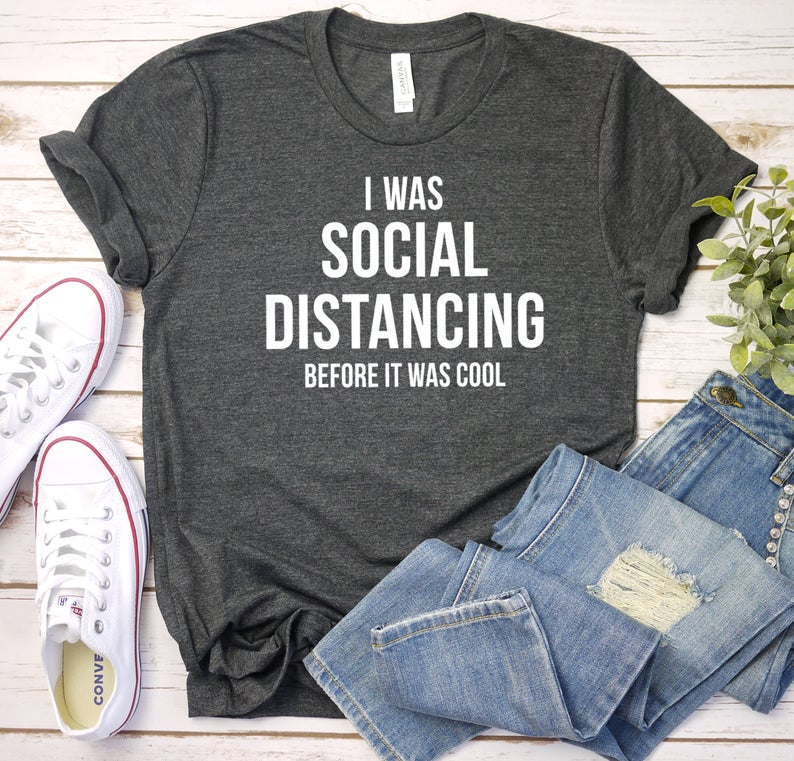
Many comments related to pandemic aren’t vocal. I like to read t-shirts. Many squarely hit on frustrations from physical distancing, shortages of supplies, and concerns about health, politics, and the economy. This t-shirt added it up: “I want to drink coffee, create stuff, and sleep.”

Some women shoppers young and old wear dresses or pants with variations of combat boots. It’s a look that suggests a self-bolstering in complex times. Male shoppers haven’t much changed their styles, many enjoy wearing messages that menace, like this one, “Ban idiots, not guns.” These days, however, men’s t-shirts may also comment at “a combat boots level”. Here are examples, “I need my space”, or “Bourbon and cigars”, or “What I have in my heart, I’ll take to my grave”.

Much is communicated nonverbally. Shoppers’ masks, clothing, tidiness, and ways of moving and looking around, reveal lots about individuals. We who work in the store don’t escape observation. Shoppers may pause to comment, “Aren’t you bored?” I quickly try to rearrange my posture and expression. Yep, sample-servers who aren’t serving samples can’t unendingly appear engaged.

Lots of new orders daily arrive for food demos, with producers accepting any arrangements possible in this pandemic environment. I’ll be there and standing in place, while also people-watching, t-shirt reading, and feeling grateful to have a paying job.

Dear Friends: It’s fun studying and trying to interpret non-verbal communications. Diana

Backbones

Thursday, September 17, 2020

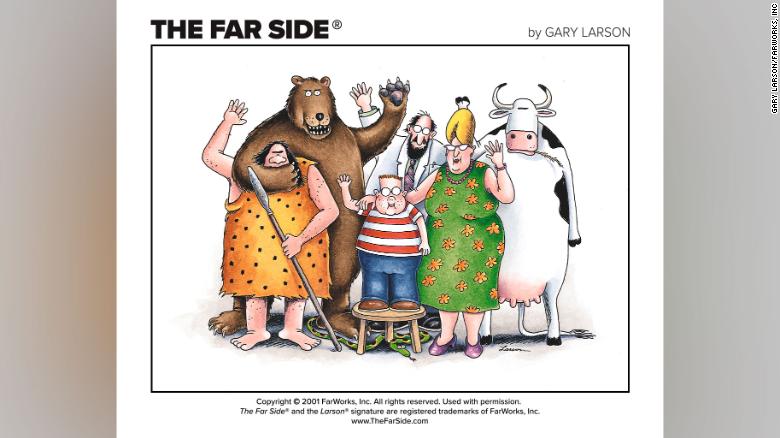
I ran across this interesting comment: In back-boned animals, being social means having to keep track of many other individuals. It’s understandable that science may categorize “back-boned” as a key identifier among physiologies. Animals with a backbone are called vertebrates. The backbone is is a column of bones supporting the body, and also protecting the spinal cord. Examples of creatures that lack backbones are bees and ants.

It’s striking that back-boned suggests unique social inclinations, and seems unarguable. My brain’s listing of back-boned types are those we know, love, and admire, like dogs, horses, cats, people, bears, fish, and…you get the picture. These are social, and some are a little anti-social, but all keep track tightly or loosely of others in their categories, and of others in different type categories.

For example, fish behavior illustrates tracking, too. (A recent underwater video wowed me, so fish pop into my mind.) The small freshwater aquariums in my home have me watching individuals and groups, for signs of wellness, sluggishness, or illness. These back-boned swimmers track similar others by schooling, and a type that’s cautious toward another type tracks to avoid closeness.

Behaviors of back-boned creatures suggest also that they have large brains. But, consider non-backboned creatures with tiny brains, like ants and bees. They’re mostly thought of pre-programmed to do specific work for which they’re hatched. Ant research teaches, however, that these creatures demonstrate amazing abilities to adapt, both in physiology and behavior, during times of great need. Bee studies are showing scientists that some bees have developed larger brains after having adapted to more varied diets.

About the broad spread in which humans track others, I’m wowed. For example, there’s tracking as I work in a part-time job and recognize frequent shoppers. We’ve become friends and discuss mutual events since our last meeting. At home, folks in my neighborhood may meet casually and stay fairly-closely in contact. And then, there’s social media making it possible to track early-life contacts. Social media can add cement to recent and physically-distant contacts. Oh and Zoom! But later for Zoom, as we’re still learning.

Dear Friends: All fascinating, for who’d a thought so much can ride on back-bones? Diana

Swimming With Octopus

Wednesday, September 16, 2020

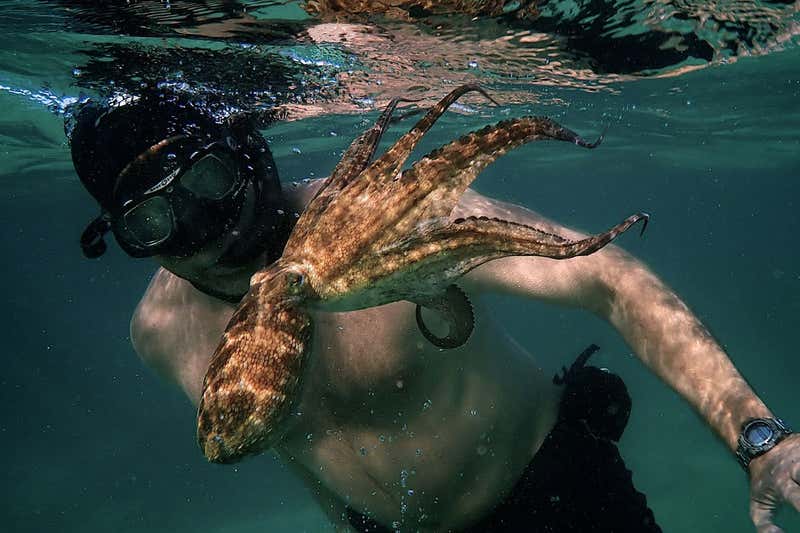
Perhaps it’s because we’re experiencing a long stretch of heat, smoky air, and very dry weather. Perhaps it’s because few creatures might be interesting as octopuses. I paused a Netflix series I’m following and watched instead the newly-added documentary, “My Octopus Teacher”.

It took a creative team seven years to put together this video, filmed during a year in which a South African documentary cameraman swam daily in the ocean. His swimming routine began as a counter to his high burnout from overwork and deep feelings of alienation from work and family life. To “find himself”, he trained himself to swim in the very cold Atlantic, so cold it forced him to work hard and long before his body could adjust to the temperature. The effort took his mind off all else, until eventually he could slip easily into the ocean and swim.

During a daily swim, he discovered on the ocean floor a curious-looking rock, which turned out to be a young female octopus in disguise. He followed that octopus to her den, and in days afterwards, found her often. He became interested in studying her and engaged a fellow documentary cameraman to captured his swims with the animal. The camera beautifully captures over time how the swimmer and octopus develop a unique and lasting relationship.

We swim along, too, in that marine world where surrounding water brings senses of closeness and silence, deepening our comprehension of the enormous ocean-supported beauty and intelligence. Above all, we’re introduced to this octopus. We watch as she swims and plays, as she hunts and is hunted, when she becomes damaged and manages to recover, and then as she mates and finally gives birth.

It’s unique, this mutual trust between octopus and human. She can be seen wrapping her body around the swimmer’s hand and holding tightly so that together they may swim. The swimmer’s intense focus on the octopus leads more toward his healing from burnout from overwork. This truly is a love story.

Watching, I was fascinated, having wished to know more about octopuses. My scientific readings have described them as highly intelligent creatures. Some marine scientists who keep an octopus as a pet describe ways in which the creatures move, respond, interact, and interestingly also display emotions. Without having seen a real octopus, I couldn’t visualize one totally from written descriptions.

“My Octopus Teacher” shows a whole octopus–its physical dimensions, its ways of moving and of resting, its high intelligence, and its capacity for emotion. The video’s human does a masterful job of explaining his responses to her. He speaks to the relationship, and eventually after its ending, shares what more he’s come to understand.

Dear Friends: I recommend this hour-and-a-half video, it offers joy and learning. Diana

The Future Is Us

Tuesday, September 15, 2020

My weekend is over, today means returning to work. Work is tiring, cuts into time for other (and to me, more important) activities. But I’m grateful for a commitment that forces me to be out and about. These throat-burning smoke days are easier among a variety of folks in a busy store. Best are the opportunities at work to greet old friends and make new ones.

Well, let’s not forget the benefits of a regular paycheck, I like that, too, and especially now as our economy struggles mightily to find a footing that may encourage everybody, regardless of economic status, toward optimism about the future. Currently in our daily living the economy, and other alive elements, like fires, riots, and declining environmental health, rolled together are taking a massive toll on American optimism.

Remember this booster-phrase? “The only thing we have to fear is fear itself!” Well, it’s an opening and for sure no end game. Sure we fear, but without action also to improve how our governing bodies make decisions and investments, modern societies may be heading toward self-destructing. There are no caveats to boost this mega-destructive 2020. All talk must be about planning and funding needed action for sustainable fixing.

I’ll be happier escaping to work where my role is to smile and parrot-talk: “Here’s a product, it costs such and such, is on a shelf over there, and hey, take some home today!” For a few hours, unless customers pause to share their takes on what’s happening beyond the store, I’ll escape from the driving worries about what our stars may be holding for us.

Dear Friends: The heavy smoke disallows escapes from social/environmental needs. Diana

Coffee Time

Monday, September 14, 2020

I’m drinking a ground coffee infused with functional mushrooms to start this day. Early this spring I got interested in mushrooms, when my friend Dave introduced the pleasures in hunting for wild versions in the high forest. His understanding of fungi made me aware of a larger concept of mushroom worthiness way beyond good-eating. The massive fungi world has potentials to improve human health and clean the environment. Eating mushrooms apparently can strengthen our immune systems, and today’s experts are employing fungi against environmental abuses.

Over the years I’ve wondered if mushrooms also offer calming qualities. I can’t recall when or why this notion popped up and haven’t explored it, but it might be worth looking into.

We need every ounce of help relative to immunity, calmness, and environment. Up and down the West Coast, air quality is poor to zero, and we’re ill-prepared victims to numerous wildfires. While inside our homes and vehicles, we breathe heavy smoke and eyes burn, we’re coughing and worrying. I’m situated beyond active fire lines, and folks closer to active fires, and those awaiting orders to evacuate, soon will offer fuller perspectives.

There’s no need to recount how humans have exploited and neglected worldwide forest-lands and infrastructures. Appropriate ongoing funding, and routine maintenance to support environmental care and longevity, would have provided more and at the ready highly trained firefighters with improved methods of control.

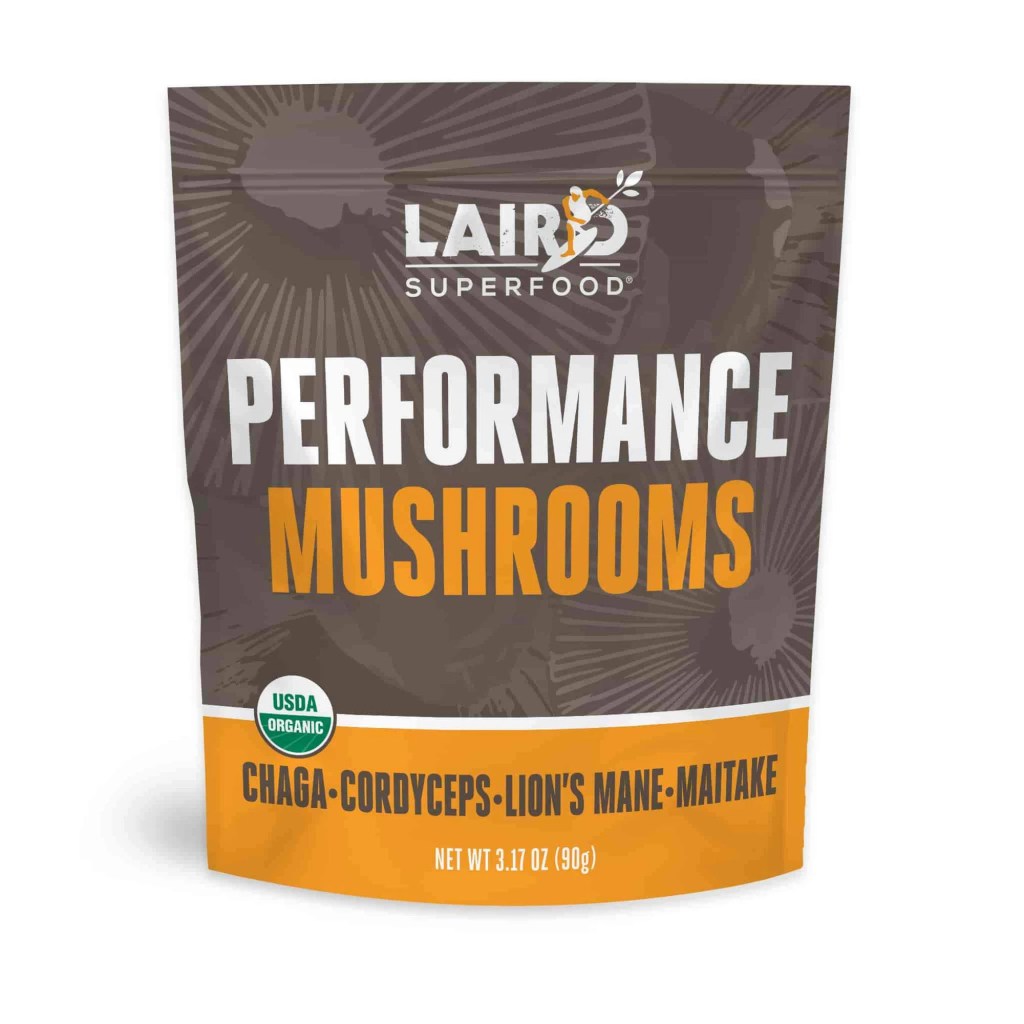
Anyway, my Laird’s coffee is infused with such as Chaga, Cordyceps, & Lion’s Mane mushrooms. It’s on grocery shelves, is an eye-catcher. I love learning about coffees and drinking them, so grabbed a bag. But I brewed the Laird’s only this morning, hastened by having noticed pharmacy products show up that are mushroom based and being promoted as supporting the immune system. I don’t know the truth of such claims, am mainly just interested, and always willing to sample coffees.

Dear Friends: Interests and activities may ease worries of nearby, gobbling firestorms. Diana