My Sister, Elaine

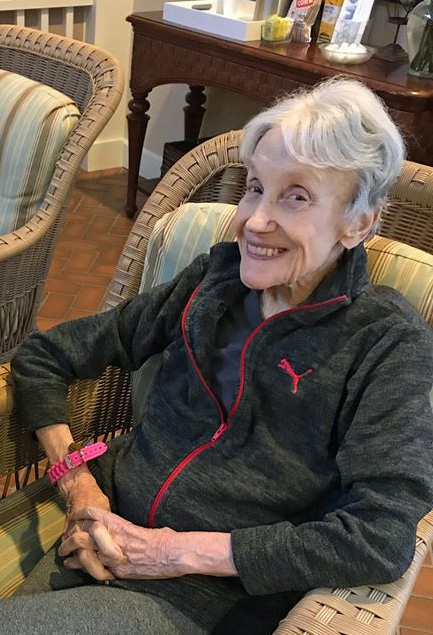
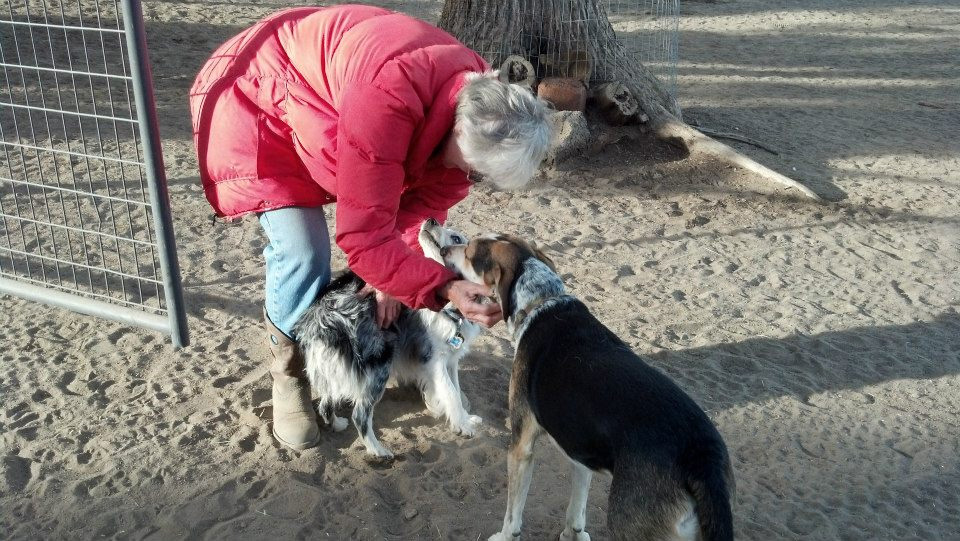
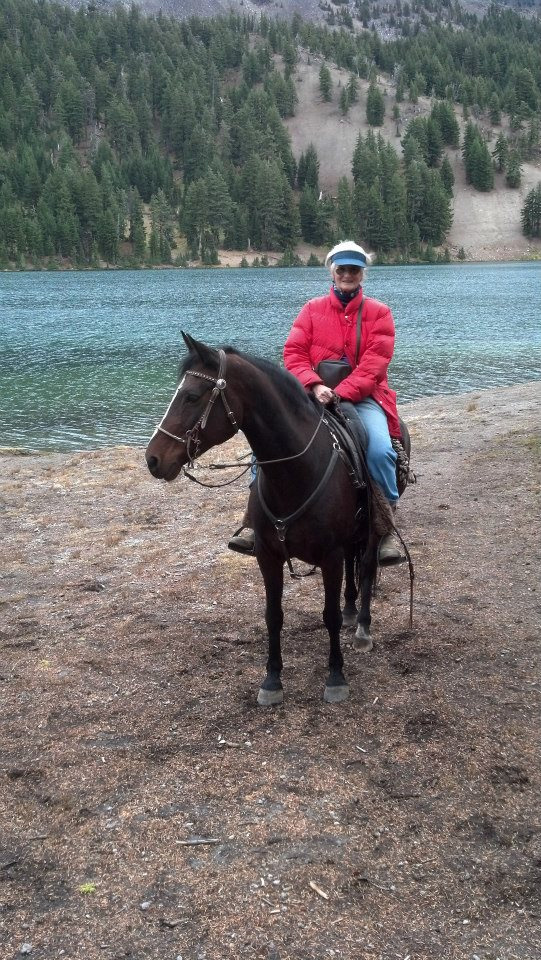
Elaine, last year

Saturday, September 28, 2019

My elderly sister’s condition is deteriorating. Her hospice social worker alerted me yesterday by phone. Last week, when I visited my sister, I found her alert and very thin. She had a highly visible stomach tumor and insisted it neither bothered nor pained her. The social worker, in our conversation, advised me to self-prepare, and expect to see significant changes that rapidly have occurred.

I’ll visit Elaine today and try to be prepared for the update. It’s not that what’s new hasn’t been anticipated, the problem is that ahead is a new reality. I really cannot imagine being without her totally, not having her somewhere around, arguing and giving me a hard time about almost everything.

That’s the story of our sisterhood. She, the big sister who wanted to be a mother, and me, the little sister trying to escape her idiosyncratic viewpoints and beliefs. Wanting to escape her swings into highs and lows that came and went quicker than many brief summer showers.

I’ll say this, while on highs, Elaine’s belief in herself was outstanding, and she could do (and did!) almost anything she set her mind to. Her lows were bummers, with calls to me always moaning and groaning about the winds that blew consistently and making her feel incredibly sad and unhappy.

All relationships have positives and negatives, and another side is that Elaine had positive influences on me. She was a role model for independence and can-do, and I adopted lots of those. She was ferociously independent, until she couldn’t be, and finally four years ago, allowed herself to accompany me to Oregon. These last four years of her life have created their own story.

I love you, Elaine, and will visit you today.

Dear Readers: My emotions are complex, maybe soon they can become clearer. Diana

Fall Daze

Friday, September 27, 2019

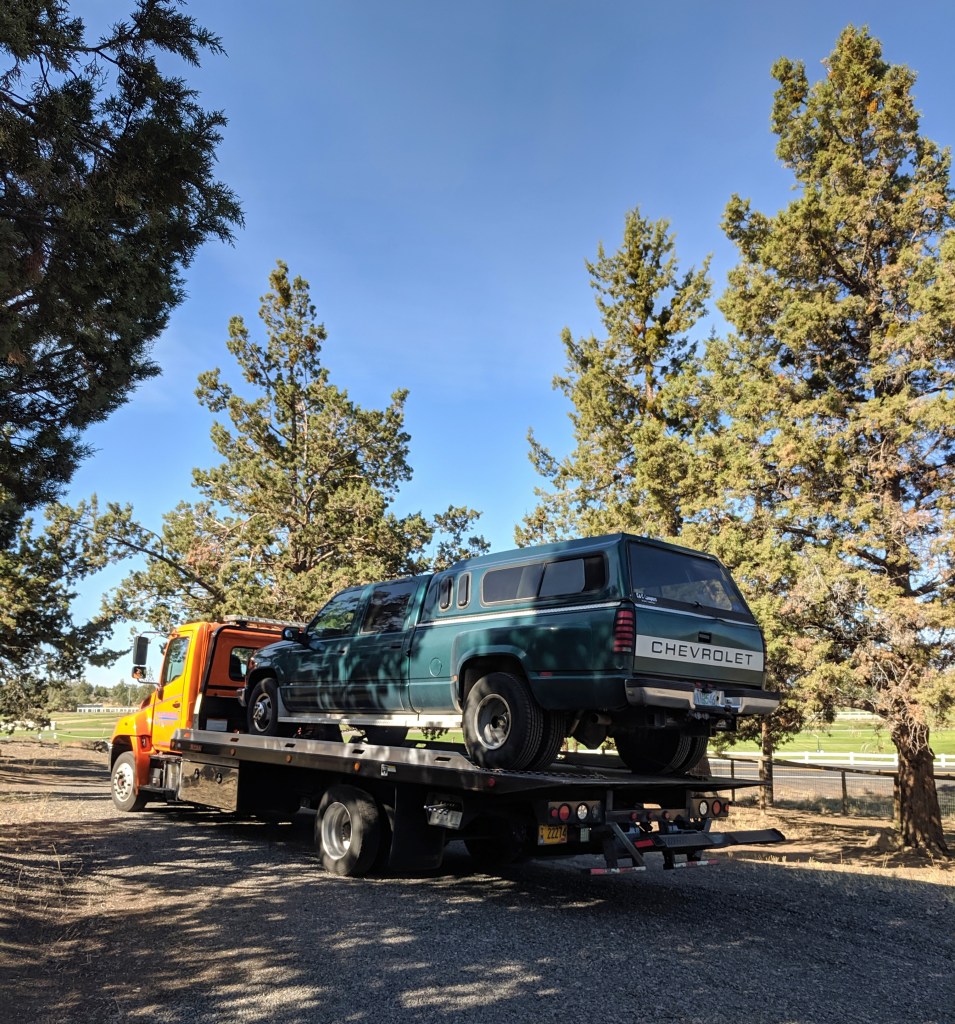
While preparing to load the driving cart and then travel to a trainer’s facility, I discovered that my truck battery was dead, so completely that a starter battery couldn’t kick it back into action. Off went my truck for mechanical diagnosis, while I watched from behind with a phone and apologizing profusely to the driving trainer.

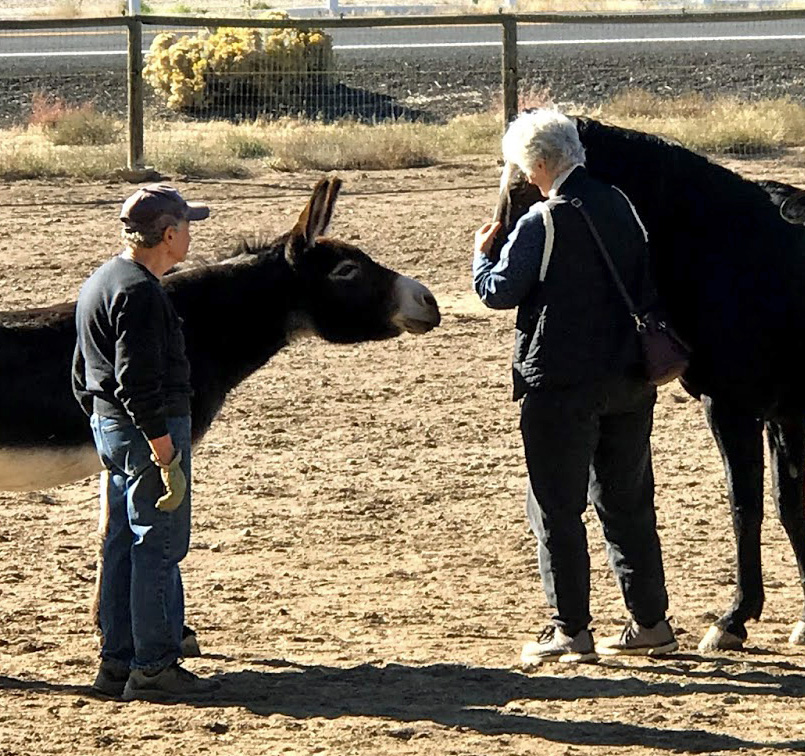
My visitor Jean and I had plenty to do anyway. We worked with the horses. She showed me how to use a length of rope to create a training halter and demonstrated ways to use it appropriately. My horses were responsive, so much so they nearly were unrecognizable. Jean long ago had raised Sunni from a little filly, had trained her, and the mare fell right into step. Rosie, often the resistor, became instant putty in Jean’s hands, looking lots like Sunni and unquestionably responding to the rope and to verbal commands.

Taking lessons

Neither of my horses had been driven for about three days. They needed to be hitched and working. I worry about a possibility that Rosie’s excess energy might interfere with the need to keep her focused while working. But yesterday, handling her was easy and we had a good drive. The same, of course, with my dependable Sunni.

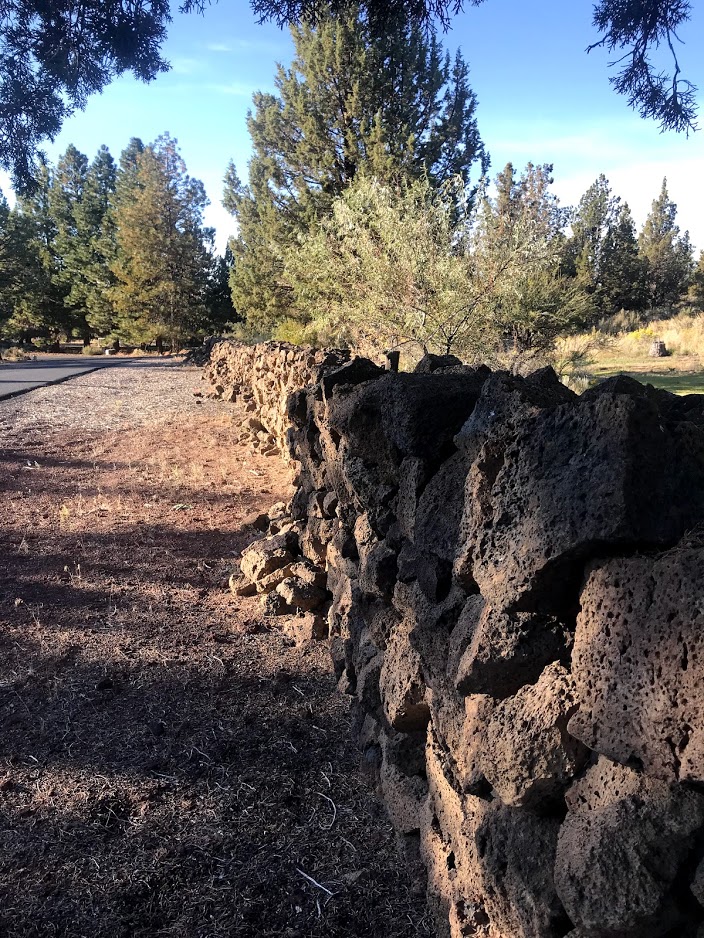
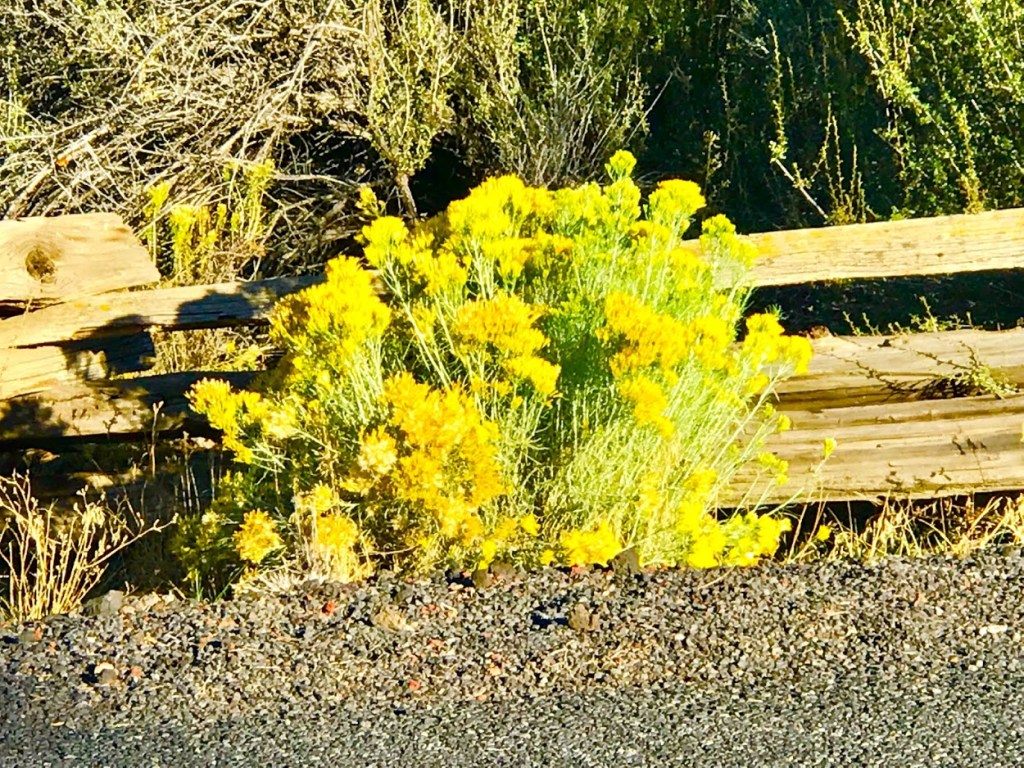
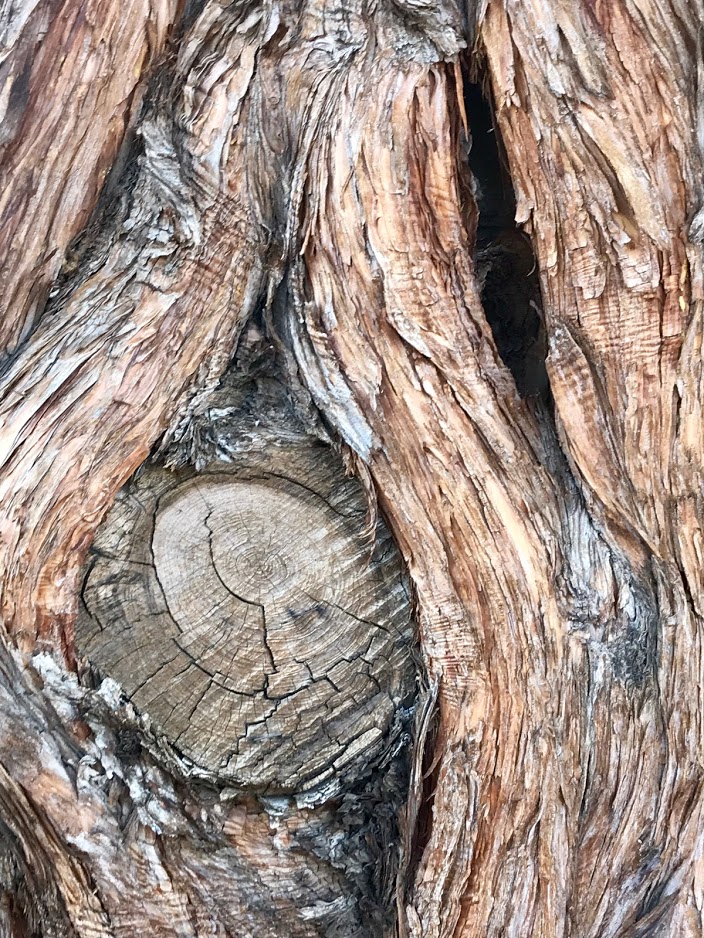
All the photos (except the one of my truck) today are from Elaine’s iPhone. She has an excellent camera eye, and upon arriving here grabbed a beer and walked through the neighborhood, capturing random local fine points.

Jean and I will use much of this day to work on horse training–her particular art. She’ll show me more about using that magic rope. There’s so much knowledge stored in her brain, it’s a mitzvah to to take advantage of what she offers.

Dear Friends: Enjoy this wonderful fall day as it closes in toward October. Diana

All Through The Night

Jean with Louie & Ranger

Thursday, September 26, 2019

It’s fun having company, at least perhaps for me. Last night as usual, it was necessary to get out of bed a couple of times to let the dogs outside. This means a trip through the house to the living room’s sliding doors, which it happens is next to Peach’s cage. We do this quietly night after night, but this wasn’t so last night.

The dogs fought to get out my bedroom door (normally never closed) and then barked their way through the house. The activity awakened something primitive in Peaches, his screams began before we were halfway toward the sliding door. As the dogs piled against the slider, I tried to open it while the reverberating of that bird’s screams against my ears sent my head into shock.

I could not imagine how my poor visitors might have tried to deal with this racket. Certainly as a guest myself, I’d have been tossed into sleeplessness for the remainder of that night. Perhaps that would have been the best thing, for the dogs and I were destined once-again to get up and out before the ordeal of trying to sleep through that night ended.

Otherwise, things are well. Everybody arrived in Bend safe and sound. Elaine and I managed to heft an item that she wishes to take home loaded onto her trailer. Meanwhile, Jean went to work re-training my horses, they need better ground manners. She also tampered with Pimmy and even made a little training progress.

I’m reminded of how well Jean knows and handles horses, something she’s done lovingly and effecrively all her life. Watching her cut off a piece of rope and fashion a quick halter and put my girls to work was watching capability in action. Jean spoke to Sunni and used her hands to get the horse backing up or walking forward, to voice and touch, helped by that little spontaneous halter Jean had created. Same with Rosie, the princess, who fell right into submission to voice and hands and behaved as asked. Oh, I can learn so much more about my equines during the few days that this wonderful horsewoman is visiting.

Jean on Rosie

For Elaine, this is a working trip and she’ll go to meetings. So today for Jean and me, it’ll mostly be about driving. This morning, we’ll trailer Sunni out for a session of training with a driving expert, and this afternoon we will hitch Rosie and drive in the neighborhood. In between and afterwards, Jean will show me more about working efficiently with equines to improve their ground manners.

Dear Readers: Regardless of how much one knows, there’s always more to learn. Diana

Raiko

Photo by Raiko Hartman

Wednesday, September 25, 2019

I learned yesterday that my once-neighbor and good friend, Raiko Hartman, recently passed away. It’s been a long time since the Hartman family and I were in touch, but they’re fond memories and I’ve always missed them. Especially Raiko, who took the time to be a mentor to me back when I used all my courage to start my own business.

He was a professional photographer and in those days specialized in photos of Harley Davidson Motorcycles, pictures that often included proud owners. His studio was the go-to-place for folks having customized gorgeous Harleys. Many of Raiko’s photos were published in motorcycle magazines. He was well-known enough that a book of his motorcycle images was published.

When first I knew Raiko, he insisted that nothing–certainly not digital photography–could match the results of good old film. And he was an expert, sharing a huge studio in Hollywood. There he photographed me, to help create a folder about my new corporate training business. He spoke lots about his attentiveness to customer service, about product accuracy and production speed, reminding me to pay as much attention to this element as to my ability to describe technical skills.

Somewhere along the way, Raiko decided that, although famous in certain niches, he needed to expand his skills and returned to college for a Masters in fine arts. The schooling forced him to play with digital photography and this became a sea change for him. The world and possibilities of digital excited Raiko, extending his imagination and encouraging a whole new avenue for his art.

In those days, nearly 20 years ago, I felt fortunate to know Raiko and to learn some of his artistic vision. His explanations expanded my sense of photography as an art form and I never forgot.

Raiko had a fascinating personal story. An immigrant child, he was adopted by an American family and grew up in the Los Angeles area. He always was attracted to form and light, and even once (in a very funny story) blew an opportunity to meet his hero, the great Federico Fellini. A devoted family man, with a wonderful wife and two children, Raiko absolutely blew away images of “the lost, wild, artist”–staying true to those he loved and to his sense of how to compose visual excitement.

My friend, Raiko, who was the nicest guy, passed away last Sunday of pancreatic cancer. As he wanted, quickly.

Dear Friends: Whenever I aim a camera, Raiko’s views help to guide mine. Diana

Friends

Photo by Michelle Wrighton

Tuesday, September 24, 2019

I have on my mind that we (the dogs, birds, cat and me) will have company for a few days this week. It’s a challenge to do ordinary stuff, like my usual time-consuming activities with horses, while there’s a disorganized house to put into better order. This happens whenever something offers to alter my routines, and somehow in the end, everything works out okay.

Honestly, I enjoy having company. It’s a wonderful thing to have my routines broken up and folks around to talk with, to replace an ongoing muttering to myself. This is a chronic habit, even as I stand in a grocery store aisle. I find myself debating aloud whether to or not to select a product. The grocery story blathering used to disturb me (after all, isn’t it that folks who talk aloud to themselves are a little crazy?), but in discussing this habit with other folks, I discovered many admitting to doing the same self-talking. Now, I don’t worry and talk-on-to-myself whenever I feel like it.

The nice thing about having the company of friends is that we’re okay with being idiosyncratic. This week, with guests here I’ll stick to most of my routines. We’ll all be horse-folks anyway who tend to be at least a little nutty. Let’s be honest, one has to be slightly off to keep large animals and shell out, paying for never-ending training, feeding, and care needs. If I think back over my years of horse ownership (few as they’ve been compared to other horse-folks), I could have, maybe should have used my resources in better ways. But there, I stop. “What better ways?”. I can’t conjure up more substantial types of goals I might have wished to pursue–and so, my investment has been good. The ROIs from my animals have been emotional, and overall more pleasurable than not, so these years have suited me well.

My visiting friends and I will have much in common, including our emotional connections to my horses. (Sunni and Rosie came to me after having flowed through my visitors’ lives). It’ll be fun to welcome these friends. But now, gotta go. Just spotted a cobweb!

Dear Friends: Thanks for staying with me, nothing beats having friends. Diana

Transitions

Monday, September 23, 2019

September 23 is the Fall equinox, when the hours of day and night are equal, 12 hours for each, officially marking the transition to decreasing daylight hours. For the next three months, the days will continue losing light. Until the winter solstice on December 21, when daylight finally bottoms out by surviving only nine hours and 26 minutes. After that, the lighting shifts to a “bottoms up” mode.

Fall is a beautiful time of year and for most of us all too short. I plan to keep my horses active as long as possible and so must keep aware of the weather ahead. The NOAA is predicting this fall to be warmer-than-normal. The Farmer’s Almanac agrees, anticipating a fall that’s mild, but wetter-than-usual. These predictions help me calculate when to pull my horses’ shoes, they get to go barefoot through the snowy seasons.

The Almanac cautions us Pacific Northwesterners that the coming winter (even as we’re happily regaining light), from mid-to-late December through mid-to-late March, will bring lots of snow with very cold temps. In other words, this winter should be about like those we’ve experienced recently.

All of us are looking toward darker days and cooler weather, and now is the time to get busy and prepare. Those living in country areas and especially keeping large animals have fences to fix, weeds to eliminate, structures to shore up, gutters to clean, and a list that seems to grow longer as we repair and think ahead. We must make sure the snowblowers will start, the winter coats and boots are handy, the requirements for creating heat are in place, and just in case, we’ve an emergency supply of food, just-in-case, for people and pets alike.

Dear Friends: Darker and cooler for three months, let’s be ready! Diana

Journey

Sunday, September 22, 2019

Jean and Elaine will arrive this week for a short visit. Jean raised and trained Sunni, and Elaine had a big hand in raising and training Rosie. Jean’s sister bred these full sisters (7 years apart) from the same mare and stallion. Both Jean and Elaine had big hands in teaching me how to handle and ride these horses.

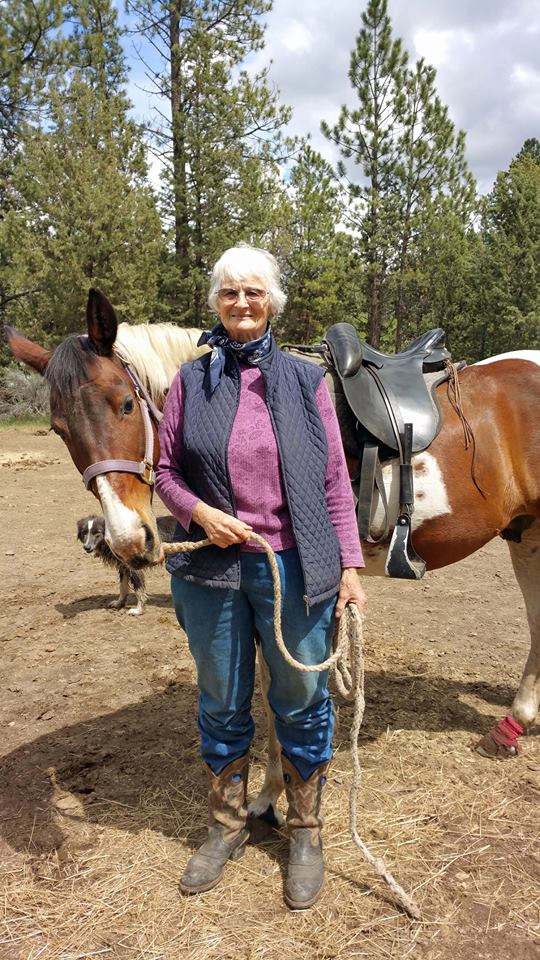
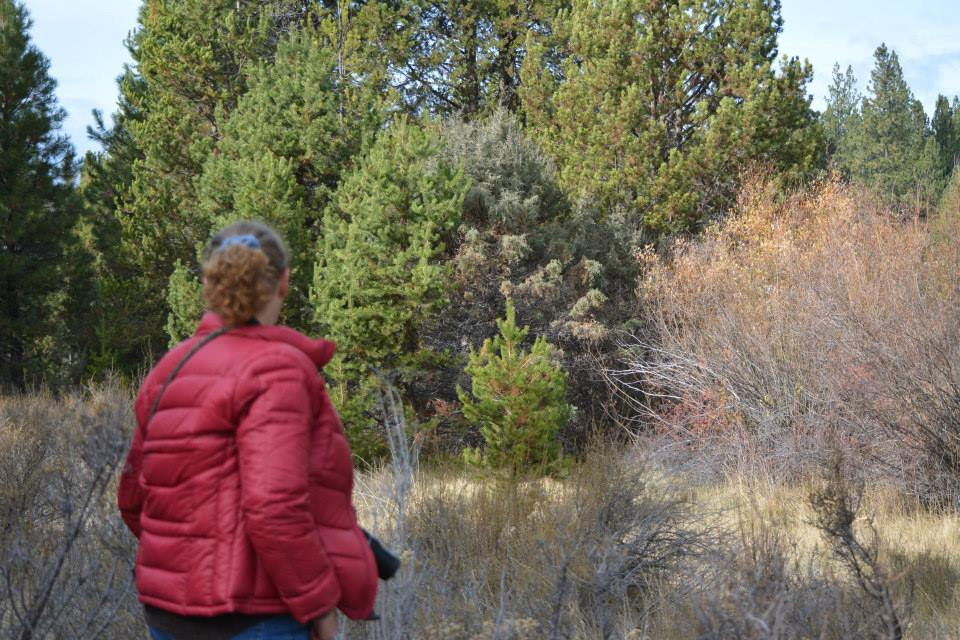
(The above photos are of (1) Jean, in Bend, with her gaited mountain horse, Jackson; and (2) Elaine at the Deschutes, just before glimpsing Miles in the river trying to find foothold on its steep muddy bank. She reacted, reaching for his collar and hauling him up the embankment.)

Jean raised Sunni from a filly and turned this pony into a trail horse, doing lots of climbing and riding in the Blue Mountains. Elaine helped, riding Sunni in an Eastern Oregon rodeo drill team and packing her for trips into the mountains with materials for trail improvement work.

Rosie had a more complex filly-hood with Jean’s sister who had some emotional issues. She taught Rosie to drive and periodically sent the mare to Elaine for “straightening-out”. Eventually, Elaine wound up with Rosie and used her for trail riding. One of her friends bought Rosie, but after a couple of years had to move to another state and couldn’t take the horse. That’s when I learned that Rosie might be available.

Sunni was a wonderful trail horse. She carried me through most of the local trails and into the Cascades, and because I knew about Rosie, I began thinking about driving a horse. Rosie was trained, so a good place to start, right? I made arrangements to take Rosie and soon after she arrived found her enough different from Sunni to be worrisome. She’s hyper-alert, prefers making the decisions, and will test a handler. It’s important to add that Rosie wouldn’t deliberately hurt anybody, she’s just apt to become pushy. I had her retrained to drive and then felt afraid (as a brand new driver) to hitch and drive her.

A couple of years passed during which I trail rode the two horses before finally deciding to revisit the idea of driving. This time, I had Sunni trained to drive, learned to drive her, and then tackled driving Rosie. By now, I knew what to do, felt confident, and began driving her. Rosie and I have worked our way into a more mutually trusting relationship. And I think it’ll keep improving.

From the time she came to me, Sunni has been pleasant, agreeable, willing, and responsive to what’s asked of her. Jean hasn’t seen Sunni in several years and will be pleased with the mare and how she handles while pulling a cart. Elaine hasn’t seen “the new” Rosie being hitched and driven, and she’ll be pleased, too.

Who’s perhaps most pleased is me. From the most novice of horsepersons, to these days when I feel capable of handling my horses adequately, it’s been a challenging but fruitful journey. One of the sweetest things from all this is having been able to adopt a caring family along with great horses.

Dear Readers: The years that amble in the end can provide terrific stories. Diana

Mini-Magic

Saturday, September 21, 2019

I attended a meeting of the local driving club at the ranch of a member who has a large arena for driving. The area was set up with a course for circling obstacles and going through cone-windows. I didn’t have with me a horse because it was my first visit to this ranch. I didn’t know how easy or difficult it might be to pull a trailer in and out of the parking area, but after all, there was plenty of space.

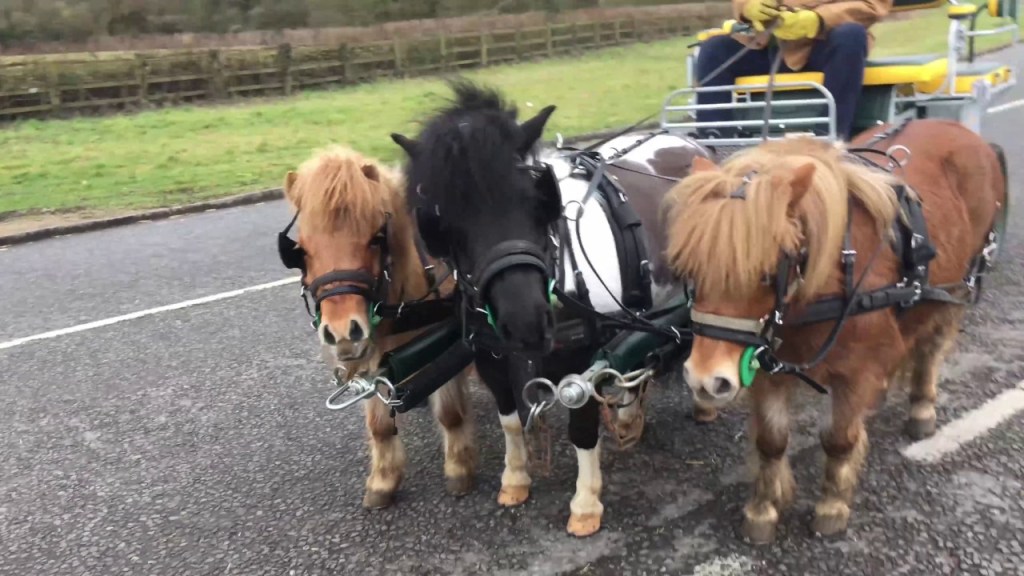
Several drivers were warming up, and to my surprise, only one who I knew already. She and her horse are quite experienced and they handled the course without hiccups. What caught my eye was the cutest mini, and maybe the fattest one I’ve ever seen, pulling a cart. I should have taken a picture of him! The photo above is an internet capture that shows minis cute and appealing. The real alive version is a heart grabber, you want to hug that pony!

We musn’t kid ourselves, a little bitty horse still is a horse. It has a horse temperament and often is the king or queen among its family of bigger horses. The littles, equally with the bigs, need correct feeding, controlled pasture grass time, teeth floated, hooves trimmed, manes and tails brushed, routine supplements and medical treatments.

Anyway back to the casual driving event and this particular little horse. He’s 20 years old, had been a breeding stallion for his first 10-12 years, and also while young had been shown as a driving mini. His current family recently adopted him, after he’d been mostly-sitting around for several years. Now they’re giving him a new life. Even very overweight, in his driving run, he exhibited energy and speed and knew his job. Driving melts fat and builds muscle, he’ll become greater with action.

I love his story. A horse in its twenties has been around the block, is trained, can behave and knows how to trailer. To my mind, its twenties are perfect years for riding and driving. Here’s the bottom line: Horses love to work, and every horse needs a job!

Cuteness is a winning factor. I couldn’t help myself on coming home and feeling ready to go online looking for a mini or two! I keep self-reminding that the littles need everything the biggies need. Besides, my own hands are full.

I will try to help our driving club build its calendar of activities and beef up it’s membership. Participating in the club will help to create more venues for local driving horses, and besides, let me enjoy the beautiful horses and cute ponies that belong to others.

Dear Readers: Pimmy needs training, she’s fun, cute, and could be “my mini”! Diana

Let’s Go, Silva!

Friday, September 20, 2019

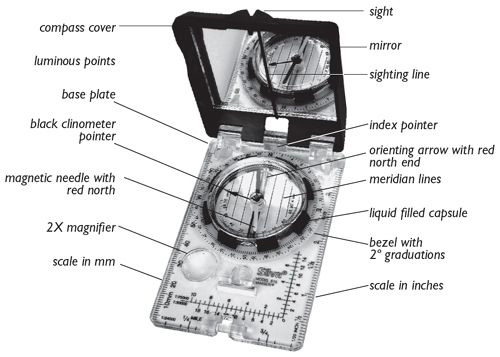
While in my barn and rummaging through a basket of miscellaneous odds and ends, there appeared a Silva Compass, Model 515, circa about 2010. Back then I rode horseback mostly, often worrying, “what if”, in case my horse and I got lost in a wilderness area. For sure, I never rode deeply into any terrain unknown and scary, unless with an experienced outdoors-person who knew the area. By myself, I tried to stick to old well-worn horse trails. The thing about horse trails is that they always lead someplace understandable, unlike vehicle roads that can go on forever and who knows to where.

I used to try learning more about being outdoors by reading. Most experts advise wannabe trekkers to understand the uses of compass and map. Wanting to master this process was useless for me. I found that like most technical bits involving needles and measurements, my mind couldn’t get it straight. Compasses seemed as confusing as topo maps.

While in the barn with that compass, its compact and interesting-looking features, and deciding whether to toss it, my brain tugged at me. Maybe it’s again time to find if I could understand the device although I no longer wander in wilderness areas. Maybe what’s important is backing up and satisfying a lingering knowledge gap. Besides, this find reminded me that several compasses, purchased periodically to pursue map-reading, lay forgotten around my house.

Off to the University of YouTube, where videos popped up demonstrating how to use my found Silva model. Viewing a couple made me annoyed with myself, for in the past using a compass and map seemed too technical and confusing, but now grasping the fundamentals seemed easy. Maybe this is because I’m older and wiser, but I doubt that. The change most likely is because we’ve used increasing technology over the past nine or ten years, say with computers, cell phones, apps, and whatever might be tapped from that Cloud.

I also learned that the first non-military compass was invented in Sweden, in 1932, by Bjorn Kjellstrom, a Swedish ski-orienteering champion. He and his two brothers, and a machinist, created a brand new type of compass specifically for terresterial navigation. It featured a liquid-damped magnetized needle housing and a protractor, all built into a transparent base, very similar to my unit. They then founded the Silva Compass Manufacturing Company in Sweden.

I’ll put my new understanding to a test in the neighborhood. I’ll orient the compass to a city map, making sure to match the instrument’s double-red indicator lines exactly to “north” as shown on the map. I’ll set the compass’s directional point to where I wish to go and then read the degrees of difference between north and my goal. Using those degrees of difference and the compass, I’ll spot ahead a hiking target. I’ll walk toward the destined point, and on reaching it, will re-read the compass and set another part-way hiking target. Re-orienting stops like this should get me correctly over the local mile-and-a-half loop, where reversing the process would re-direct me toward home.

This likely will be time that’s wasted on an activity that won’t ever benefit me. Perhaps usefulness isn’t as important as learning, hoping to overcome earlier feelings of an inability to absorb some knowledge. The analogy I’m using, that perhaps new technology makes me more comfortable with old technology, raises questions about learning comfort and discomfort. The ability to absorb and use learning likely has much to do with how topics initially are introduced, and the sincerity of a teacher’s encouragement.

Dear Readers: Old ideas, but sparked anew by personal experience. Diana

Family Diapheromeriade

Northern Walking Stick

Thursday, September 19, 2019

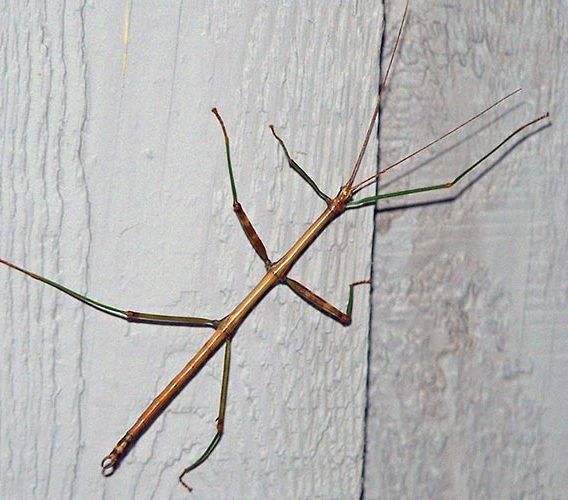
Yesterday, while walking with my neighbor, Susie, during a light drizzle, there appeared before us on the road a very still walkingstick bug. I’ve enjoyed these bugs since seeing them often long ago in my Oklahoma childhood. These days, during daylight hours, many can be spotted resting on the vertical sides of my house. These bugs, members of the genus Phasmatodea, are vegetarians and active mostly during the nights. Susie moved this little speciman from the street and set it into a grassy area.

A fellow who painted the outside of my house recently loved saving stick bugs. Before covering a new area with paint, and upon seeing a walkingstick, he carefully lifted and moved it onto a safer section of house wall. Yesterday, I walked home wondering why, and having such affection for the little animals, I’d never bothered to learn their raison d’etre. This drove me straight to the internet.

The Northern Walkingstick, among the genus Phasmatodea, has its own order, the Family Diapheromeriade. Our local variety usually is either green or brown, has antennae, and very outstretched front legs. The critter is about 3-4″ in length and wingless. If it happens to lose one of those spectacular front legs, depending on its age, the animal may be able to regrow it.

These bugs are shy, nocturnal, and reproduce in the late summer or early fall when they mature. As females negotiate the treetops, they drop eggs to the ground that overwinter in leaf litter. Nymphs hatch in the spring, already resembling the adult version, and they grow more while moving on with their lives.

There are many varieties of these bugs, and they’re referred to by lots of casual names. Like all animals, walkingsticks are amazing creatures. When you see one, pause to enjoy and appreciate.

Dear Friends: Considering the natural world’s interesting, appealing life forms. Diana