Iron Love

Thursday, September 02, 2021 —(On September 20, the full moon, “Harvest”, will rise nearest to earth.)

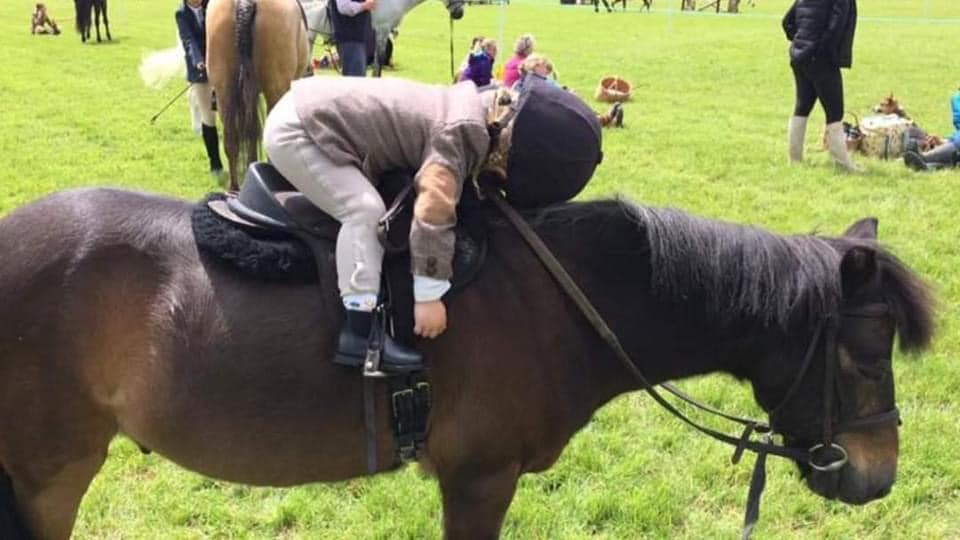
This charming moment captures a rider and pony both asleep during a horse show. I haven’t permission to use this image which popped into my Facebook feed. No telling who captured the original, or when and where it occurred.

It reminds me of delightful moments in past years at Central Oregon’s High Desert Classic Horse Show, an annual event that’s huge, crowded with horses and riders. Few sights are cuter than small kids in formal riding garb on their ponies. Somewhere are images from my camera that I can’t find, so, “borrowing” this one.

Yesterday, our farrier arrived to pull and replace worn and broken horseshoes. A California person, he comes here to work for a few days every five or six weeks. My horses without usable shoes were bored having just to hang around a couple of weeks. My job was to keep each entertained while the farrier worked.

He works in an old-fashioned method. His truck has a furnace that heats iron, before each shoe goes onto an anvil for pounding into shape. He’s back and forth from anvil to horse, for each shoe checking and adjusting fit. My horses usually travel on pavement, so he also forms and fits shock-absorbing pads between the shoes and hooves.

His visits are nearly all-day process, the shoeing always has lasted through the five or six weeks between his visits. This time is the first that the shoes thinned enough to break and be thrown. Maybe it’s a supply chain problem, with less-quality iron being used in manufacturing.

With the horses now ready for action, they’ll be rationed increased feed. They’ll like that, but best of all will love traveling across the road, to John’s place, and again being allowed to graze on summer pasture.

Dear Friends: For a trusting kid on a good pony, often it’s the beginning of a lifelong passion. Diana
Fall Daze

Wednesday, September 01, 2021 —(On September 20, the full moon, “Harvest”, will rise nearest to earth.)

It’s definitely Fall. Chillier and noisier.

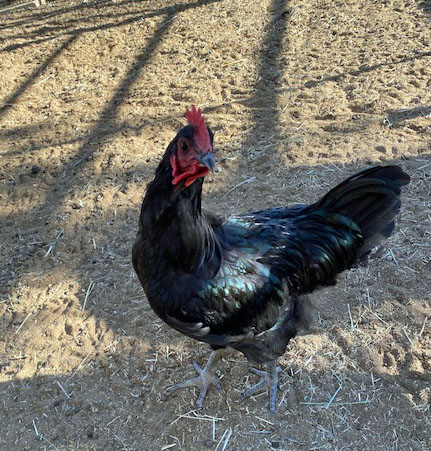
Before my Jersey Giant Rooster crowed and awakened the local area, earlier this morning we were visited by coyotes. While roaming on my property, they announced themselves with short screams before disappearing.

My dogs, all inside the house, noisily carried on for what seemed forever. They couldn’t be outside for another half-hour when likely the coyotes would be gone. The dogs found lingering scents while finally outside and renewed their barking.

I awakened to screamy coyote yips with a scary thought of my young chickens as coyote bait. Quickly though, I realized the animals weren’t hunting my chickens but just passing through. Coyotes scream to communicate, keep the pack together. A first short outburst outside my house was answered in seconds by a noisier outburst down the road. I estimated two animals were traveling and hunting.

In years past, bunches of coyotes visited during nighttime hunts. Over to the east is a large BLM, and north is a large expanse for growing hay. This side of town remains a bit rural with big grassy spaces inhabited by small critters that coyotes typically hunt.

Cooler weather brings out more wild ones. I toss seeds for the chipmunk population busily gathering and storing. Explosions of small beings invite more raptors, flying lower and circling over unusual places, like my property (always when I’ve no camera).

I wonder why it feels so important to keep my cat, Max, inside. It protects little wild ones but won’t save them from other predator types. I guess it’s one way of limiting outright opportunity. Max hangs out laying in my garden. When something alive pops within distance of a paw stretch, he’s simply grabs and gets. In contrast, those searching in roaming packs or flying overhead must work harder for victims.

Dear Friends: What more of the “old normal” will reappear in this developing cooler season? Diana

Roo-What!

Unnamed Jersey Giant

Tuesday, August 31, 2021 —(On September 20, the full moon, “Harvest”, will rise nearest to earth.)

It’s a boy!

One of my seven young babies crows.

I previously tried living with two bantam roosters, attackers whenever I entered their vicinity. They were among a dozen babies that came home with me years ago. Among that group, the most beautiful chick was soft-feathered and shiny black. I named her Pansy. I was devastated on hearing Pansy’s first squawked crows. Finally, Pansy began to breed and became my awful attacker.

The other bantam boy stayed sweet, wasn’t at all aggressive, until after Pansy had been re-homed. Once the second rooster became a breeder, his behavior toward me rotted completely.

Attacking roosters really can use their spurs! They fly onto a human leg while digging-in with incredibly painful grabbers. They hold on, forcing a pitiful human to fight back.

I hoped to deter Pansy, by carrying into the chicken area a spray bottle with water. Sprays didn’t deter him. In fact, it turned out that both roosters loved being sprayed. They attacked anyway.

My surprise-boy is a “Jersey Giant”. Hens of this breed grow to about ten pounds, twice the size of average egg-layers. I understand that Jersey Giant boys will reach thirteen pounds.

He’s been crowing for a month. Big, noisy, drawn-out wake-up calls. First-rounds occur at five a.m. or thereabouts. My first hope, maybe it’s a hen that happens to crow, not altogether unusual. Well, she’d be a gay hen, because although too young to breed, this chicken is interested in the girls. They still brush him off.

That’ll change as the hens near a laying age and Jersey’s advances become firmer while taking charge of the flock. Meanwhile, I’m keeping an eye on his still-undeveloped “spur area”. His attitude toward me is standoffish and not unfriendly.

My research suggests the Jersey Giant roosters remain sweet and gentle toward humans. I’m counting on that.

I’ll add about this bird, his absolutely beautiful “chicken eyes”. They’re not pinpoints but fill their sockets. Eye contacts with him are very cool.

Dear Friends: Roosters caring for flocks watch for and fearlessly confront potential threats. Diana

Sun-Red Sky

Setting sun

Monday, August 30, 2021 —(On September 20, the full moon, “Harvest”, will rise nearest to earth.)

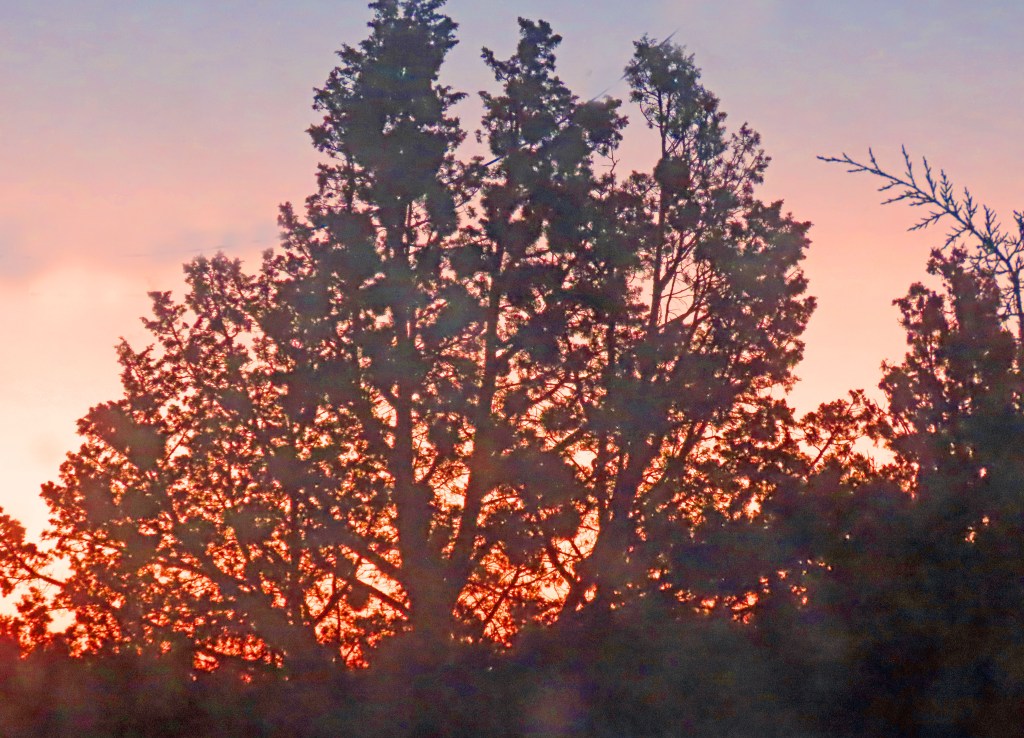
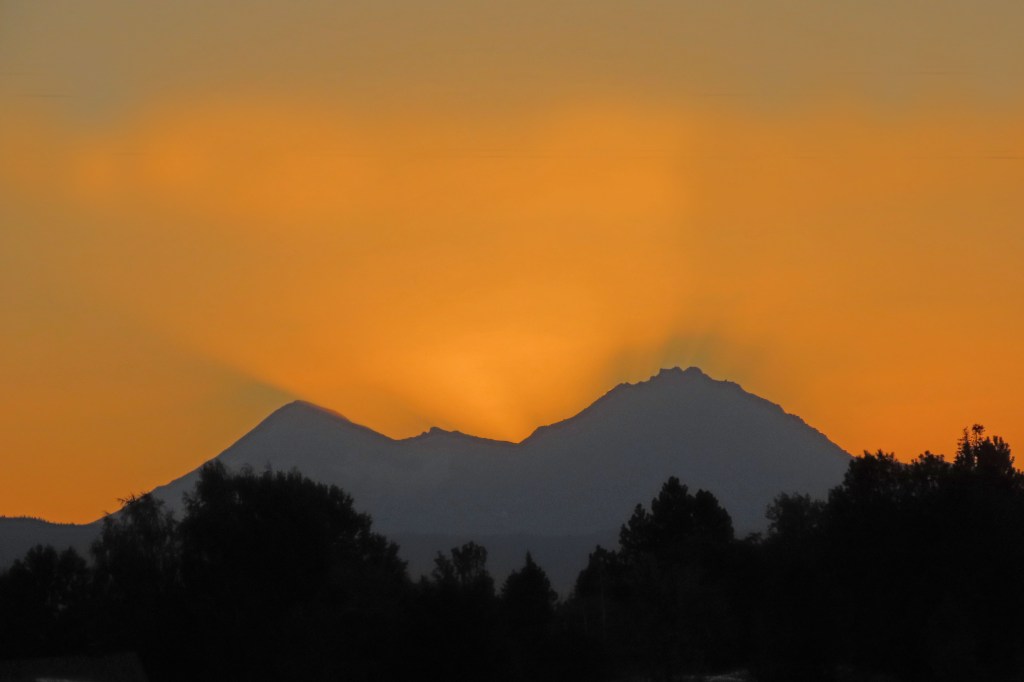
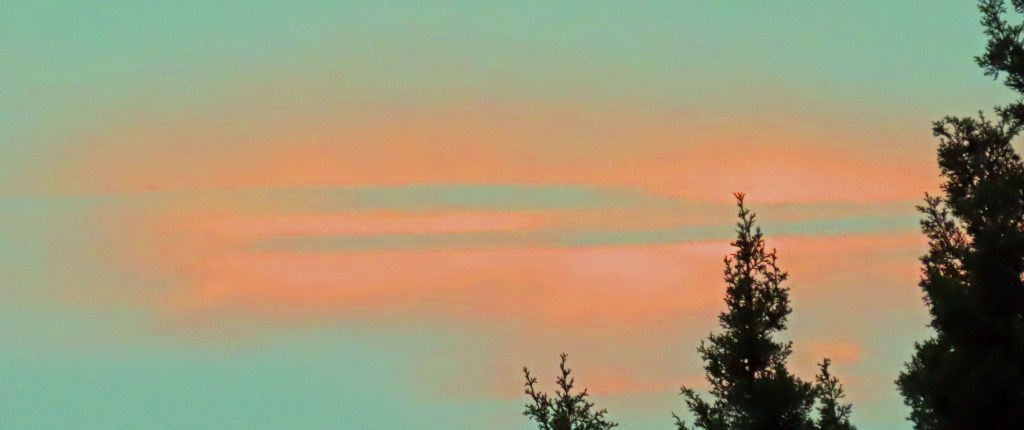
Finally, I got it, that capturing a sunset from my property means being with a camera and in place fifteen minutes before the official sunset time. That’s because my line of sight includes the Cascade Mountain Range, behind which the sun disappears earlier than it lowers to the horizon.

I knew this, but only yesterday focused on it. A reality that suddenly became conscious.

The sky was alight, and the sun was beginning to drop and would lower among cloud layers. The atmosphere was smoky, affecting the sunlight and its reflections. I wanted to capture both the setting and sky colors. My watch indicated there was plenty of time, but the darkening mountains called for hurrying.

Suddenly, I got it, about earlier timing of the event. I went for a camera.

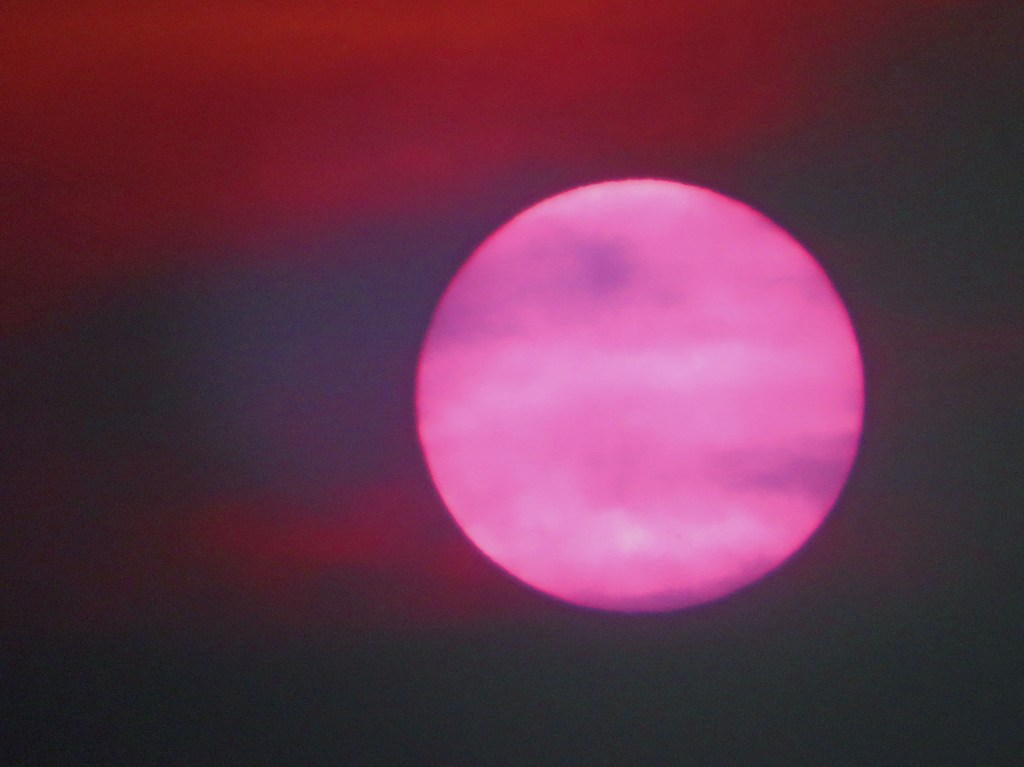
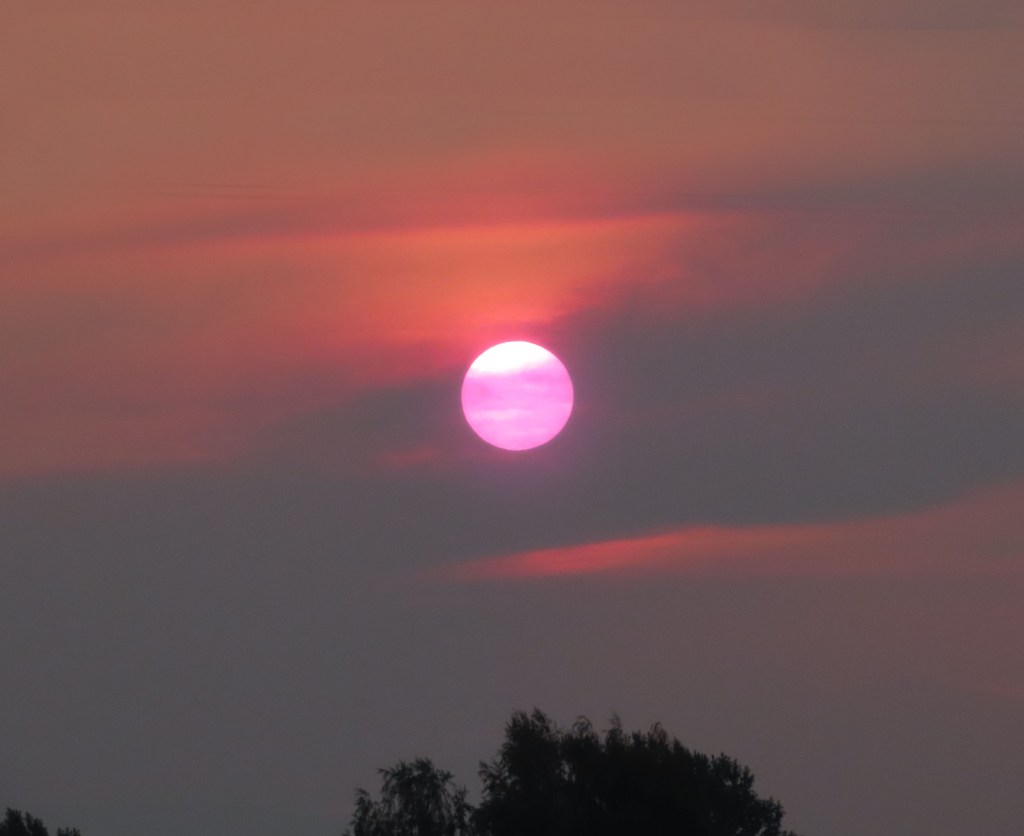
As to the sun, my camera can’t pick up enough of its color. Actually, it closely matches surrounding reds.

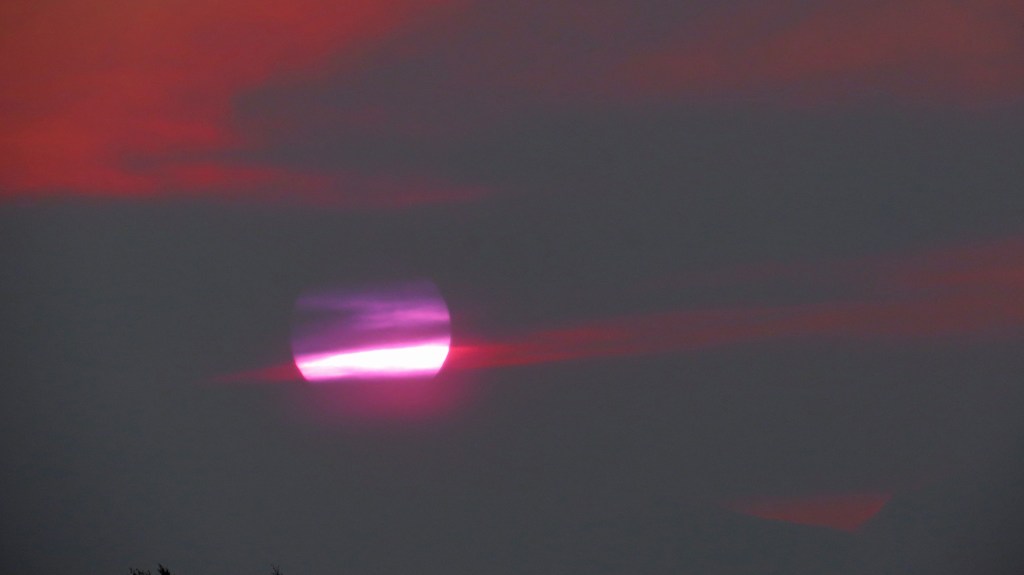
My camera finds it more pinkish than red. Here dropping through one cloud, it’s about to enter another.

Passing through that cloud and into a final one, just above the Cascades.

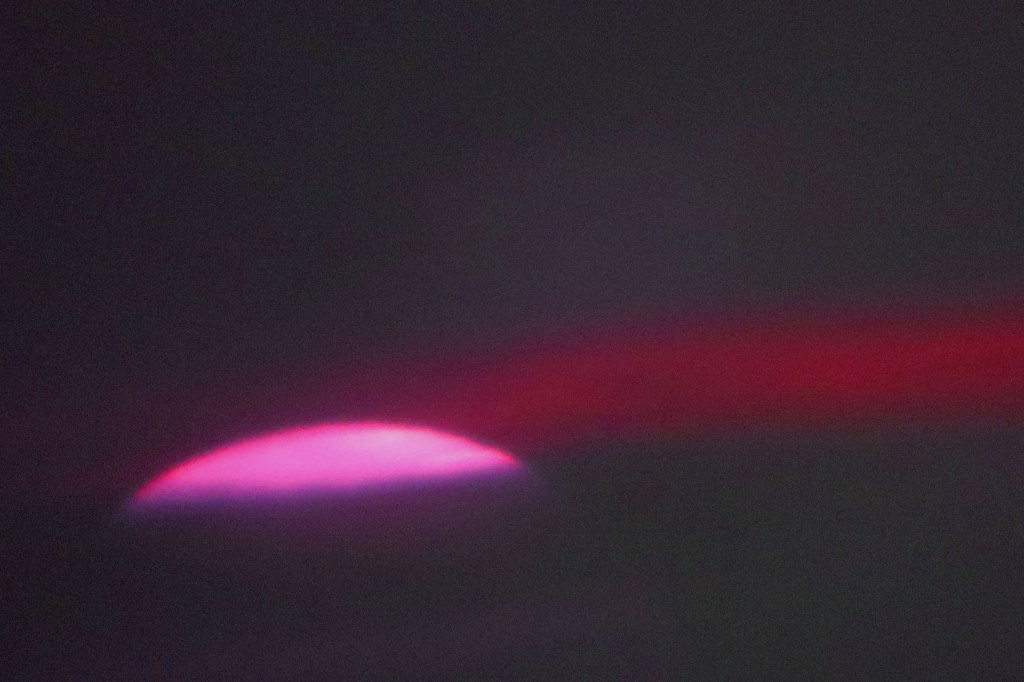
Last sight, the sun is settling behind the Middle and South Sisters.

This summer, we’ve witnessed many similar events. Each sunset has been amazing.

The heavy atmospheric smoke interrupts natural lighting. That makes it possible to look directly at the sun without being blinded. Happily, a camera lens safely can be pointed at the sun.

I say, “Grab gold when you can!” These unusual, double wammy sunsets have yielded opportunities to make unique captures. Equally fun, have provided opportunities to play with photography.

Dear Friends: It’ll help, in capturing a series similar and relatively-slow, to use a tripod. Diana

Sky & Earth Sights

First Light

Sunday, August 29, 2021 —(On September 20, the full moon, “Harvest”, will rise nearest to earth.)

This morning’s sunrise wasn’t the only beautiful sky sight. In the final moments of yesterday’s daylight, I scrambled for a camera to catch the sun just setting behind the Middle and North Sisters Mountains.

Sunset

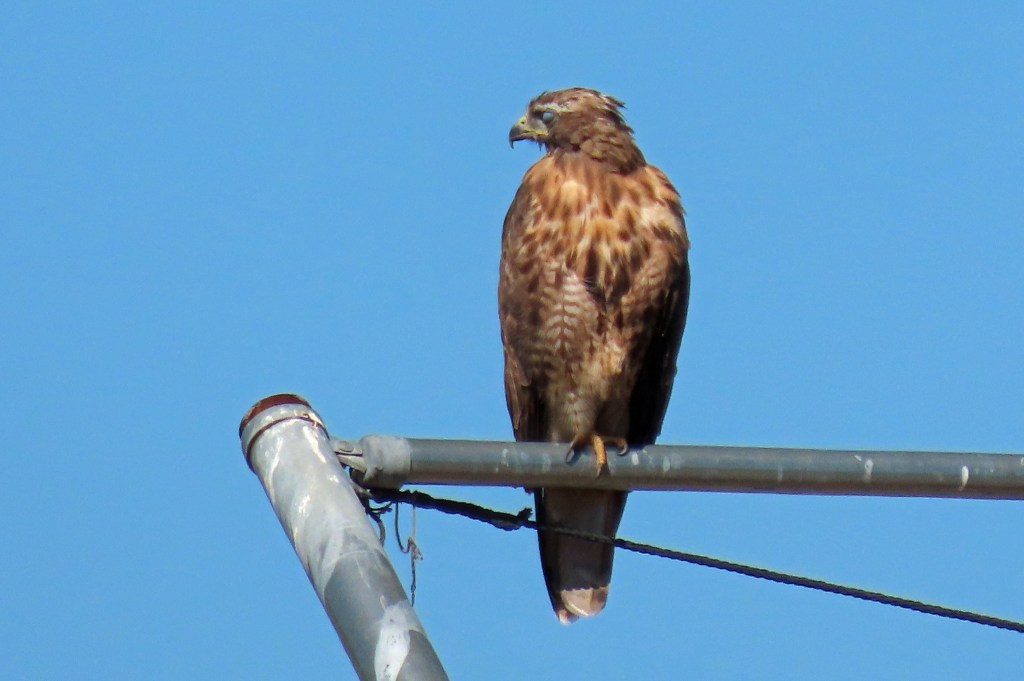
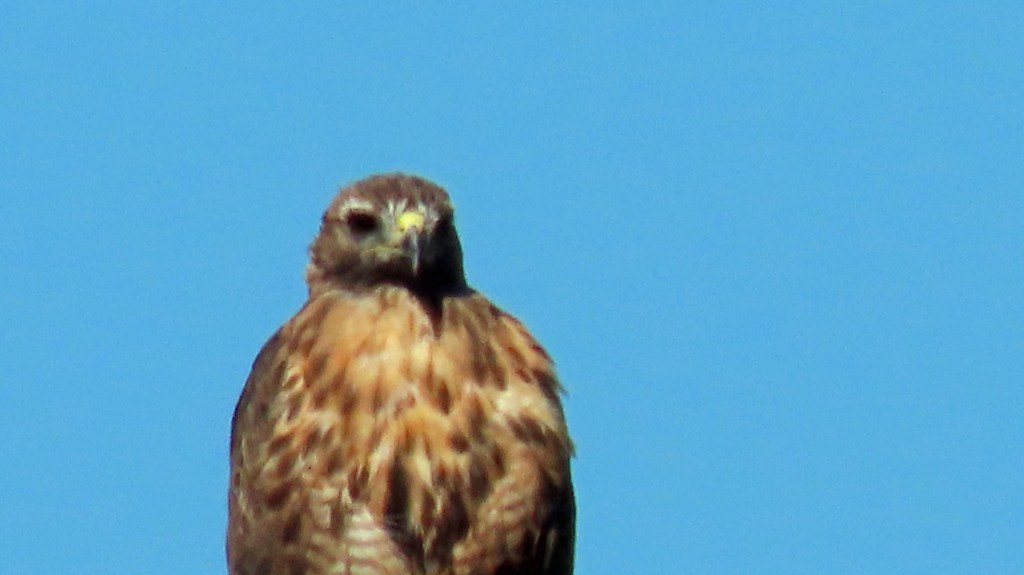
The camera had been laying nearby, because earlier the sky had delivered an exciting sight happening my way. Here’s a Red-Tailed Hawk staring at something that soon would become its capture.

Birds have incredible eyesight. This one, parked high and several hundred yards distant, saw me and my pointed camera. Several minutes afterwards, it lifted, and then while lowering flew in the direction it had been watching.

Back at’cha, human

Below-sky, too, is great. Here’s my barn’s wild resident.

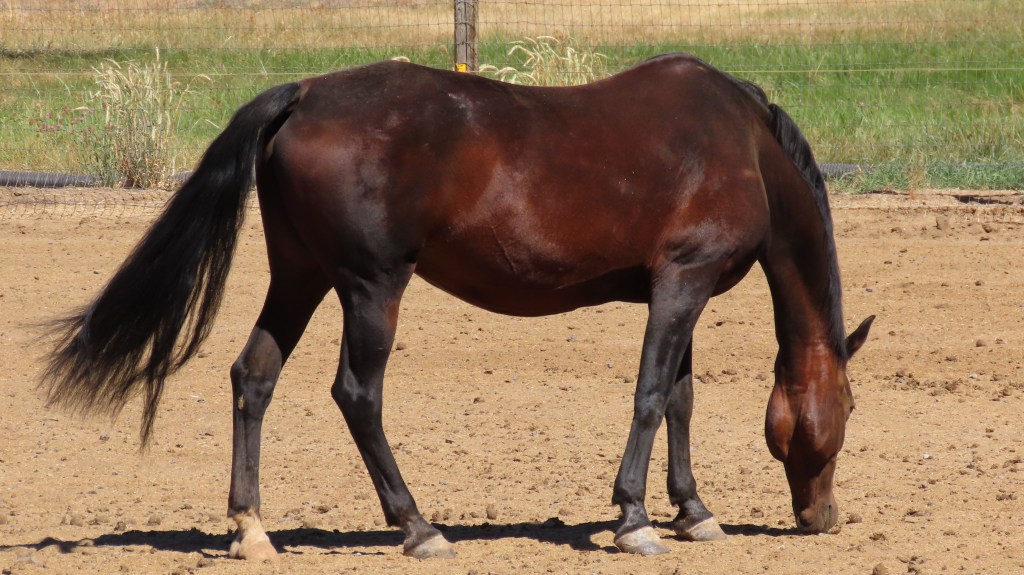
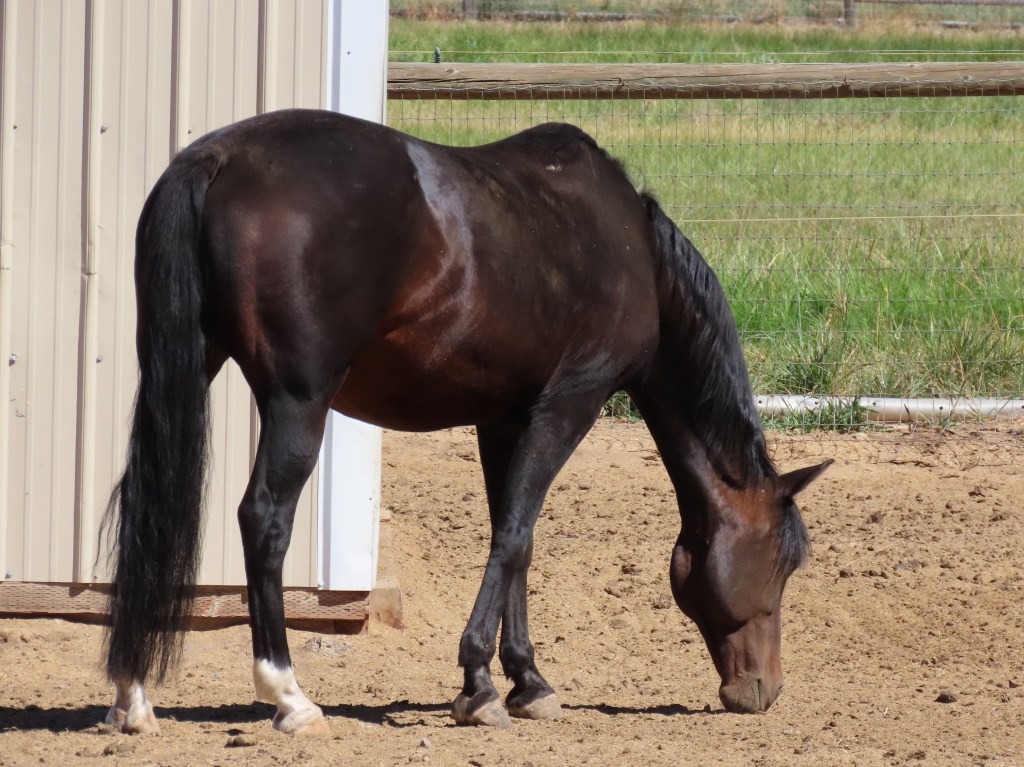
And the horses, each of which having lost a shoe must await the farrier, and completely is bored.

Rosie
Sunni

Dear Friends: A handy camera memorializes in-the-moment visions, and feelings. Diana

Traveling Anew

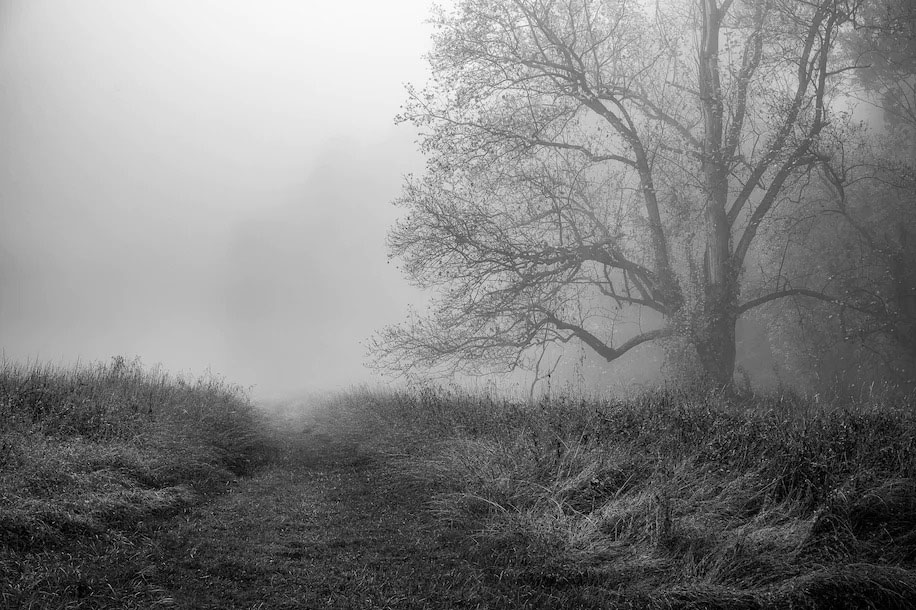
Multiple exposure, “Path Through the Fog”, by Alan Sislen (Washington Post 8/28/21)

Saturday, August 28, 2021 —(On September 20, the full moon, “Harvest”, will rise nearest to earth.)

I’m sipping from a cup containing 2X-caffeine, by Starbucks. It helps me wade through news of America’s winding-down hours in Afghanistan. Bloody awful stuff, referring not to caffeine, but to what’s occurring or could happen in the Middle East.

I remember as a little kid in the fifth or sixth grade, hearing my “geography” teacher talking about the Middle or Far East. I wondered, what’s the difference? Finding an answer didn’t seem important for many years. The question renewed on September 11, 2001.

Kids today and in the future will examine history differently.

For example, there’s a deadline for America’s withdrawal from Afghanistan, set exactly twenty years after the Twin Towers Bombings. This suggests a “connected flow” of distinct activities.

Instead of having to learn separate incidences, kids will learn a parenthesis of activities bound by dates. An entire flow will be captured as the years between 2001 and 2021, as an awfulness of horrors, summarizing the attack and civilian death, the war and combat-failure, and an entire world of comprehension with overwhelming sadness.

I remember learning about WWII in a series of separate large incidents. There was a bombing of Pearl Harbor. There were radio reports of battle engagements and incidents. There were speeches broadcast from America’s President. There’s a date on which war officially ended. There’s an afterwards, too, when America dropped atomic bombs on Japanese cities.

Past learning of history meant organizing and memorizing unique incidents. In the future, a parentheses will capture activities and be bookmarked by the dates of beginning and ending (if “endings” still seem possible).

Dear Friends: Mornings might be improved by avoiding a double caffeine with the news. Diana

Adjustments

Friday, August 27, 2021 —(On September 20, the full moon, “Harvest”, will rise nearest to earth.)

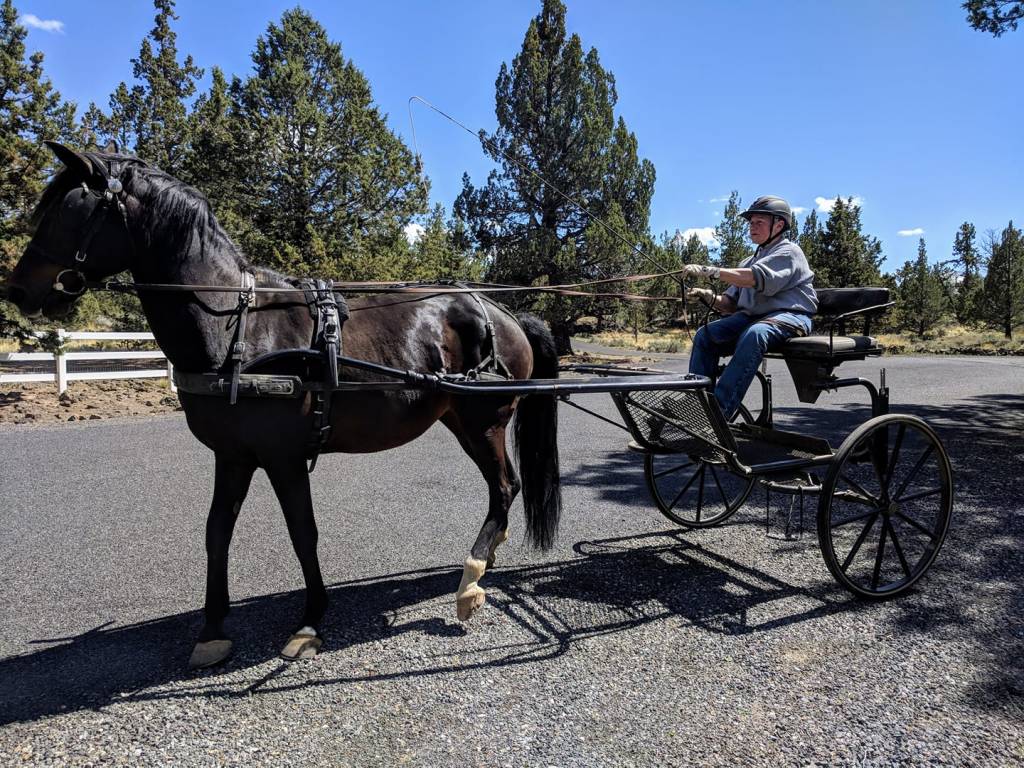
These days, driving either horse is out of the question for each has lost a rear shoe. A horse needs four solidly-working shoes to be driven, because road traction will rasp away bare hooves. Now, both horses are in dry lot until our farrier arrives from California.

His home base is Mammoth where he works on athletic animals, riding and pack mules and donkeys, and jumping and dressage horses. He’s a very skilled craftsman. Although it’s hard for me to not actively work my horses, our farrier is worth waiting for. He has good judgment for hoof needs, his work improves movement.

Horses, like humans, don’t have perfect feet. My pony, Sunni, in front is slightly pigeon-toed. Her sister, Rosie, works back feet as if she’s moving along a tightrope. The farrier grasps how an animal moves and builds shoes that support athleticism by helping to correct weight distribution.

He’s an old fashioned kind of worker. Brings a truck crammed with heavy equipment like saws and welders, gets a fire going, sets up a forge, and hammers away. It’s rare that my horses shoes fail before our farrier returns in six weeks. Sure, by then, their shoes usually are worn thin but they’re still on hooves.

So now, each lacks all four shoes and receives reduced feed. A horse standing around needs less feed, not just to avoid weight gain, but because athletic-level intake makes them “too hot”. In other words, excess energy above that being worked off, makes my horses termite-like. They actively chew on and destroy wood, meaning goodbye to stall insides and the fencing outside.

Next week, the farrier will arrive. That’ll let us start again to drive.

Dear Friends: It’s among “never-dreamed-ofs”, though my years in city and corporation worlds. Diana

Perfect Storm

Sunset 8-25-21

Thursday, August 26, 2021 —(On September 20, the full moon, “Harvest”, will rise nearest to earth.)

The evening skies are awesome and compelling. There’s brightness from the sinking sun and fogginess from the smoke-filled atmosphere. It’s interesting what a camera might deliver from overhead.

An atmospheric condition calling attention is changing weather. Several months ago, our temps quickly switched from cold spring to hot summer. Now again and as suddenly, we’ve left hot summer to deal with cool autumn.

There’s no rain, and everywhere needs moisture.

My hay grower had a poor crop, couldn’t provide all his customers needed. He promised more hay, if his second crop yields decently. The hay delivery fellow affirmed the problem. Farmers are doling to customers. Here in Oregon, without melting mountain snow-packs to fill reservoirs, water in short supply means cutting back irrigation allowances.

The lack of rain suggests that second crops won’t yield enough hay to cover shortages. Fortunately, I’ve tended to hoard hay and have enough for my animals until next summer’s cuttings.

America’s lack of water is a dire situation, especially here in the west. Blame water shortages on environmental changes, but also, remember to follow the money. Water overuse and misuse is about politics and pricing, unfair distribution allotments, and inattentive citizens with sloppy-usage habits. There’s an innate human sense that water’s always available.

While a young woman I remember a new public lesson: Don’t Waste Water. I remember learning a new behavior of turning off the faucet while brushing my teeth. From those early awareness days, to these warning of water shortages in dire straits.

Changes in weather patterns, shortages of water, bungles among distribution channels, higher prices for everything, American Military’s hasty departure from a war zone, and so much more. These wrongs are exacerbated by a lingering, ever-frightening pandemic.

Dear Friends: Our world is Earth, needing everyone contributing toward its welfare and longevity. Diana

Animal Nature

Wednesday, August 25, 2021 —(On September 20, the full moon, “Harvest”, will rise nearest to earth.)

This summer, after quitting my part-time job and staying home, I watered a desert-like area beside my house. That brought a variety of critters that delighted me. I decided to keep my inside-outside kitty, an expert small wildlife killer, inside all summer. Max hasn’t been happy about this but he’s adjusted, hangs out on windowsills and stays aware of what happens outside.

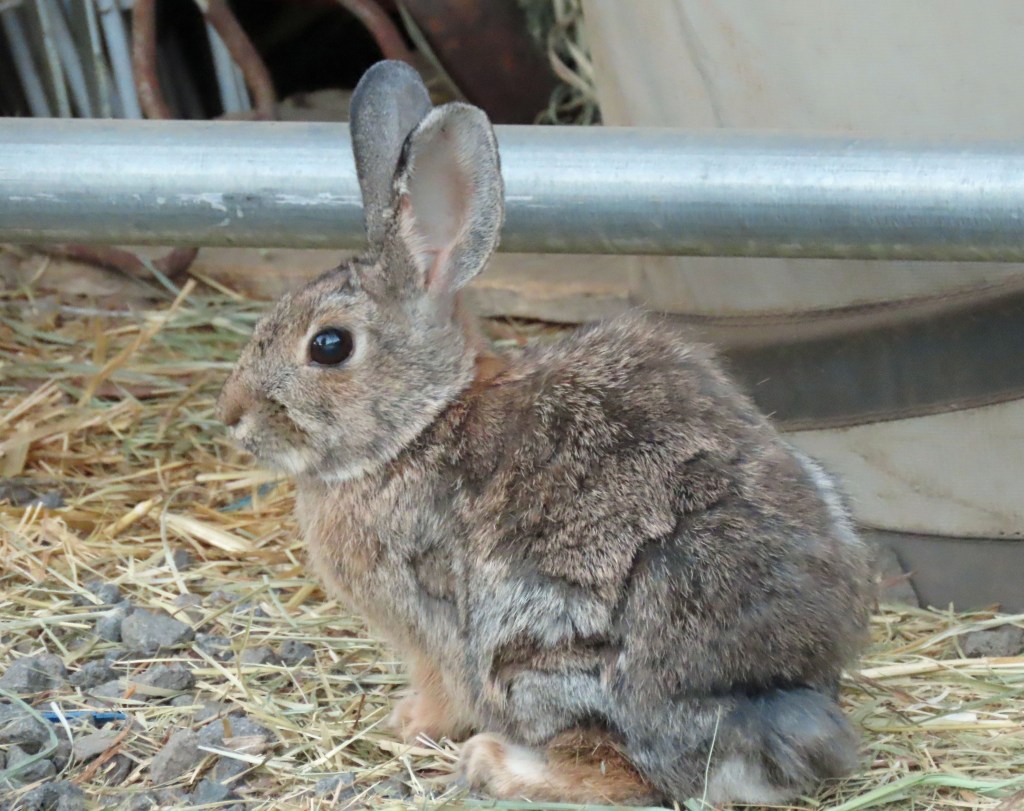
Meanwhile, I’ve enjoyed a growing population of bunnies, frogs, garter snakes, birds, and especially chipmunks. Years ago and to my dismay, Max killed off the chipmunks that originally ran around. He killed off baby bunnies and any unlucky birds not tuned to instants of great danger.

This summer at home, I decided to encourage wild little critters.

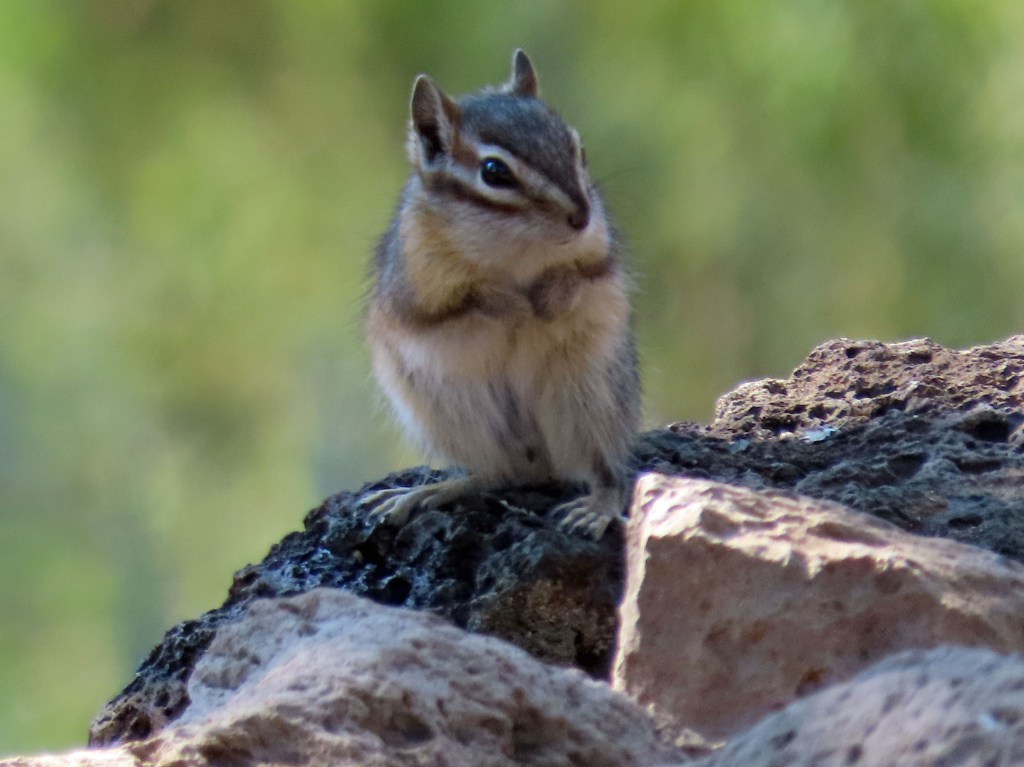
Recently, I set out a ground feeder, added bird seeds, and watched the delighted chipmunks. They showed up, beginning when one discovered the seed stash. Soon another appeared, and finally, an entire family of five or six are dining almost nonstop. I kept adding birdseed and loved watching the chipmunk action.

My bird-food mix included nuts, and birds, especially Jays, also enjoyed the feeder

Chipmunks were my desired customers. I’ve seen partially-tamed ones taking peanuts from a human hand. That was a goal along with photographic opportunities, it would be slow-going. They’re incredibly quick, hopping in and out of a feeder, perching on a rock to eat before hopping again into the feeder. At a slightest disturbance, they rush away down the driveway, trails straight upright toward other properties.

In my RV garage are humane traps, set to capture mice and rats. Occasionally, one yields a trapped chipmunk. Those little squirts are handfuls. They fight wildly for freedom and readily would bite a hand stupid enough to be vulnerable. My traps allow easy releases into the garden area.

Last night, angry screams announced a cat outside, and in Max’s territory. From a windowsill, Max threatened a kitty that didn’t seem frightened, just sat watching my howling beast. A sight of me and sounds of my voice didn’t bother the visitor. When I bumped against something that made a surprising noise, the outside one disappeared. Max shut up and yawned.

As much as it’s a hated thought, I understood that I’m setting up wild critters for destruction. Not from my cat, but by those roaming freely and becoming attracted to noises and scents.

I made a decision, went outside and removed the seed-feeder. The days of easy-food for wild critters are ended.

Dear Friends: Interfering with nature is a poor idea, except for rescuing a critter in need. Diana

Afterwards

Setting, 8-24-21

Tuesday, August 24, 2021 —(On September 20, a fav full moon, “Harvest”, will rise nearest to earth.)

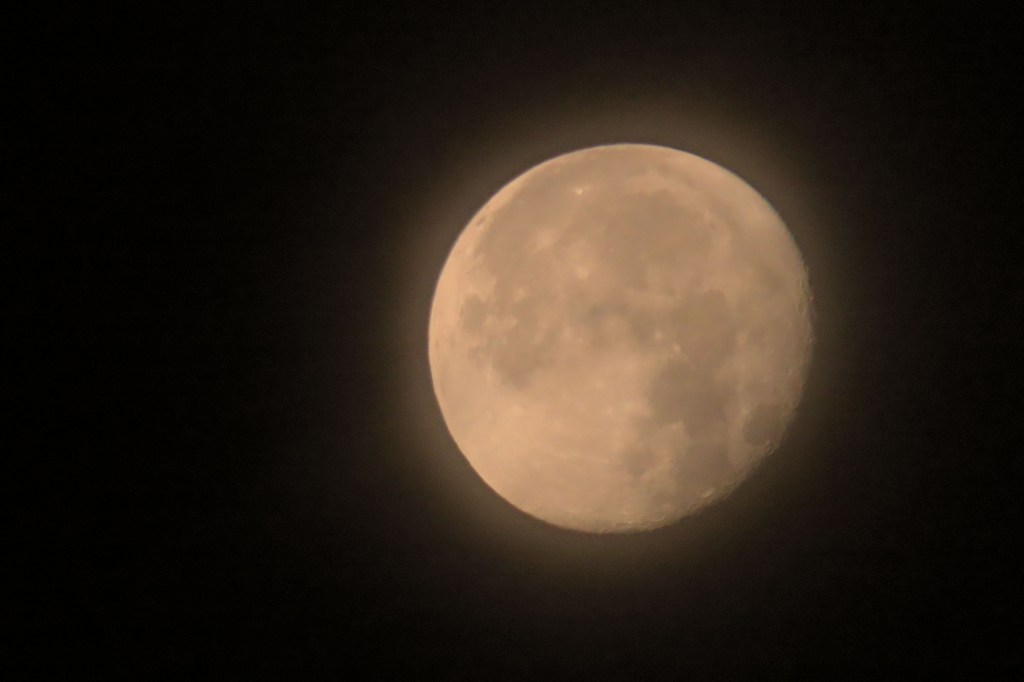
Even after Sunday’s Sturgeon Moon rose at its fullest, on Monday night it remained totally visible and striking. When an upward glance through an appropriate window caught the moon, I stared and felt joyous. Early today, that heavenly floater remained lovely.

Always, like many humans, I feel full moons as special events. Over the years, I’ve blogged about some, and most often, September’s “Harvest Moon”. What makes that moon seem special is that it occurs just as our daylights darken, with earlier evenings making a full moon particularly eye-catching. It’s not a super moon, but maybe psychological wishes make it seem very near. Anyway, September’s attractive light soon will appear and be glorious.

I’ve a growing appreciation of moons in all their phases. Earlier, my appreciation was for them as sudden, beautiful night lights. Now helped by my friend and fellow moon-chaser, Susie, I’ve a changing view. She might have a deep sense of moons somehow being alive up in the sky. We’ve chased several full moon rises, and my innate sense has begun toying with the moon as a living element.

If it seems silly, that’s okay. Similar thoughts are affirmed by many past and current, best and brightest, writers. Humans historically have toyed with ideas about the moon as a living element that offers either, or both, comfort and discomfort. The epitome perhaps is Shakespeare, who perceived the moon as essential and warming, sometimes hopeful and/or devastating, and always as a globe alive.

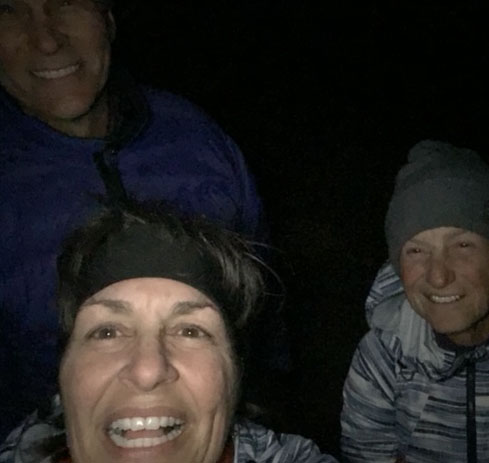
Anyway on Sunday night, and standing beside a body of water in pitch darkness except for moon reflections, our team did manage somehow to capture a selfie. Such as it is, here we are, Dale, Susie, and me.

“Believers”

Dear Friends: While planning ahead be aware, it’s impossible to predict where life might take you. Diana