Cow Happy

Monday, March 01, 2021 (20 days before First Day of Spring)

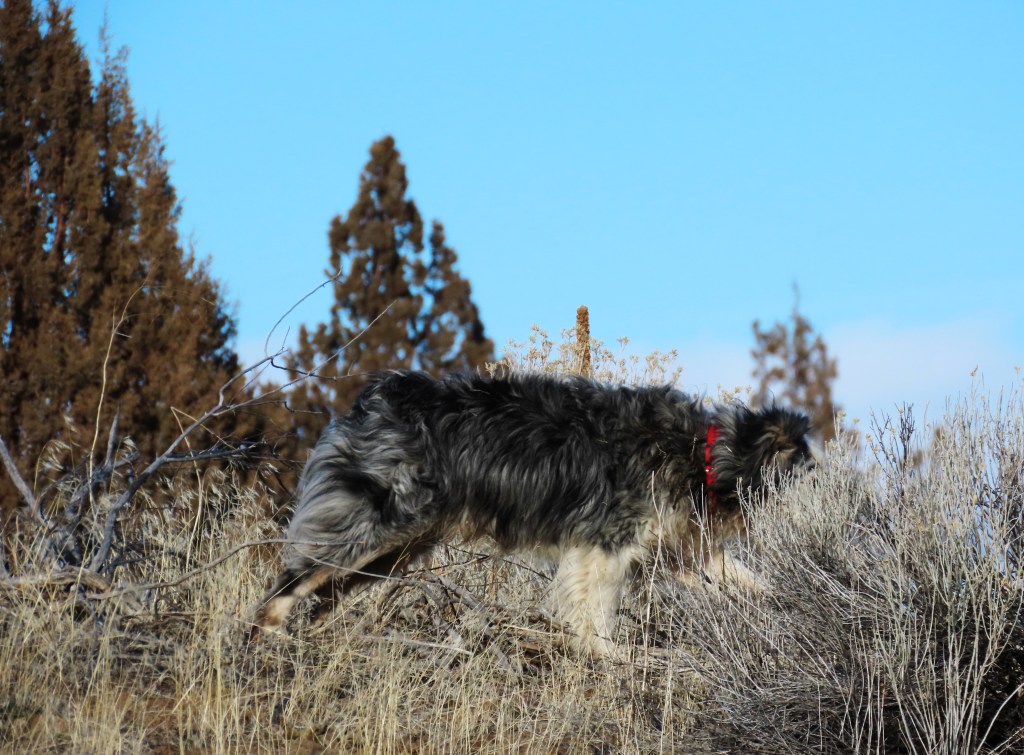
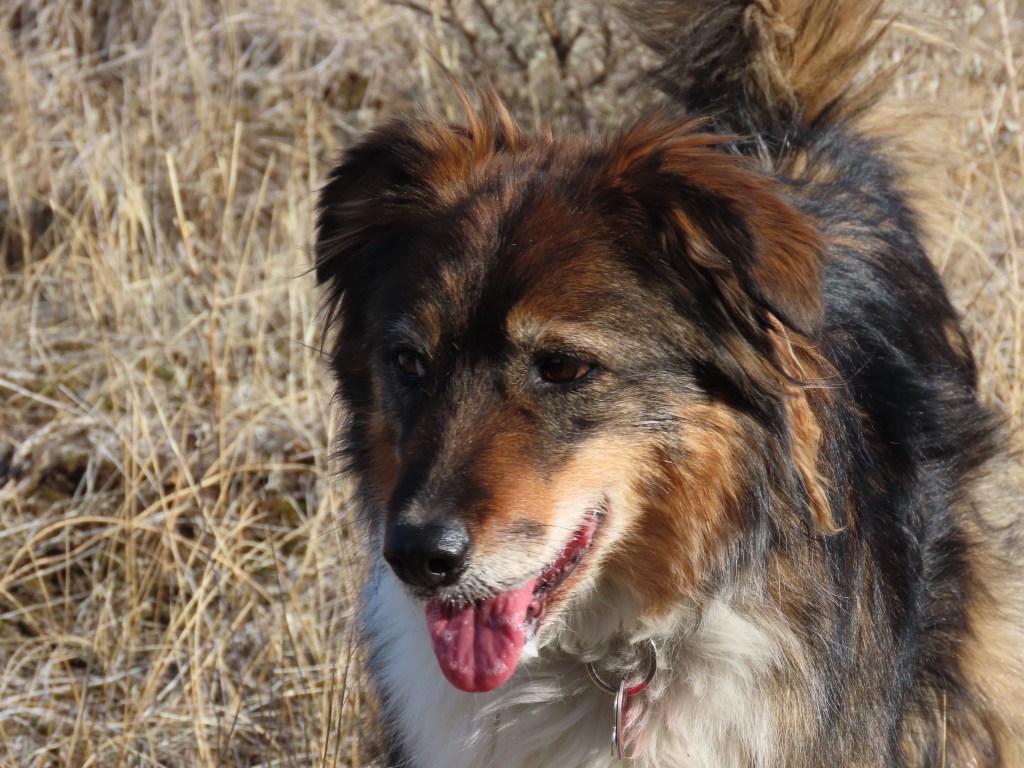
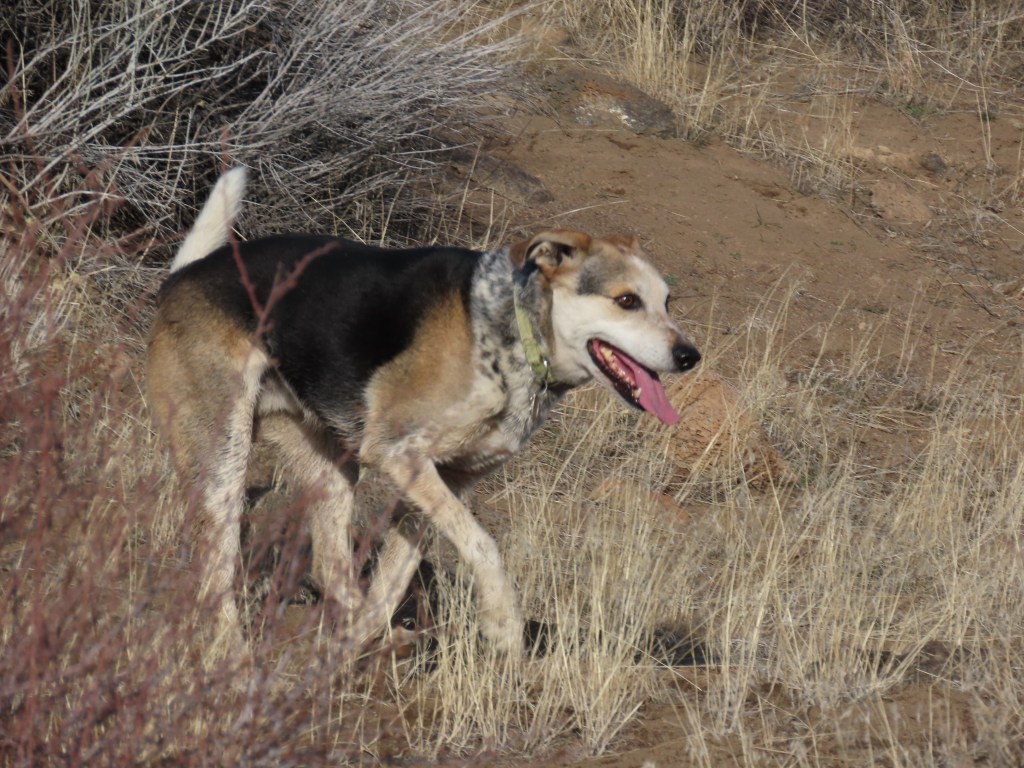
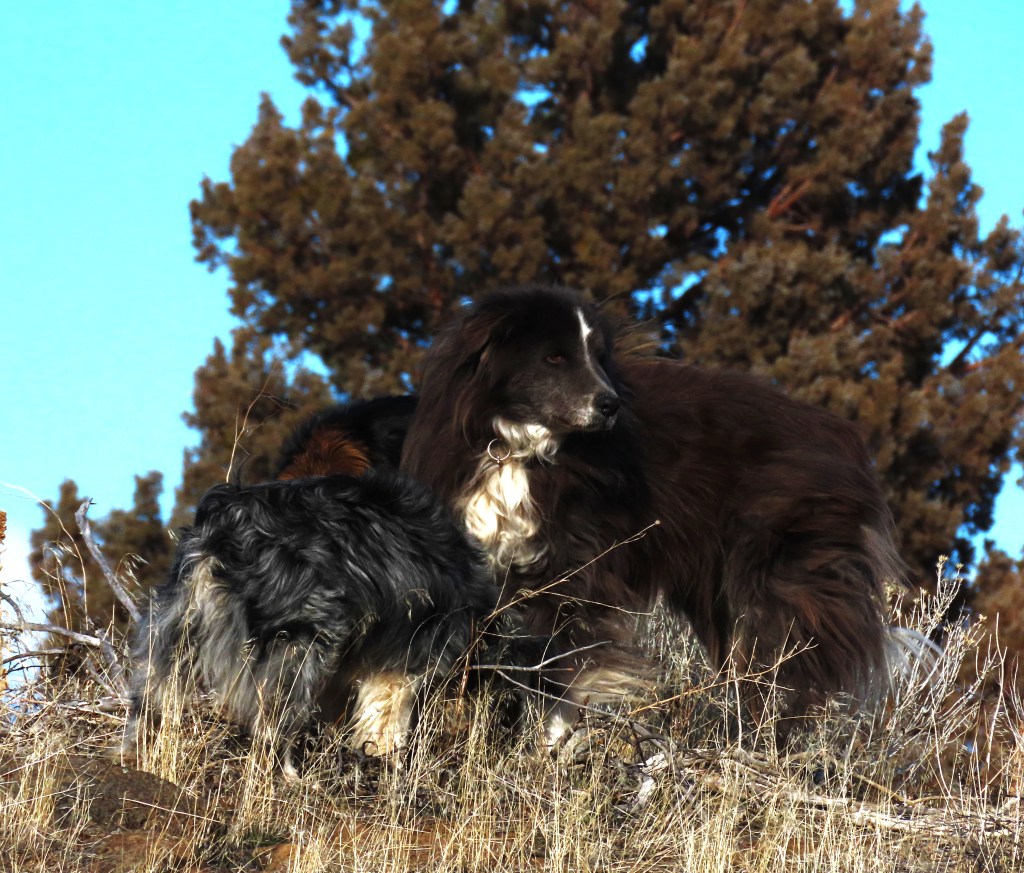
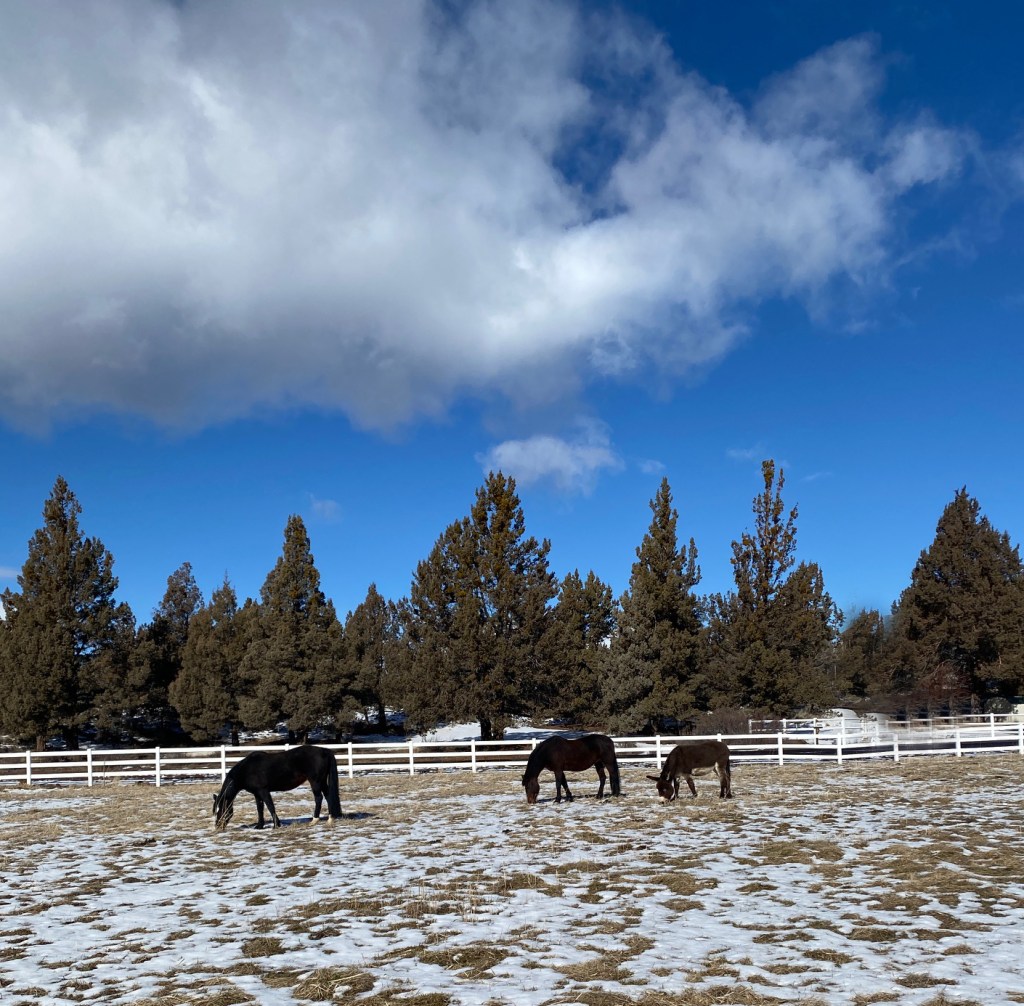
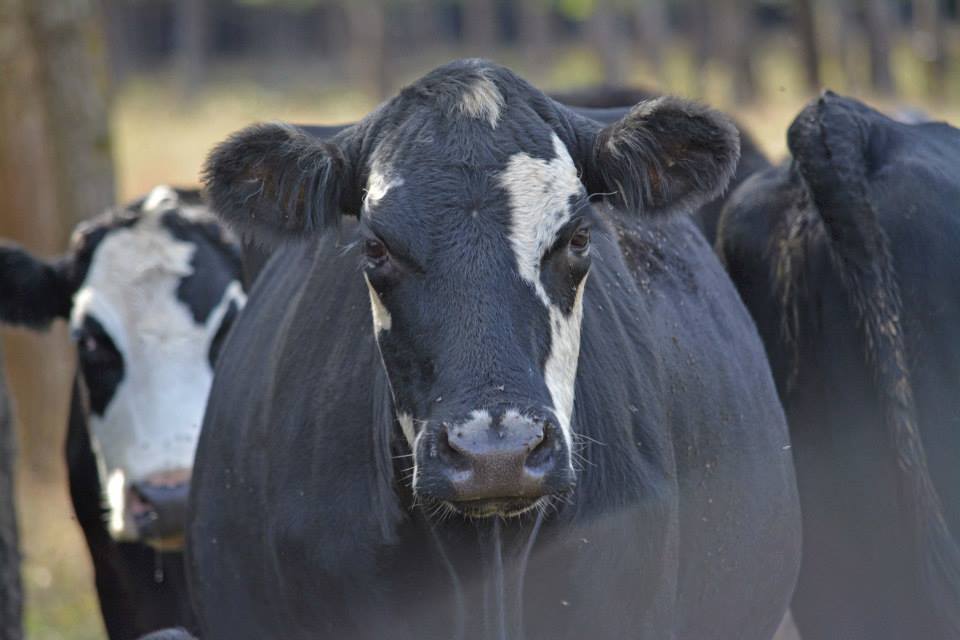
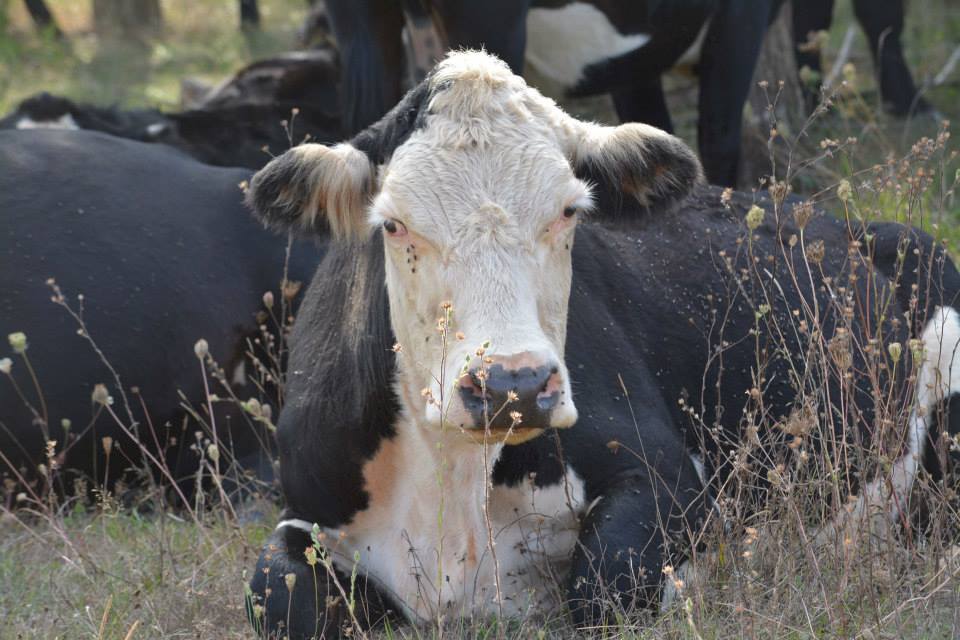
One of my postings years ago offered an idea that still seems great. It’s that by finding a small relaxed herd and hanging out with the cows a bit, one will begin feeling more mellow. I love imagining this, it seems so possible.

I’m often in a space of high mental energy and near-anxiety. Escaping this means finding ways to chill out and relax. My key solution is being around animals, the sorts most of us have, dogs, cats, horses, and for some of us, birds. I’m lucky to have nice horses.

Animal interactions force us to work at thinking in the animal’s world. This activity eases us from our own worlds.

Hanging out with cows is a notion that would be worlds away from my life. Except it’s a secondary experience, and something that seems real, could be beneficial.

Years ago, I taught creative writing to adults. Many had families and long working experience, but had realized the value of re-entering college and completing their degrees. One of the most memorable stories that a student submitted was from a man, who while a young boy had received the gift of a baby heifer. His paper told of growing up with the animal and providing her full care. He spoke eloquently of a poignant close relationship that existed between them.

His pet became tuned to his needs. Sometimes finding the cow laying in her stall, he’d snuggle against her, his head resting on her belly, and fall asleep. The animal wouldn’t move until he awoke. The details of their mutual sensitivity and closeness opened for me new possibilities in relationships between humans and large animals.

I’ve since believed that herd animals are capable of offering much more than often realized. In struggling to explore my artistic side, I must remember to find relaxing periods. Interacting with my animals helps.

Now, as today’s header photos re-trigger that student’s essay, I’m starting to think of finding few peaceful-looking bovines, and for awhile hanging out with them.

Dear Friends: Communications that teach us about others also teach us about ourselves. Diana
‘Neath The Big Blue

Red Tailed Hawk

Sunday, February 28, 2021 (21 days until the First Day of Spring)

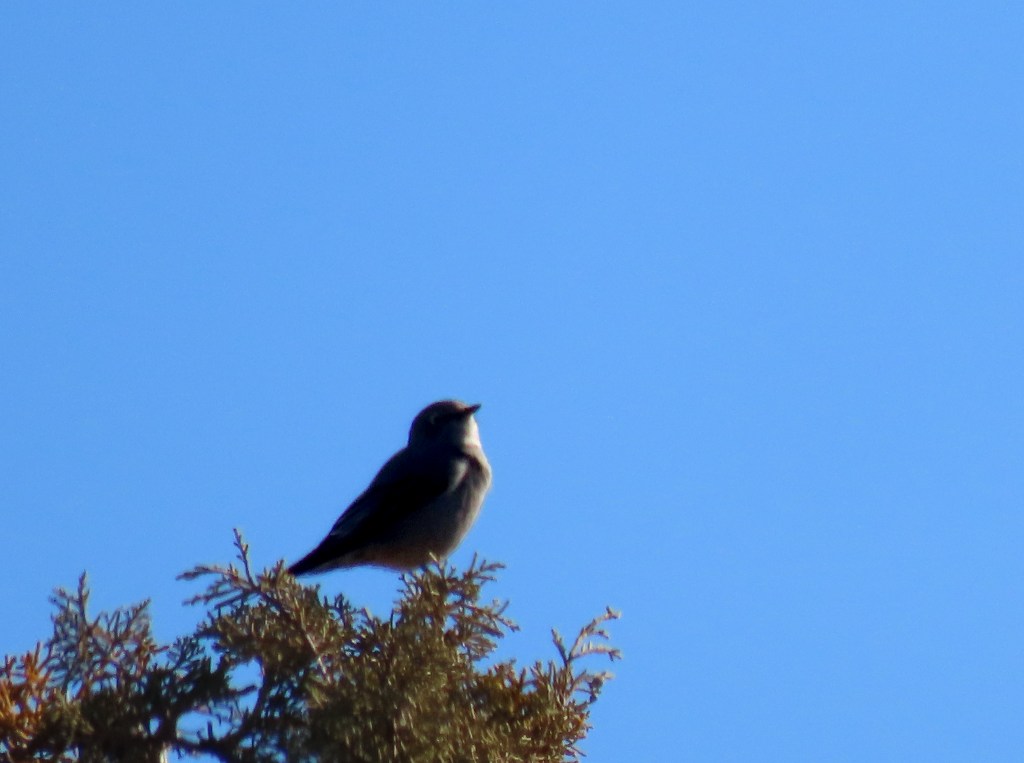
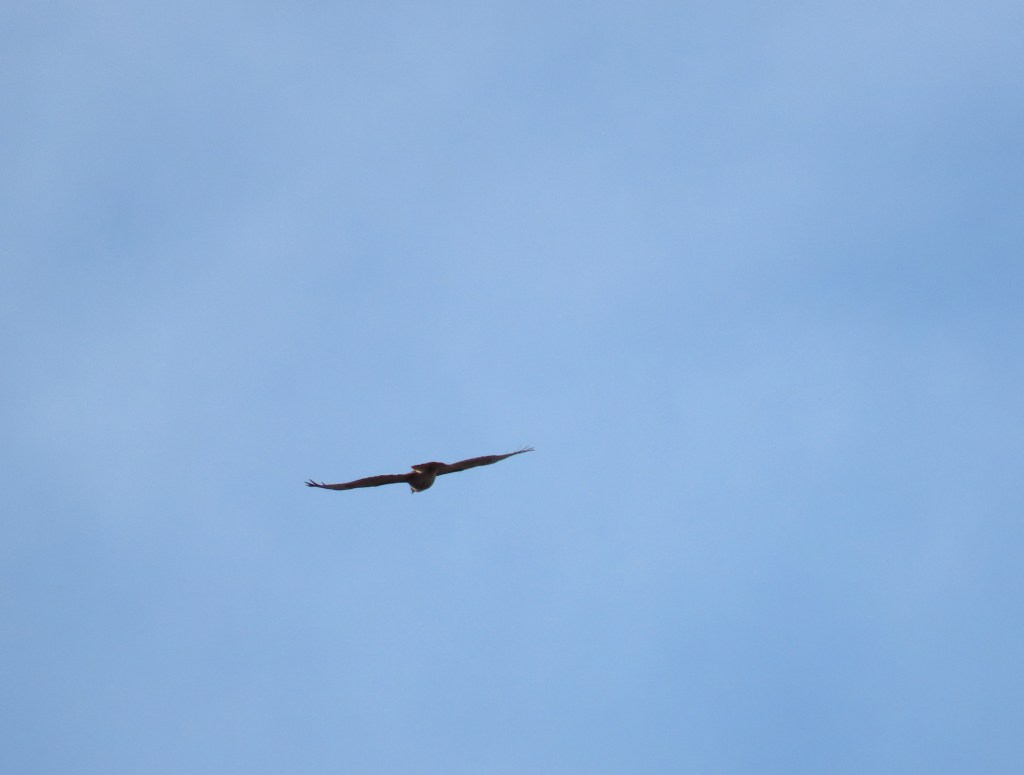
It’s no great picture of a raptor, but it’s a miracle that my zoom camera captured it soaring way overhead. The hawk was one of hunting pair that eventually drifted lower, but my camera couldn’t again find one or both in the unclouded sky. The Zoom has limits that frustrate but not enough to dwell on, because it can make pleasing captures.

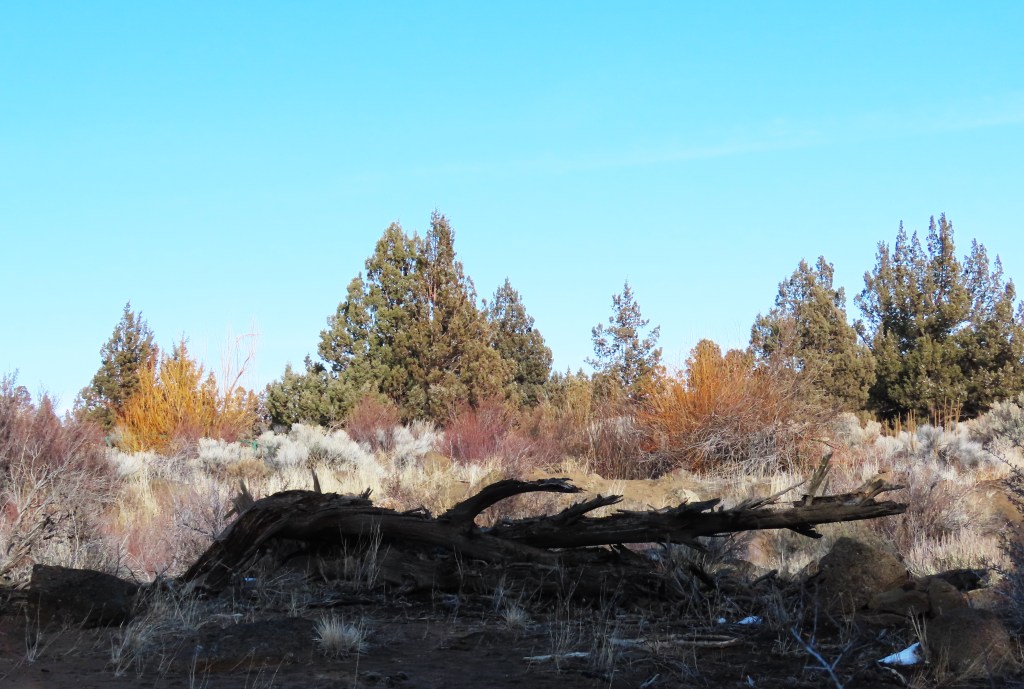
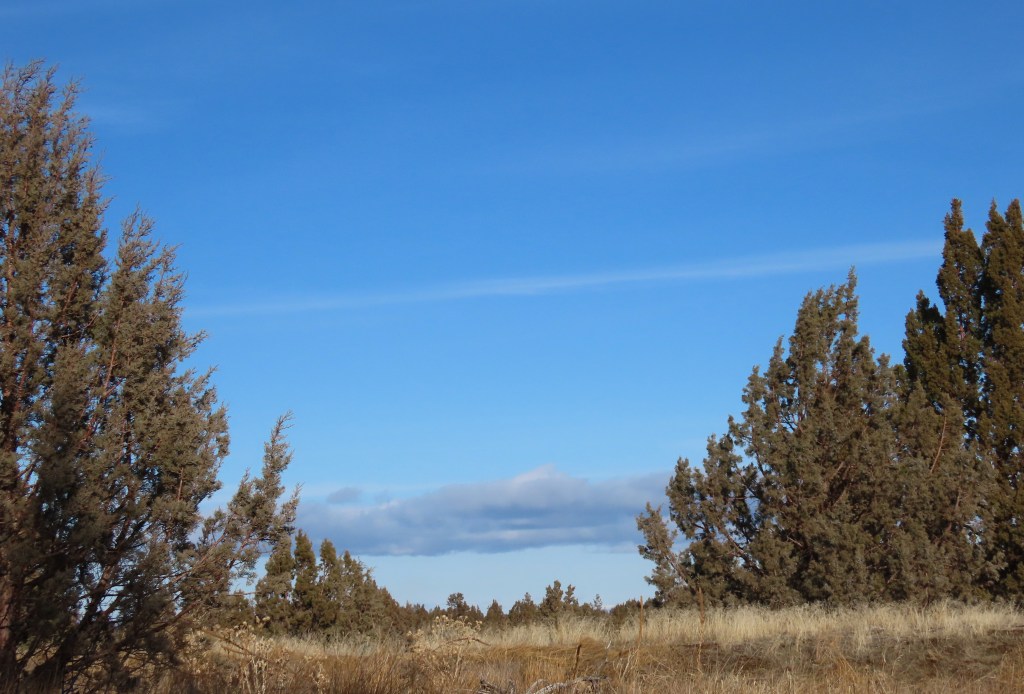
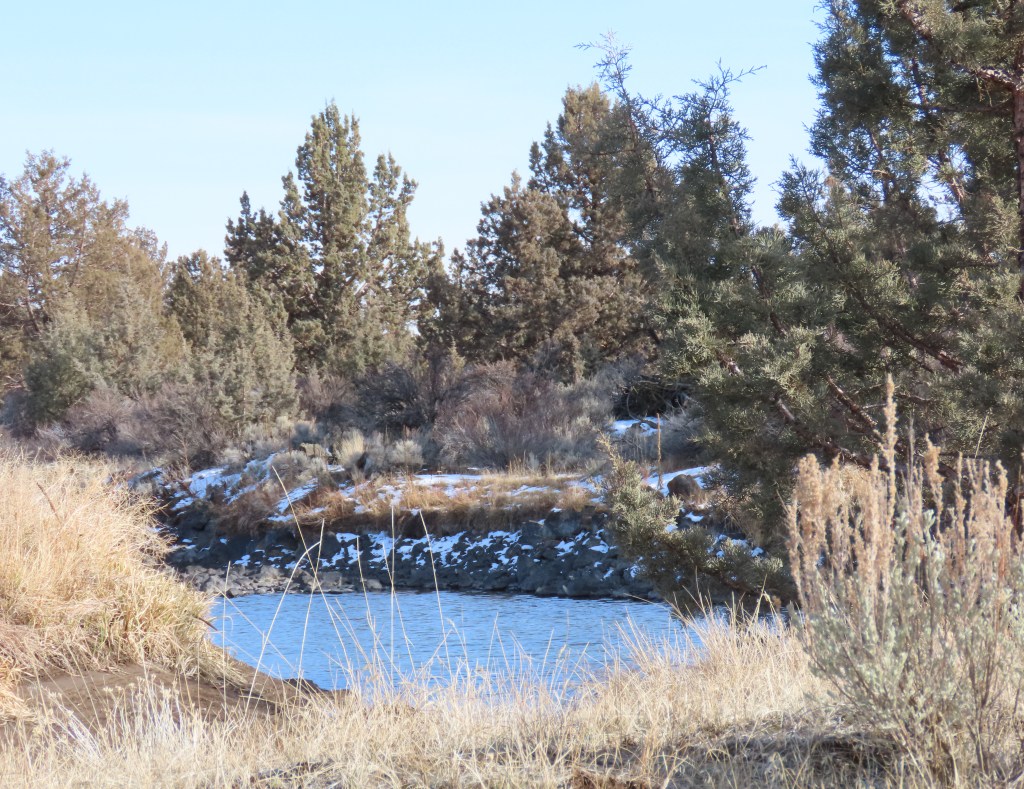
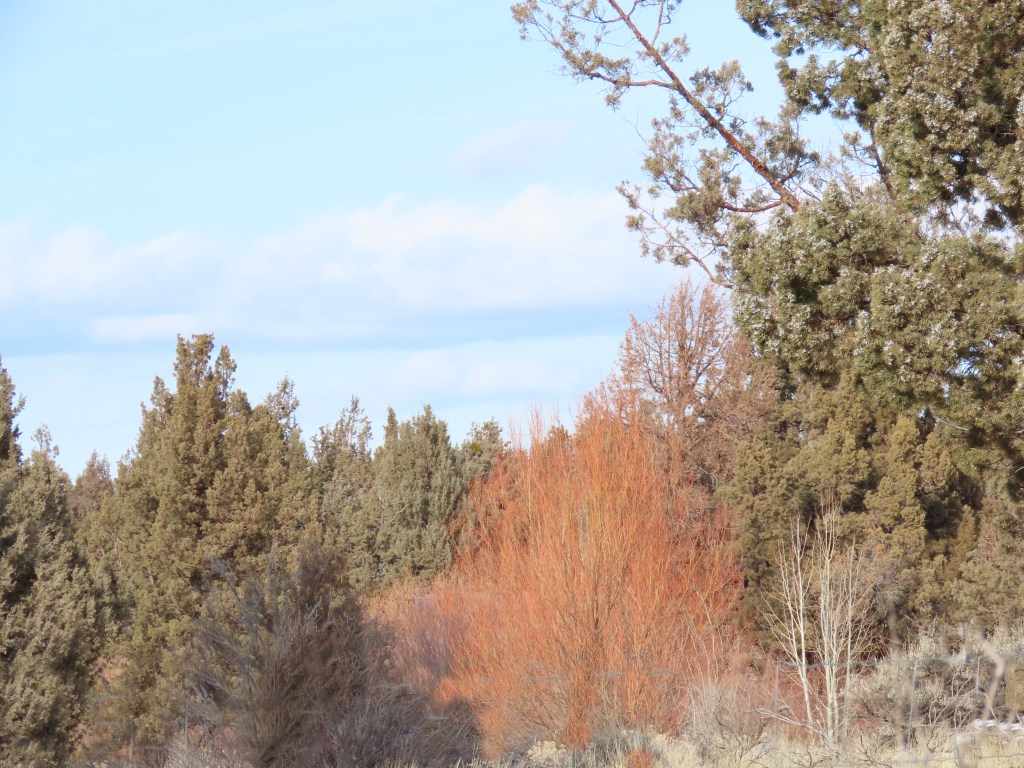
With the dogs loaded into my Jeep, we went to a natural space on Bend’s east side and hiked several miles. I planned to photograph relatively simple scenes, searching for one that whole or in parts could become a model for painting in pastels or oils. These are candidates.

Countering log
Vision
Secret
Winter

I’m no natural artist, but viewing art works does teach that truth and beauty are in the eye of the beholder. As I seek my own version of truth and beauty, hold on, for the ride could become wild.

My dogs are wonderful hiking companions, always nearby, or returning frequently for a reassurance that I’m tracking along. On this outing, I didn’t intend to take photos of the dogs, but in the end it’s impossible to resist their presence and sheer fun.

Louie, loves anything yukky
Osix, naturally a beauty
Ranger, always having the greatest fun
A muddle of three, made striking by Miles’ distraction and outer focus

I’m committed to move forward. There’s a web site in creation and a plan to explore my artistic side. To answer a reader’s question, I hope to coordinate the website and blog to work together seamlessly (both on the Word Press platform). There should be no need to renew blog subscriptions. I’m hoping a companion website may provide more for folks to enjoy. Stay tuned.

Dear Friends: Describing what one is learning may turn into a way of teaching others. Diana

Toward Going Live

Saturday, February 27, 2021 (22 days before the First Day of Spring)

Yesterday, I ordered from Word Press a new webpage, for Eight Pines Ranch, and began designing it. Its intended logo, above, is the Ranch sign that my friend, Susie, created and surprised me with months ago.

For some reason, my ordering of a new page made Word Press turn me into an unknown this morning. It tossed me off this daily blog site. All today’s early hours were needed to negotiate a return to this page. Now, most of my thoughts are anger at my blog host, but railing at an uncaring platform is useless.

About the Eight Pines web page, it’s a shot in the dark and still ill-defined. I’ve been wanting an Eight Pines website, and sometimes, just moving ahead with an idea tends to work out fuzzy details. Word Press, when it’s working right, is easy to use. It’s suggestions and templates can reduce designing and creating efforts. That’s cool, for after an initial web page becomes a reality, initial designs may be reworked and elaborated.

Currently, I’ve a couple of ideas for the website’s content. One is to make it a writing platform for my daily blogs, and another is to use it for displaying creative arts, and not necessarily my creations, for I enjoy obscure and interesting pieces from news sources and the internet, and want to make them more available to readers. I will admit to wishing to be more creative in my personal writing and photography. I’ll explore this vis-à-vis the website.

So, I’m introducing my hoped-for transition. All will depend on the page’s being on a friendly, appropriate platform, and having clearly defined objectives and goals.

Dear Friends: My body shows signs of aging, but my dreams not at all. Diana

A No-Nerd’s Confessions

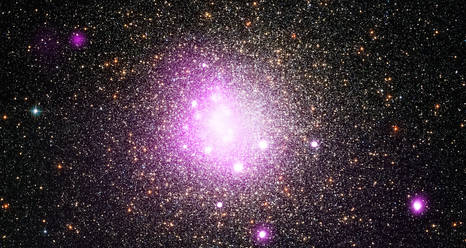
Cosmos, NASA Photo

Friday, February 26, 2021 (24 days until the First Day of Spring)

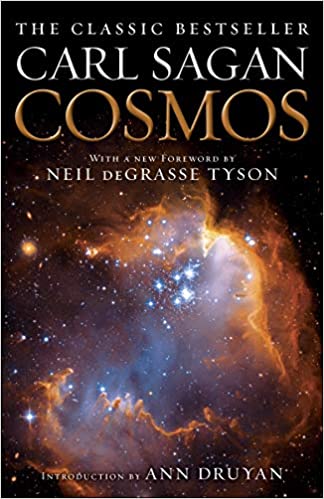
I’ve wondered why the powerful draw that keeps me reading Carl Sagan’s monumental 1980 book, Cosmos. Sagan was an American astronomer who created Cosmos as the script for his 1980s-era television series of the same name. I hadn’t ever read from cover to cover the the beautifully illustrated book, but immediately dug it out after seeing the Mars Rover descend and land.

Sagan published other astrological books prior to Cosmos, a work fine in its time that made him famous. Technology continued to evolve and soon outdated Sagan’s book and television series. Before dying in 1996, Sagan didn’t actually update Cosmos, but published a sequel in 1994, Pale Blue Dot: A Vision of the Human Future in Space.

Last week and awestruck, I watched as Mars Rover descended to the surface of Mars and landed exactly on the target spot! The immensity of that accomplishment, and renewed appreciation of high capabilities in human intelligence combined with computer technology, made me want more knowledge.

My skills in this modern techie world are at a level of simplest “armchair activities” with science and computers. I can’t move forward to learn more how Rover got to Mars and landed perfectly. First, I must renew old high school learning about key historical astrological activities. I had to study accomplishments by key (Western) individuals: Ptolemy, Copernicus, Galilei, and Newton, and eventually, forgot all, except for Galilei. He discovered that the earth isn’t the center of the Universe and so challenged social norms that the Pope went after him. A fascinating bit of social history.

Sagan’s Cosmos lays out from early times the sequence of astrological successes. For example, 2,200 years ago in Alexandria, an astrologer-poet-musician, Eratosthenes, experimented with sticks and figured out that the earth isn’t flat, but curved. Moreover, those sticks enabled him to become first to estimate correctly the kilometers of earth’s circumference, and its distance from the moon.

It feels wise to start way back and refresh all that history, before attempting to move forward to try and grasp modern astrological concepts.

Dear Friends: Backing up and making mental corrections will realign us to new possibilities. Diana

Smile

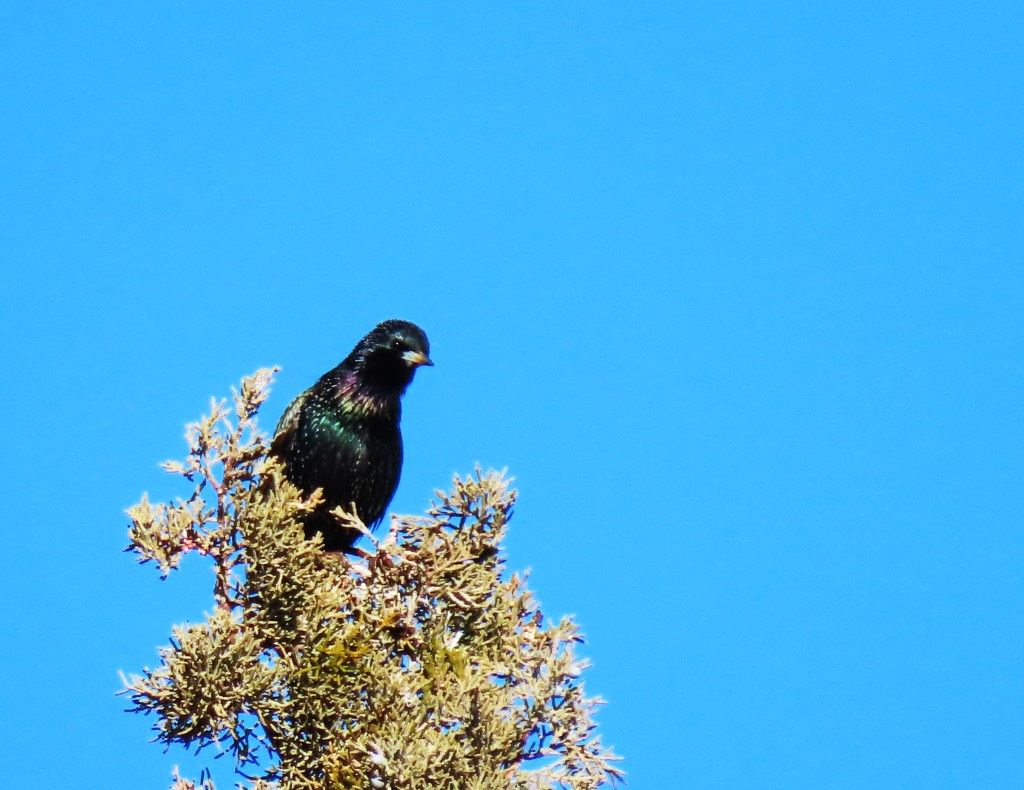
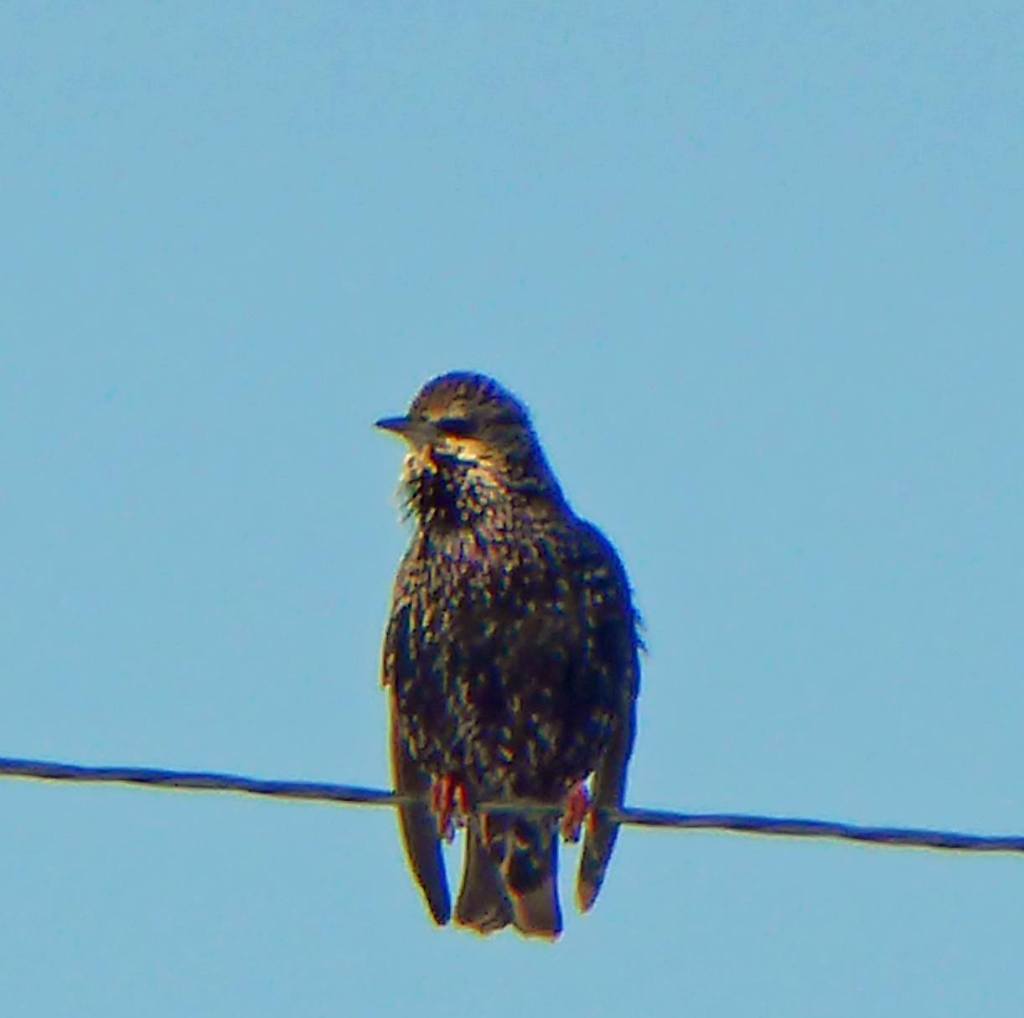
Starling

Thursday February 25, 2021 (25 days until the First Day of Spring)

I went adventuring with my camera, shooting reasonable sightings, using various settings, randomly selected from the choice wheel. To my surprise, the only difference easily visible among the settings was a panoramic capture, a quick street view shot that unfortunately isn’t post-worthy. I’ll take another panorama, one more interesting for posting.

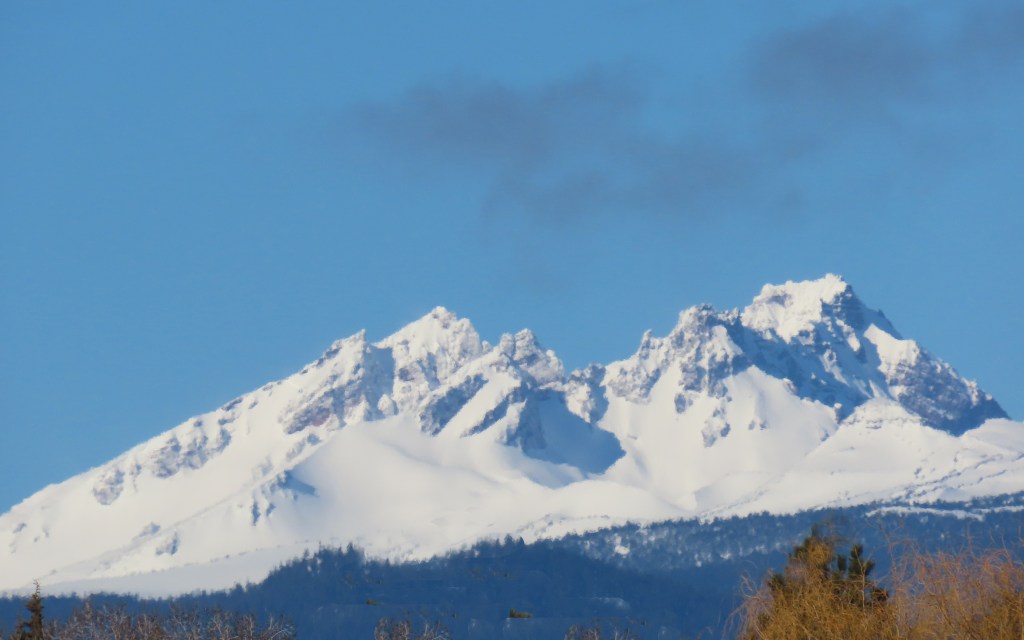
On this setting, and now I can’t remember which, the capture brought a little more detail of the most interesting profile in our local Cascade Range.

Broken Top

From far away, my camera shot treetops. They weren’t accidents, just illustrating the camera’s settings.

Pointing at treetops turned up one of my favorite birds, not a clear capture but a fun sighting. These active little guys are all over the place. Usually moving in flocks, they prefer heavy clumps of brush and love dashing from one to another.

Bushtit

These photos summarize my recent explorations with a camera that offers more than I understand to tap. I’ll keep trying and believing in practice making perfect.

Dear Friends: Regardless of expertise, there’s a potential for humor in whatever we do. Diana

Cosmos

Wednesday, February 24, 2021 (26 days until the First Day of Spring)

My fascination with the Mars Rover notched-up my interest in the solar system. I’m almost pitiful after having begun reading Carl Sagan’s COSMOS. The complicated activities of stars, comets, and planets, are even more complicated as I try to comprehend distances as measured in light years.

I’m trying to understand a cosmos that hasn’t much captured me beyond moon sightings, sunrises, and sunsets. Like most of us, I’m no total novice, and understand common knowledge about the cosmos. After the Rover’s landing, I’m tuned into bits of information that grab harder at my mind and imagination.

Consider the ancient Near East a couple hundred years before the common era, when there was Eratosthenes, an astronomer-philosopher-poet-music theorist, and man of all seasons. He experimented with lights and shadows and determined that the earth has a curved surface. Armed with that knowledge and continuing to experiment with lights and shadows, he correctly calculated the earth’s circumference.

A modern reader who hasn’t delved deeply into the cosmos finds it amazing, the focus and dedication of Eratosthenes and scientists who followed. Ptolemy created a model of planetary movement where all in space revolved around the earth. Copernicus changed that model by determining that earth revolves around the sun. Galilei drew from European models of viewing machines to invent a powerful telescope.

Those bright men and their inventions represent more than just a string of history. Sagan’s work is making me realize how very small is earth in the immense universe. And in terms of time and space, how very small are we human individuals. We feel large while consumed by nearly-overwhelming survival concerns, but size has another reality.

It’s the power of human brainwork from earliest times to the present. Recently, human minds calculated the means and ways for a rocket to travel through the universe. That work enabled America’s Mars Rover to travel light years through space, and to land on time and correctly on a target planet. It will take light years for the Rover’s samples to return to earth for analyses. We needn’t wonder if those samples really will show up, for human brainwork has re-proved its merit in that accurate flight and landing.

Dear Friends: It’s mind boggling to delve into the cosmos, and to recognize a tiny earth and us. Diana

Freewheeling

Tuesday, February 23, 2021 (27 days until the First Day of Spring)

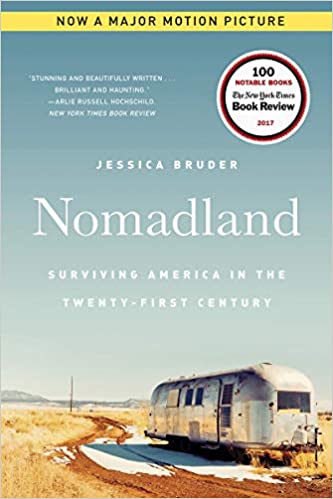
I watched the movie and am reading the book, each a different experience, and I’ll recommend both. The movie is a tour de force for the talented actress Francis McDormand. There’s also plenty of reason to admire its director, Chloé Zhao. The book, written by Jessica Bruder, began as a journalistic piece, focusing on adults who live as transients and its focus is wider than the movie.

The movie follows a unique, interesting individual whom viewers admire, but the story doesn’t reveal much of why she’s motivated to live separately and independently. The book’s author is a professional journalist who focuses on America’s subculture and its dark economy. Nomandland, the book, grew from Bruder’s initial plan to glimpse those living as transients. That experience deepened her interest in the wheeled culture and its participants and she began to explore it deeply.

I’ve been interested in the wheeled culture since some of my co-workers at Costco have taken off during winter months for a mobile life. Other co-workers sold their homes and decided on a mobile life. Some have returned permanently to this area, saying they didn’t enjoy being completely mobile and that the lifestyle became too expensive. Others are completely into the culture, saying they look forward to meeting up with like-minded others at common collection points.

The current economy also encourages a transient life style. These days, those owning homes in attractive areas can sell high, but although armed with cash can’t afford to buy another home in the same or a nearby area. One option is to sell one’s home, purchase a live-in vehicle and go on the road, hoping for an eventual economic readjustment that enables returning to home ownership.

Neither work addresses the self-isolating culture caused by Covid-19. The virus is another justification, at least in the short term, for choosing a transient life style.

Over the last four years nearly everyone worldwide has tuned in to culture’s social and economic differences. Both works, entitled “Nomandland”, add value by broadening insight and understanding as to why and how individuals choose paths that differ from known norms.

Dear Friends: Redefining a definition of “freewheeling” as “no norms”, for culture has cast it to a new norm. Diana

Thousands Of Words

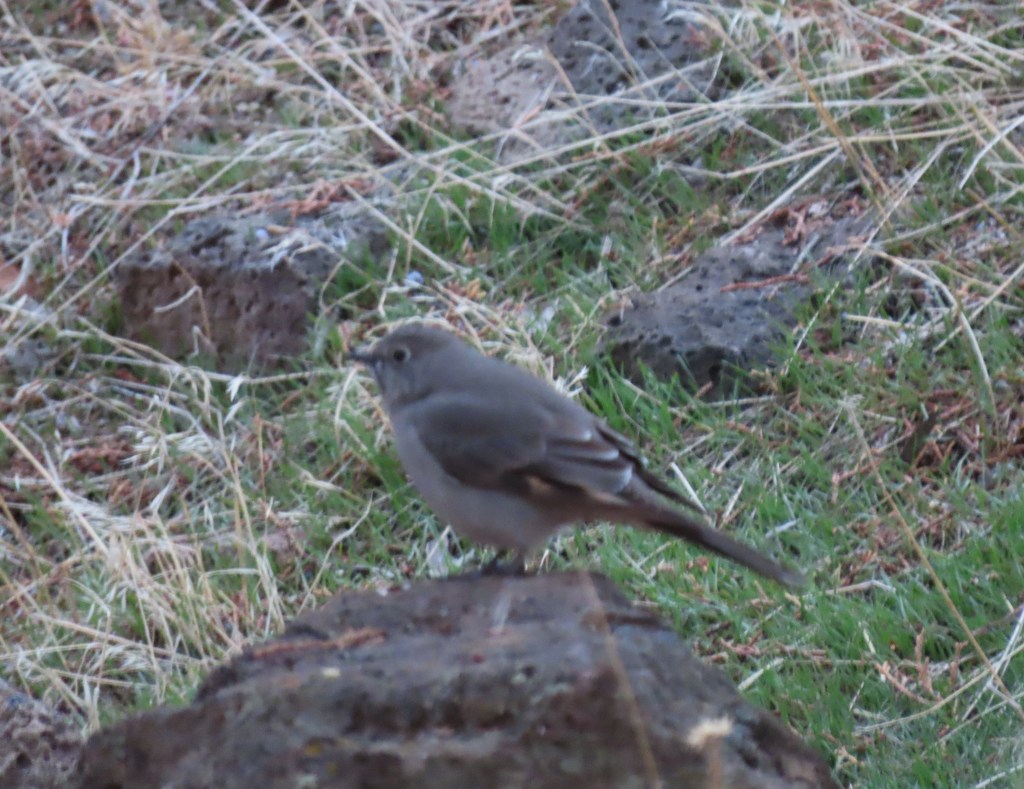
Dusky Flycatcher (juvenile)

Monday, February 22, 2021 (28 days until the First Day of Spring)

This little fellow landed nearby yesterday evening, took its time watching for insects and darted swiftly to make captures. The bird was unbothered by my presence and camera. I grabbed shots that should have been clear, but none turned out pleasing enough. To understand more about the camera’s focusing options, I turned to YouTube. Now going forward, I’ll try to get away from automatic focus and start adjusting manually.

As a non-techie in love with photography, I’m awed by modern cameras with incredible attributes and challenged to understand their capabilities. I’ve found while looking at past photos that an image instantly can recreate an experience and associated memories. A picture is worth a thousand words because it captures complete moments.

Achieving desired outcomes isn’t easy with a complex camera. Now, with several days free from work and YouTube under my belt, I’ll carry the camera and play with settings. I often will return to YouTube, but expect that experimenting with settings will increase my awareness and ease an absorption of technicalities.

Meanwhile, there are pleasing captures that keep me working to improve my camerawork. This image of Maxwell moving into action has many hoped-for qualities.

Dear Friends: Any problem will matter less if one can manage to hold the right attitude toward it. Diana

Retuning

Thawing sky

Sunday, February 21, 2021 (29 days until the First Day of Spring)

When next my farrier arrives from California to take care of clients in Central Oregon, around mid-April and depending on the weather, he might shoe both horses. For sure he’ll shoe Rosie’s rear hooves to strengthen her for conditioning to be ridden and driven.

The farrier was here yesterday and mentioned his next visit in April. That was my wake up call that time is closing in for starting to ready the horses for doing work. In a few weeks, the weather will be warmer, I could stand outside and exercise them using the long lines. Activities associated to this require me to practice “tacking up”, for riding and for harnessing to drive. Practice sessions are essential, for after months of not assembling tack, tacking-up has stumbles. In early season outings, I’ve know disappointment in finding an essential bit of tack missing. Or, while on horseback, having attached my off side rein to one of a bridle’s useless rings.

Along with the prep challenges is excitement in again anticipating adventures with the horses. And hopefully accompanied by my four dogs. These dogs are older and showing early arthritis that could limit running on horse trails. For a devoted Border Collie, like my Miles, finding himself staying home as the horse trailer is pulling away equates to disaster. Dear Miles, your unhappy screams would sadden me and I’d miss your presence on the trails, but better that you can walk and run painlessly on our property than needing narcotic meds to alleviate over-exercising.

Today’s temperature should rise to about fifty degrees. I’ll scramble to take the horses over to pasture before it’s time for me to leave for work. Later, in early darkness and wearing a headlight, I’ll returned to the horses and lead them home.

Dear Friends: Periodic renewals of activity can refresh our senses and spirits. Diana

Vision

Starling on a wire

Saturday, February 20, 2021 (30 days before First Day of Spring)

Yesterday, I visualized with friends what our world might be like following this pandemic. So many questions, like will we return to understood workplaces and do our work as before? I’m less ambivalent after experiencing this week’s Mars landing. It suggests a huge extent to which technology is poised to change our lives.

The Mars landing is mind-staggering. It seems inconceivable that long-working teams did figure a path to the landing. They controlled the landed Rover’s self-recharging and initial samples collecting, and remotely will direct and monitor the machine’s ongoing activities and behaviors. It took years of planning and years of flight for the Rover to arrive on Mars, and years will pass before its samples return to earth.

It’s not new that we’re aware of fantastic technologies related to space activities. But it’s been a long while since America successfully launched an incredibly complex mission. It has huge power because of getting there, as we’re still cocooning, semi-hibernating, self-isolating, and eager for a sense outside ourselves, beyond our enclosures. The Mars landing is a mind grabber.

It suggests a future of higher technology. Manufacturing designs and production processes will be managed and finalized by computers. Assembling will become more highly robotic with fewer working opportunities for non-college educated job seekers. Many humans dislike being in school, don’t do well in classrooms, have trouble teaming successfully with others to plan and design projects. In a highly automated environment, where will the employment opportunities be?

For over seventy years, the fast food industry has provided employment for drop-outs from schools. There will be increasing automation in that industry, which will reduce employee numbers. Besides, after our long months of mask-wearing and hand-washing, foods are less appealing for being handled by many humans through various preparation stages. More attractive are the meals prepackaged by automation and waiting on store shelves.

If we experience the Mars landing as increasing our awareness of next steps, it’s thinking about technology with a world of possibilities. Most of us are way behind those who are pioneering in space travel, like Richard Branson and Elon Musk, both working to change how we live.

Dear Friends: It’s timely and appropriate to uncloud our vision, and redirect it to a newer world. Diana